The Forgotten Thrill: How Skijoring Once Strained Banff's Winter Carnival
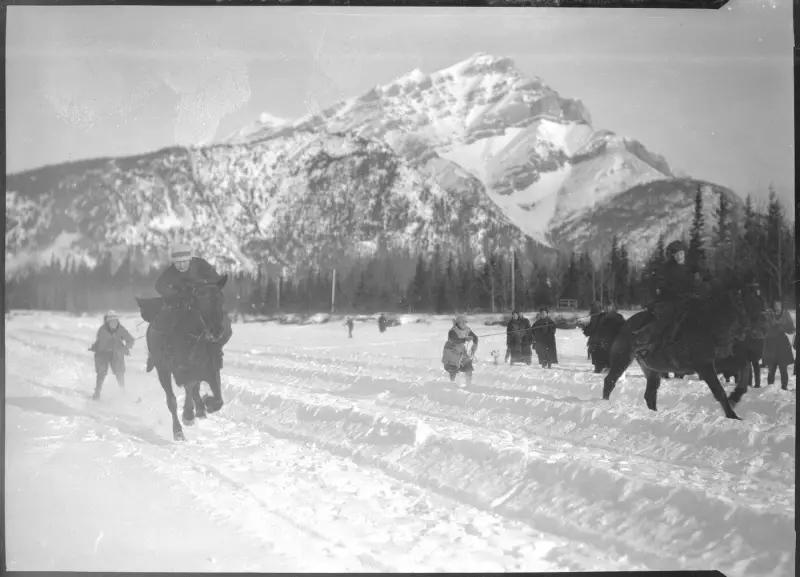
In the annals of Canadian winter sports, few activities are as obscure or as historically captivating as skijoring. This unique pastime, which involves a person on skis being pulled by a horse, dog, or motor vehicle, once played a central role in the early Banff Winter Carnival. Archival photographs from the Whyte Museum of the Canadian Rockies, dated between 1903 and 1942, vividly capture pairs skijoring on the frozen Bow River, showcasing a spectacle that pushed the resort town to its operational and social limits.
A Sport of Daring and Community Strain
During the early decades of the 20th century, skijoring was not merely a novelty but a headline event that drew crowds and tested Banff's capacity. The sport required significant coordination, with horses and skiers navigating icy courses at considerable speeds. This demand placed immense pressure on local organizers, who had to ensure safety on the river ice and manage the influx of participants and spectators. The carnival, aiming to boost winter tourism, found itself balancing the excitement of skijoring with the logistical challenges it presented, from crowd control to animal welfare concerns.
Historical Context and Cultural Impact
Skijoring's popularity in Banff reflected a broader trend of adapting European winter traditions to the Canadian landscape. As a resort town, Banff leveraged such events to establish itself as a premier winter destination. However, the sport's intensity often stretched resources thin, highlighting the town's growing pains as it evolved from a remote outpost to a tourist hub. The archival images serve as a testament to this era, capturing moments of joy and adrenaline that also underscored the community's resilience in the face of seasonal demands.

Why did skijoring fade from prominence? Over time, factors such as the rise of more standardized winter sports like skiing and hockey, along with increasing safety regulations, led to skijoring's decline. Yet, its legacy endures in Banff's historical narrative, reminding us of a time when innovation and risk-taking defined the Canadian winter experience. Today, as modern resorts grapple with similar challenges of balancing tradition with progress, the story of skijoring offers a poignant lesson in how communities adapt to the limits of their environment and ambition.