Olympic Ski Racers Furious Over Weather and Judging at 2026 Games
Canadian ski cross athletes voiced intense frustration over challenging weather conditions and controversial judging decisions during the 2026 Winter Olympics in Livigno, Italy. The event, held on February 21, 2026, saw competitors battling not only each other but also deteriorating course conditions and race officials' rulings.
Weather Woes and Course Conditions
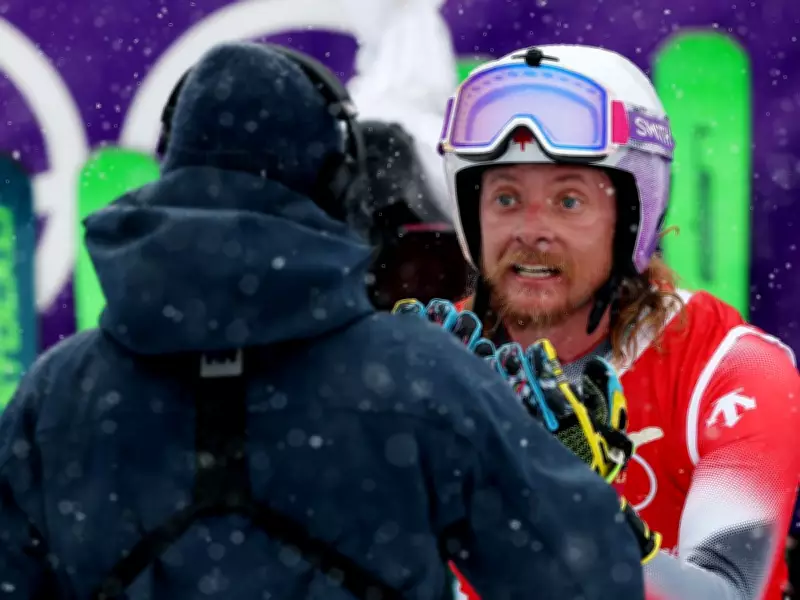
Reece Howden of Cultus Lake, British Columbia, the top-ranked man on the World Cup circuit and pre-race favorite, was eliminated in the quarterfinals. He described the decision to proceed with the race in heavy snowfall as "an absolute joke" to CBC. The snowy weather significantly slowed the course, transforming what should have been a high-speed ski cross event into what Howden compared to cross-country skiing.
"I've trained four years for this and these are the conditions that we have to race in? It's really, really unfortunate," Howden told reporters in the mixed zone. "There's a lot of people that are watching me here compete, friends and family. And it just sucks that this is what we have to compete in. The course is falling apart."

Howden expressed willingness to wait another four years for better conditions, stating, "Maybe it's out of our control. Maybe there's no other opportunity whatsoever to push the race to better conditions or to have moved it forward. But if that's the case, screw it. I'll wait another four years because this is terrible to be a part of this race right now."
Controversial Disqualification
Teammate Jared Schmidt of Ottawa faced an even more disappointing outcome. After appearing to advance through the 1/8th finals with a strong finish, Schmidt was disqualified for allegedly making contact from behind with Swedish skier Erik Mobaerg, who was also eliminated as a result.
Schmidt, 28, reacted with visible anger upon learning of the disqualification, slamming his ski pole into the ground. "When your day is ended by something like that, where in my mind, in my eyes, in my skiing, I really didn't do anything wrong, you kind of feel like you got robbed a little bit," he said.
"It's tough, I'm dealing with it. It's tough when you go four years and you feel like you're skiing the best you ever have. And you get robbed a little bit. It's hard to wrap my head around it. I don't really know what to make of it."
Request for Video Review Denied
Schmidt revealed that his request to review video footage of the incident was denied by officials. "Contact from behind was the call for the yellow card," he explained. "It baffled me because I was behind him far enough that I don't even think I touched his skis. He definitely felt that there was contact. But from what I saw, it was actually the Swiss athlete (Alex Fiva) beside him merging into the gate."
The Canadian athlete called for a thorough explanation from the International Ski and Snowboard Federation (FIS), emphasizing the high stakes of Olympic competition. "Especially at a big event like this, when your day ends like that. To win a medal here, it can change your life."
Race Results and Aftermath
Despite the controversies, the race concluded with Italy's Simone Deromedis claiming gold, his teammate Federico Tomasoni taking silver, and Switzerland's Alex Fiva earning bronze. Howden had demonstrated his potential earlier in the competition, posting the best time in the seeding run with nearly a full second advantage over the field, but couldn't overcome the challenging conditions in the quarterfinals.
The events in Livigno highlighted the ongoing tension between athlete preparation, weather variables, and officiating decisions in winter sports. Both Canadian athletes' passionate responses underscored the emotional investment and high expectations surrounding Olympic competition, particularly when external factors appear to compromise the fairness and quality of the event.