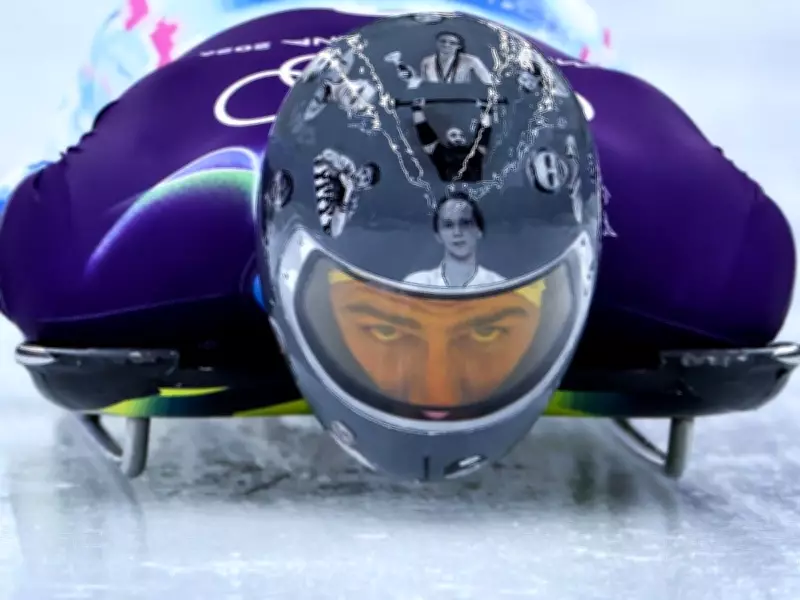
IOC's Cowardly Ban on Ukrainian Athlete's Tribute Stains Milano Cortina Olympics
In a moment that should have showcased humanity and solidarity, the International Olympic Committee instead delivered an epic failure on the global stage of the Milano Cortina Winter Olympics. The IOC's handling of Ukrainian skeleton racer Vladyslav Heraskevych's touching tribute to fallen compatriots has left a lasting stain on the Olympic movement and revealed deep contradictions in its professed values.
A Simple Remembrance Met With Heavy-Handed Response
Vladyslav Heraskevych, a Ukrainian skeleton athlete competing at the Winter Olympics, might have completed his event relatively unnoticed if not for the tone-deaf reaction from Olympic officials. During his training session on February 9, Heraskevych wore a helmet bearing images of Ukrainian athletes and coaches killed since Russia's invasion of his country in 2022. Some of those memorialized were people Heraskevych knew personally.
"This was a simple, touching remembrance," noted one observer. "A very mild reaction, given that Russia continues to create a humanitarian crisis in Ukraine by destroying infrastructure and leaving residents to face winter without power."

The wise course would have been to acknowledge the tribute and move forward. Instead, the IOC responded with all the finesse of a drunk on a four-day bender, initially imposing a complete ban on Heraskevych from the Winter Olympics for what they deemed a political act.
From Complete Ban to Partial Reinstatement
The Ukrainian athlete, considered a genuine medal contender, was forced to surrender his credential and barred from even supporting his teammates from the sidelines. Only after Heraskevych appealed to the Court of Arbitration for Sport did the IOC relent partially on Thursday, reinstating his credential so he could cheer from the sidelines.
However, the damage had already been done. The incident served as the first major test for newly minted IOC president Kirsty Coventry's ability to make decisions during the Games, and the result was enormously discouraging. While Coventry did meet with Heraskevych, she ultimately displayed the same cowardice as her mentor, former IOC president Thomas Bach.
Political Hypocrisy Exposed
Ukrainian President Volodymyr Zelenskyy condemned the decision, stating: "Sport shouldn't mean amnesia, and the Olympic movement should help stop wars, not play into the hands of aggressors."
The incident exposed the fundamental hypocrisy in the IOC's approach to politics. The organization cannot realistically bar politics from the Olympic Games when politics permeates every aspect of the event:
- The garish national outfits worn by American fans with their chants of "U-S-A! U-S-A!"
- The absence of Russian and Belarusian athletes due to the invasion of Ukraine
- The medal counts by nation and national anthems played at ceremonies
- The virulent nationalism that divides athletes and spectators alike
"As always, it's not whether a particular act is political, but who is responsible for that political act," noted one analyst. Heraskevych, as one lone athlete, has virtually no economic impact on the Olympic Games, while NBC alone has a $7.75 billion broadcast contract with the IOC running through the Brisbane Games in 2032.
The Uncomfortable Truth About Right and Wrong
Heraskevych introduced a concept into the Olympic debate that clearly makes the IOC uncomfortable: the notion of right and wrong. An unprovoked invasion of a neighbor is wrong. Slaughtering civilians is wrong. Destroying civilian infrastructure is wrong. Targeting schools and hospitals is wrong.
The IOC itself explicitly recognizes these truths through its bans on Russia and Belarus. Yet when presented with an opportunity to support one Ukrainian athlete in his lone quest to remember a handful of the dead, the organization failed Ukraine—and the world.
Those who shriek "keep politics out of it" are usually first in line when it comes to rolling out massive national flags and getting emotional over displays of military might during anthem ceremonies. The real world does not disappear during the Olympics, and Heraskevych's tribute served as a poignant reminder of that reality.

There is no graceful way for President Coventry to extricate herself from this mess. The IOC's heavy-handed response to a simple act of remembrance has revealed the organization's priorities and highlighted the selective application of its own rules regarding political expression during the Games.