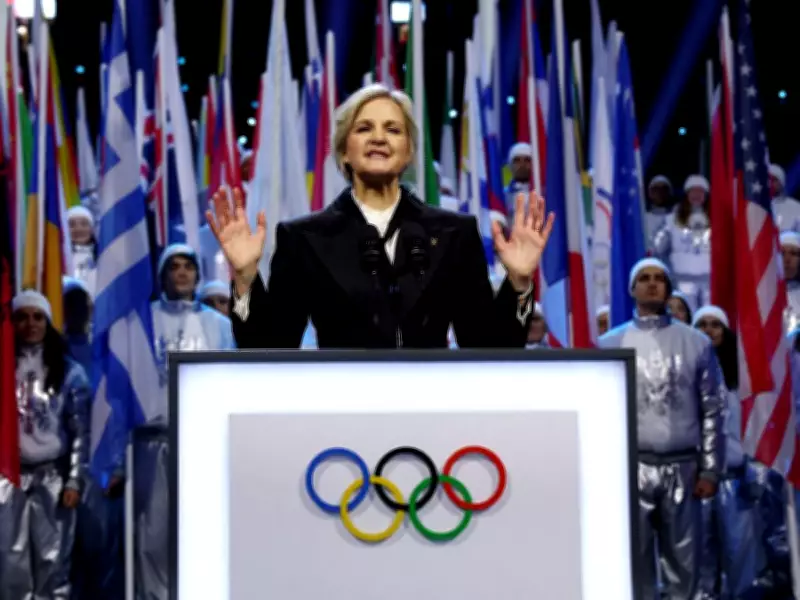
Olympic Committee Institutes Science-Based Policy for Female Sports Eligibility
The International Olympic Committee (IOC) has announced a landmark policy change that will fundamentally reshape participation in the female category at the Olympic Games. In a decision announced on Thursday, the IOC declared that eligibility for female Olympic competitions will be strictly limited to biological females, marking a significant shift toward policies rooted in scientific evidence.
Scientific Foundation for Fair Competition
"I understand that this is a very sensitive topic," stated Kirsty Coventry, President of the IOC, in a video announcement. "As a former athlete, I passionately believe in the rights of all Olympians to take part in fair competition." Coventry emphasized that the new policy emerged from extensive scientific review conducted by medical experts with athletes' best interests at heart.
The scientific evidence reviewed by the IOC's Working Group on the Protection of the Female Category demonstrates conclusively that male chromosomes provide distinct performance advantages in sports relying on strength, power, or endurance. "The scientific evidence is very clear," Coventry affirmed. "Male chromosomes give performance advantages in sports that rely on strength, power or endurance."

Ensuring Fairness and Safety in Elite Competition
At the Olympic level, where victory and defeat can be separated by the smallest margins, the IOC determined that biological males competing in the female category would compromise fundamental fairness. "At the Olympic Games, even the smallest margins can be the difference between victory and defeat," Coventry explained. "So it's absolutely clear that it would not be fair for biological males to compete in the female category."
Beyond fairness considerations, safety emerged as another critical factor in the decision-making process. Coventry noted that in certain sports, particularly contact sports, biological males competing against women "simply would not be safe" due to physiological differences between the sexes.
Implementation and Verification Procedures
The IOC's new policy will involve verification of biological sex through what the organization describes as "the most accurate and least intrusive method currently available." This verification process will screen for the SRY gene, a segment of DNA typically found on the Y chromosome that initiates male sex development in utero and indicates the presence of testes.
Coventry clarified that athletes will only need to undergo this screening once in their lifetimes, minimizing the burden on competitors while ensuring the integrity of Olympic competitions. "The Olympic Games has a focus on elite sport, and in elite sport, we must ensure the fairness, safety and integrity of all competitions within the Games," she stated.
Scope and Application of the New Policy
While the IOC recommends that other governing bodies adopt similar policies for events related to Olympic competitions, the organization specified that its new eligibility rules "do not apply to any grassroots or recreational sports programs." This distinction acknowledges different considerations at various levels of athletic participation while maintaining strict standards for elite Olympic competition.
The policy development process involved comprehensive review of scientific evidence, including developments since 2021 when the IOC's previous policy was instituted. The Working Group on the Protection of the Female Category reached a clear consensus that "male sex provides a performance advantage in all sports and events that rely on strength, power and endurance."
This decision represents a significant evolution in Olympic policy, moving toward what many observers describe as a commonsense approach grounded in biological reality. As Coventry emphasized, the policy aims to balance sensitivity with scientific evidence, ensuring that female athletes can compete on a level playing field at the world's most prestigious sporting event.