At the beginning of the season, Ottawa Charge general manager Mike Hirshfeld was well aware that many observers projected the team to finish last in the PWHL standings. To some extent, it was an inevitable consequence of league expansion. Defenders Ashton Bell and Aneta Tejralová were the top expansion targets for the new Vancouver and Seattle franchises, while 2024-25 leading scorer Tereza Vanišová was another notable loss to the west coast.
In other instances, the Charge lost out on financials. Management made an effort to re-sign free agents like Shiann Darkangelo and Danielle Serdachny, but those forwards decided to sign in other markets. The task of replacing the 30-plus goals Ottawa lost to expansion and free agency appeared daunting.
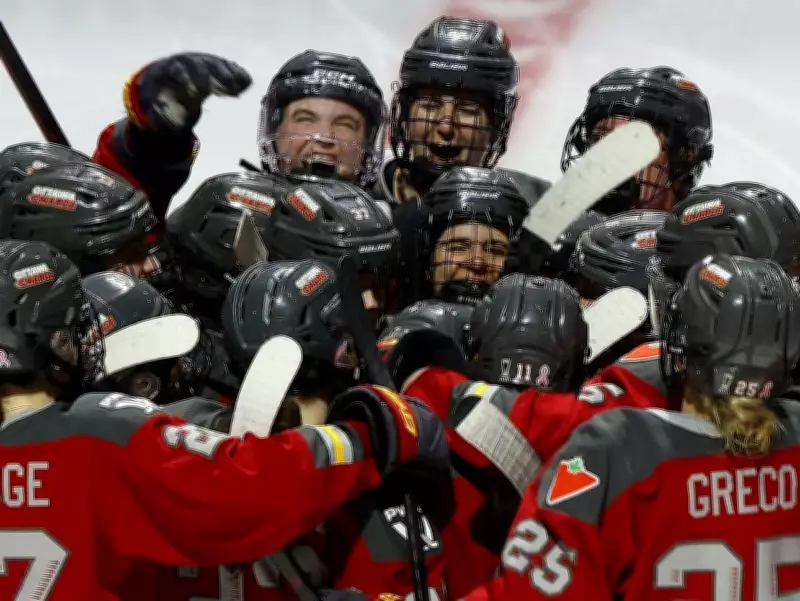
But fast-forward a year, and the Charge overcame the odds and appeared in a second straight Walter Cup final. How did this happen? Speaking with the Ottawa Citizen in Laval, Que., during the off-day between Games 1 and 2 of this year’s PWHL championship series, Hirshfeld reflected on how the Charge managed to rebuild its roster to league-final form and how it uncovered unexpected contributors from last season’s draft.

“When you see some of the comments that were made preseason, for certain, we wouldn’t be human if we didn’t get a little bit of pleasure out of that,” he said.
How did Ottawa approach the rebuild?
“We just put our head down, and we’re like, ‘OK, we’ve got to rebuild this, here we go again, let’s do this,’” Hirshfeld said. Holding the fifth overall selection in the draft, Hirshfeld knew the Charge would be “a bit behind the eight-ball” when it came to landing a superstar. Instead, Ottawa focused on identifying players who may have been overlooked by other teams.
“I think we’ve had more (draft) hits than any team in this league,” he said, “maybe not superstar potential because we’ve never picked high enough to have the superstars.”
Careful not to reveal too much about the team’s approach, Hirshfeld said Ottawa targeted a “very specific type of player” and then drafted accordingly. “I’m not going to give away too many secrets, but the biggest one for us is skating,” he said. “If you can skate, you’re going to be in a good spot.”
Ottawa also benefited from strategic free-agency additions like defender Brooke Hobson, who Hirshfeld said was preparing to retire from pro hockey after two seasons in New York.
Rory Guilday (1G, 10A in 38 GP)
After Ottawa defenders became the first two players selected in last year’s expansion draft, the Charge needed to reinforce its blue line. To fill that void, the Charge used its first-round pick on 5-11 defender and Cornell University captain Rory Guilday. It was Guilday’s size, skating and puck-moving ability that stuck out to Charge scouts, Hirshfeld said, and that success translated to the PWHL in her rookie season.
The Charge’s ability to find value in the draft and make smart free-agent signings allowed them to overcome significant roster losses. Hirshfeld’s strategy of prioritizing skating and specific player traits paid off, as Ottawa defied preseason predictions and earned a spot in the championship series.