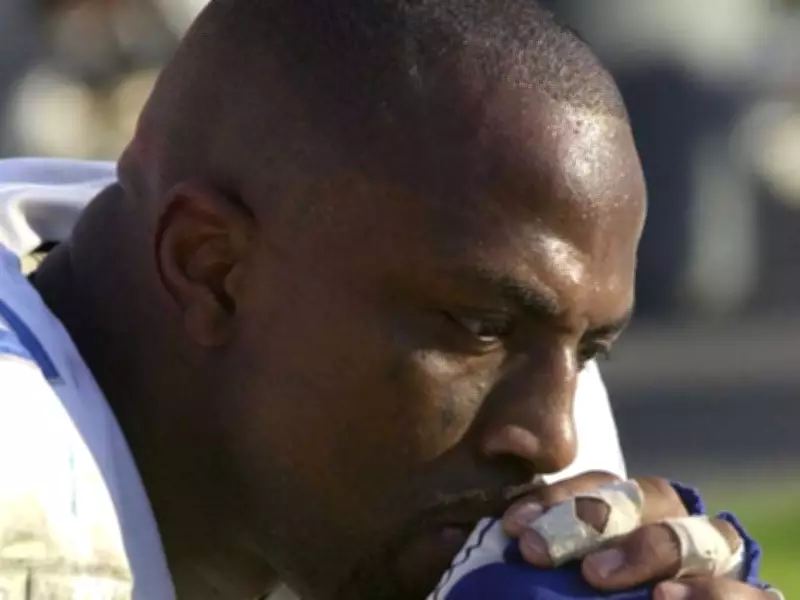
The football world is mourning the loss of former Detroit Lions defensive lineman Tracy Scroggins, who passed away on Monday at the age of 56. The Lions organization confirmed his death in a social media post, paying tribute to the player who spent his entire 10-year NFL career with the team from 1992 to 2001.
A Family's Heartbreaking Revelation
While no official cause of death has been released, Scroggins' family has come forward with a poignant statement revealing the former athlete had been battling chronic traumatic encephalopathy (CTE) throughout his retirement years. In their emotional tribute to TMZ, the family described Scroggins as "a devoted father, cherished family member, and loyal friend whose life was marked by remarkable strength and perseverance."
The family's statement took a direct stance on the connection between Scroggins' football career and his health struggles, stating: "Playing in the NFL gave Tracy the opportunity to pursue his lifelong dream and to rise from poverty. However, unfortunately, the NFL was also ultimately the cause of his untimely demise. Tracy spent every moment of retirement courageously battling the devastating effects of CTE."

The CTE Connection to Football
Chronic traumatic encephalopathy is a progressive neurodegenerative disease caused by repeated blows to the head. The condition leads to abnormal tau protein buildup that destroys brain cells over time. What makes CTE particularly challenging is that it can only be definitively diagnosed after death through examination of brain tissue.
Scroggins was among thousands of former NFL players who filed concussion-related claims against the league before the landmark 2015 settlement. He filed an additional claim in 2016, highlighting his ongoing health concerns related to his football career.
Reflections on a Football Career
In a 2016 interview with The Detroit News, Scroggins reflected on his career with both pride and awareness of the risks involved. "I don't have any regrets. I think things happen, sometimes for a reason," he told the newspaper. "But if I had the knowledge that players today have, I think that probably my career would've been five years shorter than it was."
Selected by the Lions in the second round of the 1992 draft from the University of Tulsa, Scroggins established himself as a formidable presence on Detroit's defensive line. Over his decade with the team, he appeared in 142 games and recorded 60.5 sacks, placing him seventh on the Lions' all-time sack list. He retired from professional football following the 2001 season.
Legacy Beyond the Field
The Scroggins family emphasized that while many knew him as an NFL player, those closest to him experienced his kindness and generosity. "Those closest to him knew him as a kind-hearted and generous man who cared deeply for his family and friends," their statement noted.
As the football community processes this loss, the family expressed both grief and relief, stating: "While our hearts are heavy, we find comfort in knowing that he is finally at peace." The passing of Tracy Scroggins adds another name to the growing list of former NFL players whose post-career health struggles have brought increased attention to the long-term effects of football-related head trauma.