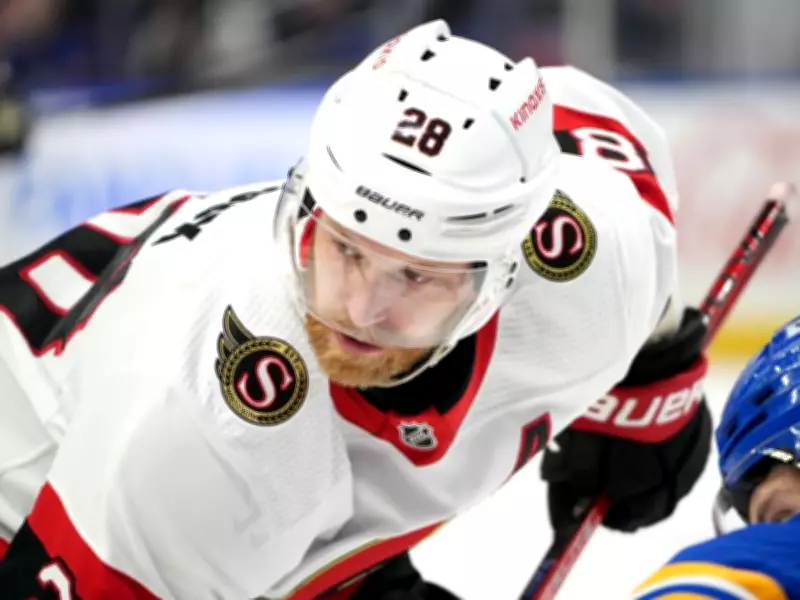
Claude Giroux's Faceoff Excellence Elevates Ottawa Senators
One of hockey's greatest faceoff specialists is currently experiencing the most successful season of his illustrious career at the dot. Claude Giroux, the Ottawa Senators veteran forward, is not only dominating faceoffs but also generously sharing his extensive knowledge with the team's younger generation of centers.
The Evolution of Hockey's Opening Moment
The beginning of a hockey game looked remarkably different 150 years ago. When the sport first blossomed in Canada, many matches commenced with the referee ringing a bell, followed by two opposing skaters performing what was known as a "bully" manoeuvre at centre ice. Players would whack their sticks on the ice three times, tap them together once above the puck, and then scramble for possession.
Similar procedures remain familiar to Canadian children playing road hockey and ministicks today. However, the National Hockey League has evolved significantly beyond those early days of "1, 2, 3... Go!" In the NHL's 108-year history, faceoffs have arguably been the rule most frequently modified and refined.

The Intricate Modern Faceoff Rulebook
The current NHL rulebook section dedicated to faceoffs spans six single-spaced pages and details fifteen potential violations that could result in a center either being removed from the draw or penalized. This represents a dramatic evolution from the simpler beginnings of the sport.
Red lines have come and gone throughout hockey history, and enforcement of stick infractions has grown more stringent by the decade. However, the procedural minutiae involved with dropping the puck has seen particularly numerous alterations over the years.
Adapting to Changing Faceoff Techniques
Ottawa Senators veteran forwards Claude Giroux and Lars Eller aren't quite old enough to have participated in a "bully," but faceoffs have transformed significantly since each lined up for his first NHL draw. Eller explained the evolution to the Ottawa Citizen, noting that "some of the techniques that were utilized that were effective, it's changed a little bit the last five, six, seven years."
Eller specifically referenced rulebook updates from 2012 and 2017. The 2012 modification prohibited players from batting the puck with their hand to win a faceoff, while the 2017 announcement introduced "stricter enforcement" of the starting position of centers' sticks and skates.
"They took away how some guys would use their hand and try to tie up a stick, guys with their skates over the dot a lot, too," Eller continued. "And those big sweeps have kind of gone away, and now it's about getting over top. Smaller movements, but getting over top of the stick."
Giroux's Journey to Faceoff Wizardry
Claude Giroux's path to becoming a faceoff master began surprisingly late in his hockey development. Throughout minor hockey and junior leagues, Giroux played exclusively as a winger. It wasn't until 2008, during his first full professional season with the AHL's Philadelphia Phantoms, that coach John Paddock made the pivotal decision to move him to center position.
Giroux offered his perspective on the modern faceoff game, emphasizing that "I'd say it's more about timing now. When your timing is good, I think that's when you're successful. Some nights, you just don't have the timing, and you'll have a bad night. I wouldn't say cheating, more just good timing."
This emphasis on precision timing represents a significant shift from earlier faceoff strategies that relied more on physical positioning and sweeping motions. Giroux's current success demonstrates how effectively he has adapted to these evolving requirements while maintaining his competitive edge.
Mentoring Ottawa's Next Generation
Beyond his personal achievements at the faceoff dot, Giroux's most valuable contribution to the Ottawa Senators may be his willingness to mentor younger centers. His wealth of knowledge about faceoff techniques, rule interpretations, and timing strategies is being actively passed down to developing players within the organization.

This combination of elite performance and leadership exemplifies why Giroux remains such a vital component of the Senators' roster. As faceoff rules continue to evolve and techniques become increasingly sophisticated, having a veteran master like Giroux to guide younger players provides Ottawa with a significant competitive advantage that extends beyond simple win percentages.