Canadian Figure Skaters Overcome Rough Night to Advance at Olympics
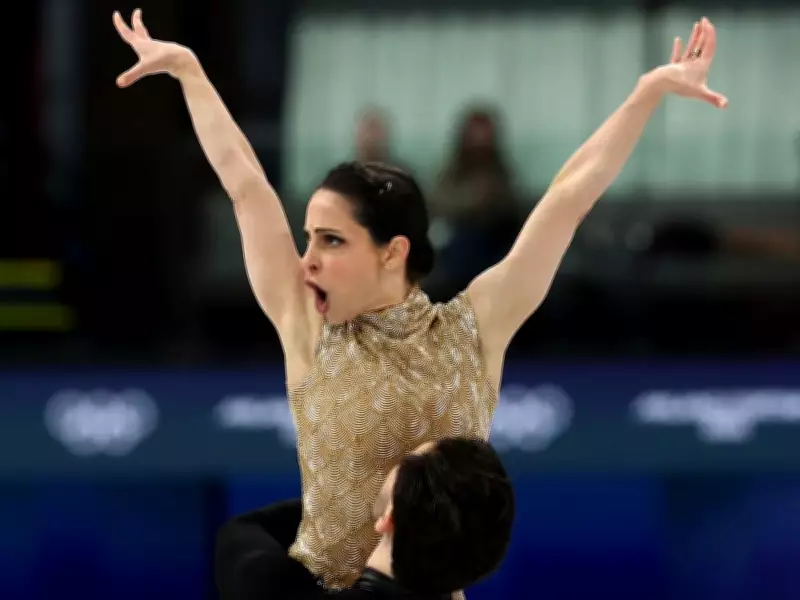
Canadian figure skater Deanna Stellato-Dudek and her partner Maxime Deschamps experienced a turbulent Olympic debut on Sunday evening in Milan, yet managed to advance to the second stage of pairs skating at the Games. Despite a performance marred by technical errors and a hard fall, the duo secured the 14th position in the short program, just enough to qualify for the free skate competition.
A Challenging Performance on Olympic Ice
The Canadian pair finally took to the ice after a delayed start to their Olympic journey, but their short program was far from smooth. Deschamps encountered a stumble during their routine, while Stellato-Dudek suffered a dramatic fall onto the rink surface. These mishaps left them in 14th place at the conclusion of the evening's competition, barely within the cutoff for advancement.
"I don't know what happened," Stellato-Dudek confessed to reporters following their skate. "That has never even happened in practice and then I had to hurry up and get up for the next element. But I thought we recovered well, considering it's never happened before."

The top sixteen pairs from the short program advance to the free skate program, giving Stellato-Dudek and Deschamps another opportunity to demonstrate their capabilities on Monday night. Their qualification was by the narrowest of margins, adding pressure to their upcoming performance.
Historical Achievement Amidst Adversity
Despite the difficult start, the 42-year-old Stellato-Dudek made Olympic history on Sunday, becoming the oldest woman to compete in figure skating at the Games since 1928. This remarkable record was previously held by British skater Ethel Muckelt, making Stellato-Dudek's participation a significant milestone in Olympic figure skating history.
"I'm always really happy to represent for the millennials and the women in their 40s," she remarked with a chuckle. "We're constantly underestimated, and we're constantly told no, and there's not one person that told me that I could achieve this when I started. So the fact that I persevered and was able to be here, I hope, gives other people courage to do something else in their lives that people are fighting them against."
An Unconventional Journey to the Olympics
The path to Milan has been anything but conventional for the Canadian pair. They arrived in the Olympic host city just three days before their event, following a concerning incident during practice in Montreal. Stellato-Dudek spent approximately a week-and-a-half recovering from a bad fall on ice where she hit her head during training.
The Canadian Olympic Committee confirmed on February 10th that the skater remained in Canada to consult with medical professionals regarding her recovery and to determine whether it would be safe for her to travel to the competition. Stellato-Dudek declined to specify the nature of her injury during a media availability on February 13th, only clarifying that it was not a concussion.
"The last week-and-a-half was a living nightmare that I wouldn't wish on anybody," she revealed about the recovery period.
Preparation and Mindset for Competition
Despite the recent challenges, Stellato-Dudek reported feeling "fine" both on Friday before the competition and after her performance on Sunday evening. She described their preparation as consistent with their normal competition routine, emphasizing the importance of proper nutrition, hydration, and warm-up procedures.
"We do competitions all the time. The preparation doesn't change," she explained. "You're focused on getting your meals when the time is right, making sure you're hydrated, making sure you're well warmed up, limber. It's the same as every other event."
Once the performance began, she described herself as "going on autopilot," relying on years of training and muscle memory to navigate the routine despite the unexpected difficulties.

A Remarkable Comeback Story
The Olympic debut represented a particularly disappointing moment for Stellato-Dudek, who has dedicated the past decade of her life to pursuing her Olympic dream. After a competitive skating career in her teens followed by a fifteen-year hiatus from the sport, she made headlines before the Olympics for her impressive comeback to competitive figure skating.
Her journey to secure a spot at the world's most elite skating competition has been characterized by perseverance and determination against considerable odds. Now, with another opportunity in the free skate program, she and Deschamps have a chance to rewrite the narrative of their Olympic experience and demonstrate the resilience that has defined their partnership.