Olympic Curling Erupts in Controversy as Canada-Sweden Clash Sparks Scandal
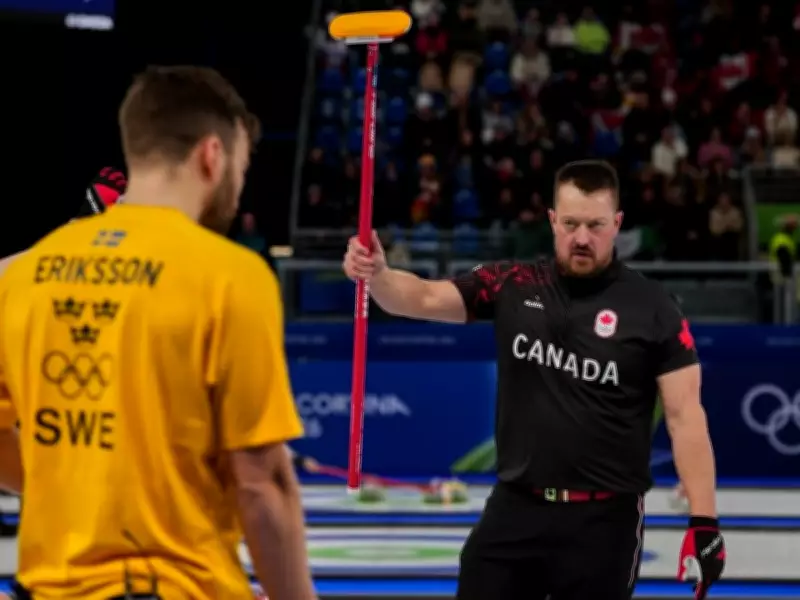
The typically genteel world of international curling found itself thrust into an unprecedented scandal following Canada's dramatic 8-6 victory over Sweden at the Milan-Cortina Winter Olympics. What began as a competitive match between defending Olympic champions Team Niklas Edin of Sweden and Canada's Team Brad Jacobs escalated into a heated confrontation that has reverberated throughout the curling community.
Heated Exchange and Accusations Rock the Ice
During the intense Friday evening match, Swedish curler Oskar Eriksson leveled serious accusations against Canadian veteran Marc Kennedy, alleging repeated rule violations. Eriksson claimed Kennedy had been "double touching" his stones after passing the hog line—the critical point where players must release their rocks according to Olympic regulations.
The confrontation grew particularly heated when Kennedy responded with profanity toward Eriksson, marking a rare moment of visible tension in a sport known for its traditional sportsmanship. This exchange immediately transformed what should have been a routine Olympic competition into a major controversy that has dominated conversations about the 2026 Winter Games.

Multiple Allegations Surface Across Tournament
The controversy did not end with the Canada-Sweden match. Additional allegations emerged during Canada's subsequent 9-5 loss to Switzerland on Saturday, with Swiss lead Pablo Lachat-Couchepin reporting similar concerns about Kennedy's delivery technique. Lachat-Couchepin noted that while he observed potential issues, he ultimately deferred to the referee's judgment during the game.
Further complicating matters, Canadian skip Rachel Homan experienced her own brush with the controversy when one of her stones was removed from play during Saturday evening's competition for double touching—a first in her distinguished career. These multiple incidents have created what Canadian curling legend Jennifer Jones described as "one of the biggest tension moments I've ever seen in curling."
Understanding the Technical Violations
At the heart of the controversy lies the technical rule regarding stone delivery. According to World Curling Federation regulations, players must clearly release stones from their hands before the rock reaches the hog line—a point located 33 feet from the delivery hack in Olympic competition. Stones that violate this rule must be immediately removed from play by the delivering team.
The specific accusation against Kennedy involves what Eriksson described as a "tapping or flicking motion" on the granite stone either just before or as it touched the hog line. Kennedy has acknowledged that his finger may have inadvertently grazed the stone after release but maintains that any contact was unintentional.
Rule Clarifications and Sensor Technology
Modern Olympic curling employs sophisticated technology to monitor potential violations. Stones used in high-level competition contain advanced sensors within their handles that flash red when they detect delivery infractions. These sensors are designed to provide objective measurements of whether stones have been properly released before reaching the critical hog line.
World Curling rules explicitly state that any moving stone touched by the delivering team or their equipment must be immediately removed from play. This applies specifically to contact occurring between the T-line and hog line, with such stones being declared "burned" and taken out of competition.
Broader Implications for Olympic Curling
The controversy has raised significant questions about sportsmanship, rule enforcement, and the pressure of Olympic competition. As allegations continue to circulate and tensions remain high, the curling world finds itself grappling with unfamiliar scrutiny. The incident has transformed what many consider a gentleman's sport into front-page news, with implications that may extend beyond the Milan-Cortina Games to affect how curling is perceived and regulated internationally.

With multiple teams now involved and allegations spreading across different matches, Olympic officials face the challenging task of addressing these concerns while maintaining the integrity of the competition. The controversy serves as a stark reminder that even in sports known for their decorum, the intense pressure of Olympic competition can sometimes lead to unexpected confrontations and allegations that capture global attention.