From Gridiron to Granite: The Unexpected Challenge of Curling
If you believe that transitioning from one of the world's most physically demanding professional sports to curling would be straightforward, former NFL star Jared Allen has a reality check for you. The retired Minnesota Vikings defensive end discovered that mastering the roaring game presents unique challenges that defy expectations.
A Football Legend's New Arena
Jared Allen, a four-time First Team All-Pro and five-time Pro Bowl selection who led the NFL in sacks twice during his 12-season career, retired from professional football in 2015 with an impressive resume. Elected to the Pro Football Hall of Fame in 2025, Allen possessed the competitive drive that defines elite athletes. Yet when he turned his attention to curling with Olympic aspirations, he encountered a sport that demanded entirely different skills and strategies.
"For a lot of people, the story might have ended there," observes curling commentator John Cullen, "but not for Jared." With financial resources from his football career and ample free time, Allen embarked on what he initially believed would be a straightforward path to Olympic competition.

The NFL Curling Experiment
Allen's approach was characteristically bold. Rather than seeking guidance from established curling organizations, he recruited fellow NFL athletes to form what he presumed would be an unstoppable team. His recruits included:
- Michael Roos, a First-Team All-Pro offensive tackle
- Keith Bulluck, a two-time First-Team All-Pro linebacker
- Marc Bulger, two-time Pro Bowl quarterback and future curling bar owner
The assumption was logical in football terms: if one elite athlete could transition successfully, four together would dominate. The reality proved dramatically different. Their initial forays into competitive curling revealed significant gaps between football prowess and curling proficiency.
Curling's Growing Popularity
This NFL experiment coincides with curling's remarkable expansion beyond its traditional Canadian strongholds. The sport once viewed as "your grandfather's Canadian curio" is gaining international traction. Evidence of this growth includes the first-ever Grand Slam of Curling All-Star Game held at Tee Line, a Nashville curling bar owned by Marc Bulger.
The event brought together twelve of the world's top curlers from Switzerland, Sweden, Scotland, and other nations for competitions and skills demonstrations. This reflects strategic efforts by organizations like The Curling Group, which recently purchased the Grand Slam series and sees significant potential in today's sports landscape where previously niche activities like disc golf and darts are capturing substantial market share.
Beyond Stereotypes
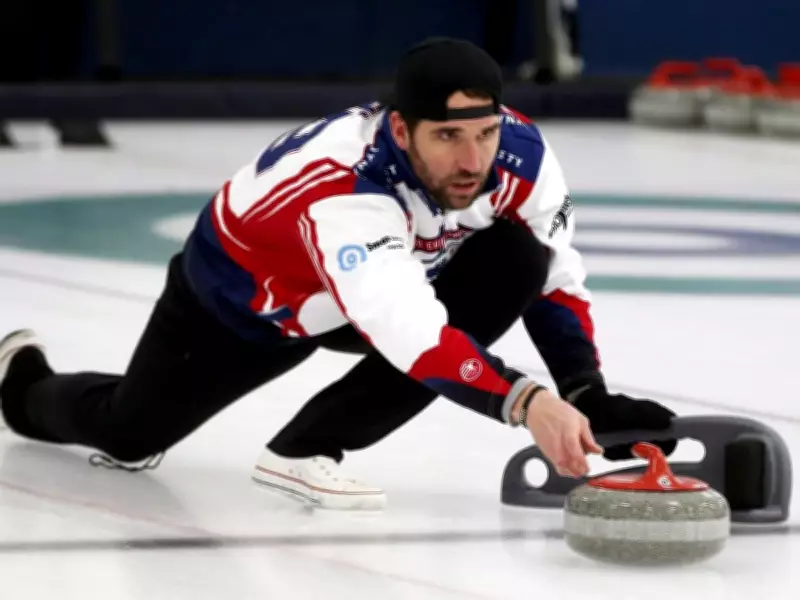
Curling has historically battled misconceptions that it's merely a social activity for small-town Canadians escaping winter weather or an easy alternative for athletes seeking Olympic glory without rigorous training. Allen's experience demonstrates otherwise. The sport requires:
- Precise technique and balance
- Strategic thinking and teamwork
- Specialized equipment mastery
- Ice reading capabilities
As Cullen notes from his perspective as a semi-professional curler with over twenty years experience, "Curling is not a sport for the out-of-shape armchair athlete who dreams of making the Olympics but doesn't want to put in the requisite time or effort."
The Continuing Journey
Despite initial struggles, Allen remains committed to his Olympic curling dream. His story represents both the challenges of athletic transition and curling's evolving identity. From Nashville curling bars to international competitions, the sport is shedding its niche status and attracting diverse participants.
The narrative of four NFL athletes attempting to conquer curling highlights broader themes in modern sports: the crossover appeal between disciplines, the universal nature of competition, and the surprising difficulty of mastering activities that appear deceptively simple to spectators. As curling continues to grow globally, stories like Allen's remind us that athletic excellence in one domain doesn't guarantee success in another, no matter how humble the new arena might seem.