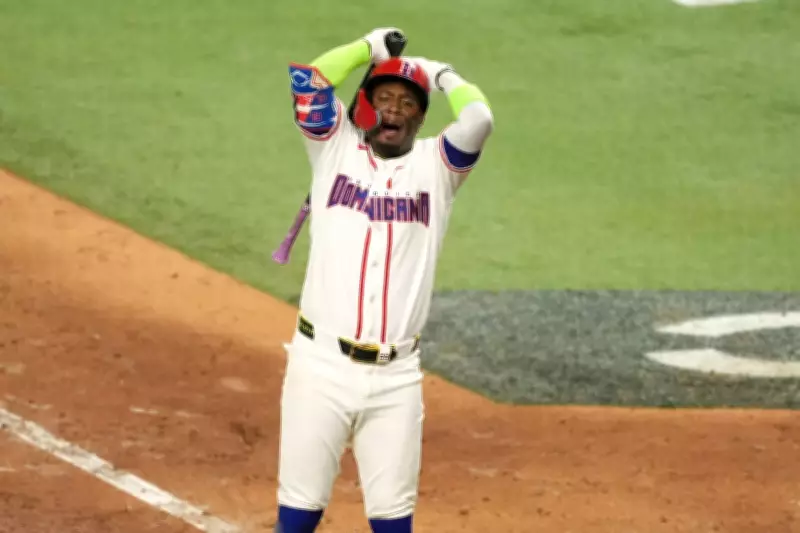
A controversial called third strike, which appeared to be well below the strike zone, sealed the Dominican Republic's heartbreaking elimination from the World Baseball Classic on Sunday, March 15, 2026. The pivotal moment occurred in the ninth inning of a tense semifinal clash against the United States in Miami, with the game ending on a full-count pitch to Geraldo Perdomo that was ruled a strike by home plate umpire Carlos Torres.
Semifinal Showdown Ends in Disputed Fashion
The Dominican Republic, trailing 4-3 with two outs in the final frame, had the tying run on base when Perdomo stepped to the plate. After working the count to 3-2 against U.S. closer Jalen Beeks, Perdomo took a sweeping curveball that replay showed crossed the plate at the shin level. Despite immediate protests from Dominican players and coaches, the call stood, concluding the game and sending the United States to the championship round.
"It's a tough way to end our tournament," said Dominican manager Manny Acta in post-game comments. "Our players fought incredibly hard, and to have it decided on a call that everyone in the ballpark could see was low is disappointing. But that's baseball—human judgment is part of the game."

Timing Adds Fuel to Robot Umpire Debate
The incident has ignited fresh debate over umpiring accuracy, arriving with particularly poignant timing. Major League Baseball is scheduled to implement its Automated Ball-Strike System (ABS), commonly referred to as "robot umpires," across all 30 ballparks beginning Opening Day, March 23, 2026—just one week after this WBC controversy.
MLB's system, which has been tested extensively in the minor leagues, uses radar tracking to determine ball and strike calls with millimeter precision, relaying the decision to the home plate umpire via an earpiece. Proponents argue it will eliminate precisely the type of game-altering missed call that occurred in Miami.
Player Reactions Mixed on Technology's Imminent Arrival"Seeing that happen makes you understand why they're bringing in the technology," commented U.S. infielder Trea Turner. "But there's also something about the human element that defines baseball's history. It's a complicated change."
Perdomo, whose at-bat ended the game, was more direct: "In that moment, you want the correct call. If a machine can get it right every time, maybe that's better for the sport."
Broader Implications for International Baseball
The World Baseball Classic, which operates under World Baseball Softball Confederation rules, does not currently use ABS technology. This incident is likely to prompt discussions about whether future tournaments should adopt similar systems to ensure consistency with MLB, where many participating players are professionals.
"The WBC aims to showcase the highest level of baseball globally," noted WBSC President Riccardo Fraccari. "We continuously evaluate all technological advancements that could improve the fairness and accuracy of our competitions."
As the baseball world processes this dramatic semifinal exit, attention now shifts to both the impending MLB season with its historic rule change and the ongoing conversation about how technology should intersect with the timeless traditions of the sport. The Dominican Republic's loss, sealed by a single debatable call, may well be remembered as a defining prelude to the robot umpire era.