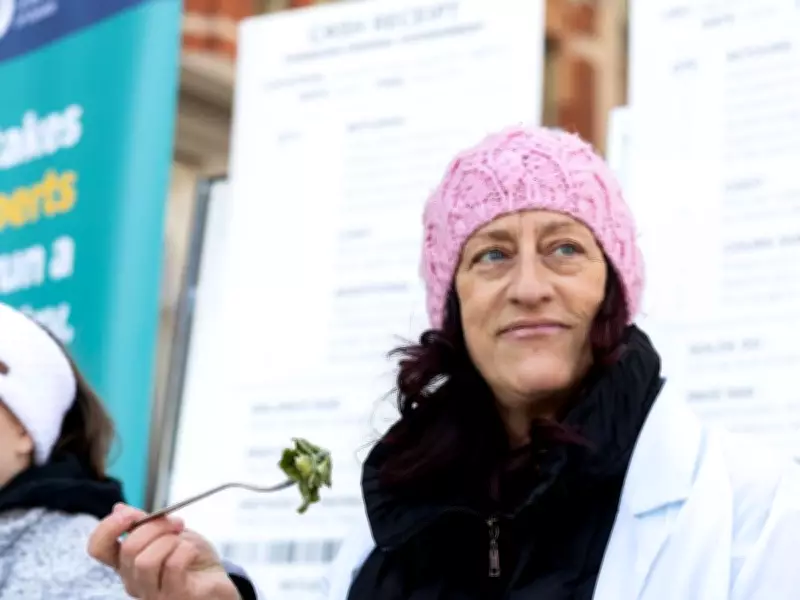
The Professional Institute of the Public Service of Canada (PIPSC) organized a lunchtime protest in downtown Ottawa on February 13, 2026, to highlight the severe risks associated with federal cost-saving measures targeting Canada's food inspection regime. Union members displayed dishes of ground beef, romaine lettuce, and pistachios—all items linked to past serious food-related outbreaks and recalls—as a stark visual warning of potential dangers.
Potential Impact of Cuts on Public Health
PIPSC vice-president Stéphanie Fréchette emphasized that reducing inspection hours could have dire consequences. "If you remove a million of hours of inspection or surveillance or analysis a year, the risk is in everyone’s plate," she stated. "People can die." Fréchette explained that cuts to the Canadian Food Inspection Agency (CFIA) might lead to undetected outbreaks, compromising food safety across the nation.
Uncertainty Over Job Losses and Positions
Approximately 1,300 workers at the CFIA, including 500 PIPSC members, have received workforce adjustment letters, signaling potential layoffs. However, the specifics remain unclear, with Fréchette noting that the cuts are broad and could affect various roles such as veterinarians, inspectors, and biologists. This uncertainty adds to concerns about the agency's capacity to maintain rigorous food safety standards.

Union Leaders Voice Concerns Over Expertise Loss
PIPSC president Sean O'Reilly underscored the value of public servants dedicated to safeguarding Canadians. "We’re going to lose a lot of people that dedicated their careers to be public servants. They wanted to serve Canadians, they didn’t want to serve a shareholder," he said. O'Reilly warned that these experts, who ensure Canadians can live carefree lives, might leave for other opportunities, further weakening the inspection framework.
Protest as a Call to Action
The protest, attended by members including Ellen Webber, Emily Whalen, and Lionel Siniyunguruza, aimed to draw public attention to the critical role of food inspection programs. By using recalled foods as props, the union effectively illustrated how budget reductions could translate into real-world health hazards, urging the federal government to reconsider its approach to public safety funding.