

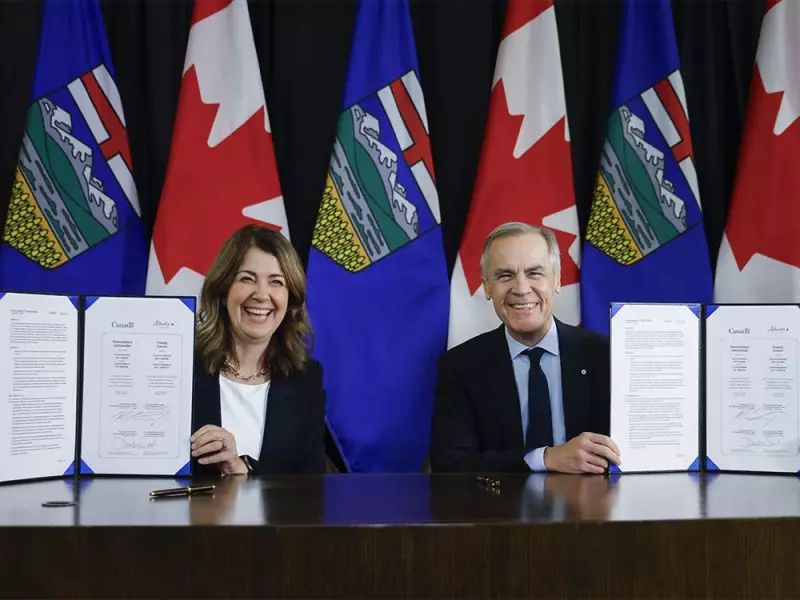
Alberta Premier Danielle Smith has achieved a significant political milestone, successfully negotiating an agreement with the federal government that reaffirms provincial control over natural resources. The deal, signed with Prime Minister Mark Carney in Calgary on November 27, 2025, marks a pivotal moment for Alberta, drawing direct parallels to former Premier Peter Lougheed's historic confrontations with Ottawa in the 1980s.
A Modern Echo of a Historic Stance
Smith's protracted negotiations with Prime Minister Mark Carney culminated in a memorandum of understanding on energy development. This outcome required remarkable patience, mirroring the late Peter Lougheed's strategy when he faced Prime Minister Pierre Trudeau over constitutional resource rights in 1980. The premier's refusal to capitulate or simply blame Ottawa for a potential failure, despite immense political pressure, proved decisive.
The context for this showdown is a longstanding sentiment in Western Canada that federal policies, particularly from the Liberal Party, often overlook constitutional provincial rights. The perception persists that the region is viewed primarily as a resource feeder for Central Canada, whether the commodities are wheat, lumber, potash, or oil.

Navigating Pressure to Secure a Deal
The path to this agreement was not smooth. Many observers initially believed Smith was being outmaneuvered by Carney, given the extended timeline of talks. Furthermore, Smith's government faced considerable domestic challenges during this period, including a teachers' strike, persistently high unemployment, and a growing provincial budget shortfall exacerbated by slumping oil prices. The temptation to abandon talks and gain a fleeting boost in the polls by attacking Ottawa was significant, yet the premier chose to stay the course.
The announcement of the deal, however, was not universally celebrated. At the United Conservative Party's annual convention in Edmonton last weekend, some party members jeered the agreement. For a faction within the UCP, pushing the federal government "off the porch" is insufficient; they advocate for its complete eviction from provincial affairs—a sentiment that aligns with the more extreme call for Alberta independence.
The Lasting Impact on Alberta and Canada
Analysts suggest Smith's success has effectively marginalized the separation issue for the foreseeable future, though they caution that, like a dormant force, it could resurface if Ottawa reverts to policies perceived as hostile to Western interests. The premier's achievement underscores a critical political reality: Canada's future prosperity is inextricably linked to its Western provinces.
The article concludes with a pointed, albeit controversial, aside about British Columbia's political leadership, suggesting the potential power of the Western bloc is sometimes hampered by the electoral choices of its neighbours. Ultimately, Danielle Smith's tenacity has not only secured a key agreement for Alberta but has also etched her name into the province's political history alongside giants like Lougheed.






