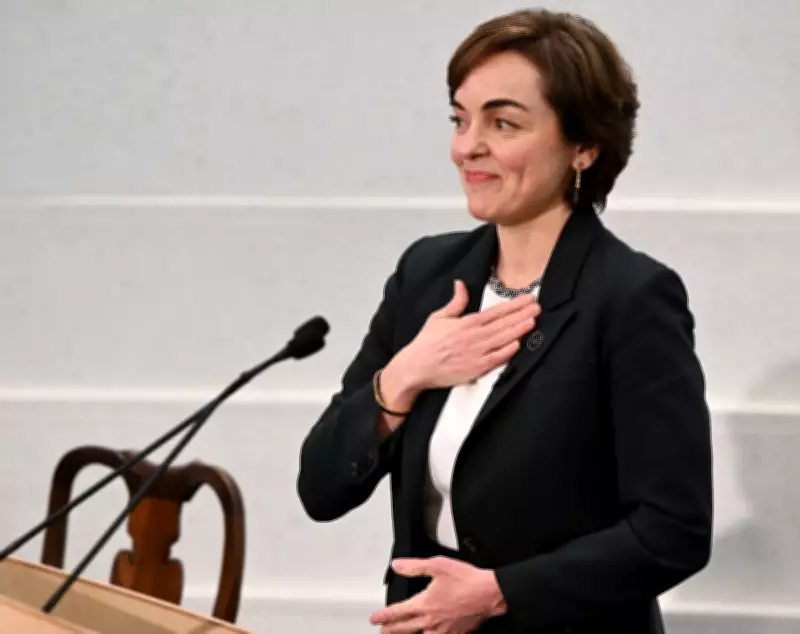
Quebec's New Premier Takes Stand Against Federal Charter Override Powers
In a significant development that signals renewed tensions between Quebec and the federal government, newly sworn-in Premier Christine Fréchette has declared her administration's intention to vigorously oppose Ottawa's potential use of Charter override powers. The announcement came shortly after Fréchette took her oath of office at the Quebec legislature on Wednesday, April 15, 2026, marking a clear stance on constitutional matters that has long been contentious in Canadian federal-provincial relations.
A Constitutional Battle Looms
The Charter override, formally known as the notwithstanding clause (Section 33 of the Canadian Charter of Rights and Freedoms), allows federal or provincial governments to temporarily bypass certain Charter rights. Premier Fréchette's pledge to fight Ottawa on this issue represents a continuation of Quebec's historical position regarding constitutional autonomy and provincial jurisdiction. This move is particularly noteworthy as it comes at the beginning of her term, suggesting constitutional matters will be a priority for her government.
Political analysts note that Fréchette's stance reflects ongoing debates about the balance of power between federal and provincial authorities in Canada. The notwithstanding clause has been invoked by various provinces in recent years for different policy objectives, often sparking legal and political controversies about its appropriate use and limitations.

Context and Implications
The premier's declaration comes amid broader discussions about federal overreach in provincial affairs, a perennial issue in Quebec politics. By positioning her government as a defender of provincial rights against potential federal Charter overrides, Fréchette is aligning with traditional Quebec sovereigntist and autonomist sentiments while operating within the framework of Canadian federalism.
This development is expected to have several immediate implications:
- Increased scrutiny of federal legislation that might employ the notwithstanding clause
- Potential legal challenges from Quebec against federal use of override powers
- Renewed public debate about the Charter's role in Canadian governance
- Possible strain in federal-Quebec relations on constitutional matters
The timing is also significant, as it follows recent federal initiatives that some Quebec politicians have characterized as encroaching on provincial jurisdiction. Fréchette's administration appears poised to take a more assertive stance in defending what it perceives as Quebec's constitutional prerogatives.
Broader Constitutional Landscape
Canada's constitutional framework has long included tensions between federal and provincial powers, with Quebec frequently at the center of these debates. The notwithstanding clause specifically has been a point of contention since the Charter's adoption in 1982, which Quebec never formally endorsed. Previous Quebec governments have both criticized and utilized the clause themselves, creating a complex legacy that Fréchette's administration must navigate.
As the new premier settles into her role, her approach to Charter issues will be closely watched by constitutional scholars, political opponents, and other provincial governments. The commitment to challenge federal override powers suggests Quebec will continue to play its traditional role as a vocal participant in Canada's ongoing constitutional conversations, potentially influencing how the notwithstanding clause is understood and applied nationwide.