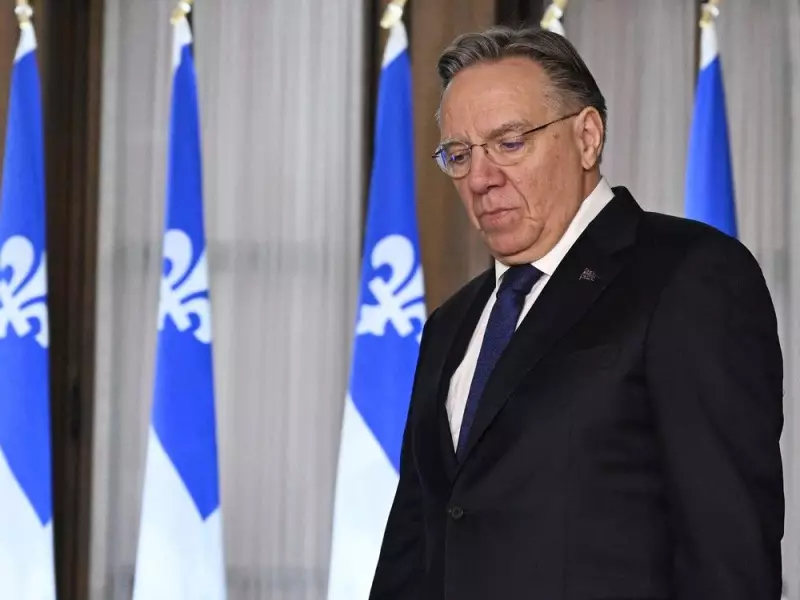
In a move that surprised much of Quebec's political class, Premier François Legault announced his resignation on Wednesday, January 14, 2026. The leader of the Coalition Avenir Québec (CAQ) stated he was stepping down for the good of the party and the province, acknowledging a widespread desire for change among voters.
A Sudden Announcement After Months of Speculation
Rumours had circulated for weeks about Legault's potential departure, given his persistently low standings in public opinion polls. However, the timing of his decision caught many off guard. The premier notified media at 9:45 a.m. of an important announcement, which he delivered at 11 a.m. from the lobby of his office in Quebec City's Honoré-Mercier Building.
"I can see now that many Quebecers want a change, including a change in premier," Legault said during his statement. "For the good of the party and above for the good of Quebec I am announcing today that I will leave my post as premier."

The 68-year-old premier was accompanied by his wife, Isabelle Brais, and his longtime chief of staff, Martin Koskinen. He will remain in office as the MNA for L'Assomption until the party selects a successor.
Legacy and Challenges of the Legault Era
In an 18-minute address where he took no questions, Legault sounded serene as he reflected on his two majority mandates, secured in 2018 and 2022. He listed managing the COVID-19 pandemic, increasing funding for health and education, and improving the economy among his accomplishments.
He also pointed to the adoption of controversial legislation, including Bill 21 on state secularism and Bill 96, which strengthened the Charter of the French Language. He made a pointed plea for his successor to continue protecting the French language in Quebec.
"I profoundly love Quebecers and Quebec," Legault said. "Being premier of Quebec has been the greatest honour of my life."
His decision came despite months of insisting he would stay to fight for a third term in the general election scheduled for October 2026. The announcement followed a series of political setbacks in late 2025, including the resignations of key ministers Christian Dubé and Lionel Carmant. Since the 2022 election, a total of 11 CAQ MNAs have left the party.
A Party in Search of a Leader and a Path Forward
The immediate focus now shifts to who will succeed Legault as leader of the CAQ, a party he founded in 2011 as an alternative to the Liberals and Parti Québécois. There is no obvious successor, as the CAQ was largely built around Legault's personal leadership, which served as glue for a coalition of federalists and pro-independence figures.
Potential insider candidates include Higher Education Minister Sonia LeBel, Justice Minister Simon Jolin-Barrette, Municipal Affairs Minister Geneviève Guilbault, Economy Minister Christine Fréchette, and Environment Minister Bernard Drainville.
Names from outside the party, such as former Mouvement Desjardins CEO Guy Cormier or former ADQ leader and media personality Mario Dumont, have been floated but have publicly expressed no interest. The CAQ's constitution is vague on organizing a leadership race, which would be the first in the party's history.
Whoever takes the helm will inherit significant challenges: a party polling at just 16% in voter intentions according to a Pallas Data poll published the same day as Legault's resignation, an angry labour movement, a strained healthcare system, and a historic deficit. They will have little time to make their mark before the October election.
The Parti Québécois, currently leading in the polls, and other opposition parties offered respectful words for Legault's service, even as they prepare for a transformed political landscape. The post-Legault era for the CAQ begins with considerable uncertainty about its future direction and unity.