Israeli Officials Claim Iran's Supreme Leader Khamenei Killed in Joint Strike
Israeli officials have told The Associated Press that Supreme Leader Ayatollah Ali Khamenei was killed in a major attack on Iran launched by Israel and the United States on Saturday. The stunning development, if confirmed, would represent a seismic shift in Middle Eastern politics and potentially trigger a protracted regional conflict.
No Immediate Confirmation from U.S. or Iran
There was no immediate comment from either the United States or Iran regarding Khamenei's status. The assassination of the second leader of the Islamic Republic, who had no designated successor, would throw Iran's future into profound uncertainty. This comes amid escalating tensions and Iranian threats of retaliation following the coordinated strikes.
In a nationally televised address, Israeli Prime Minister Benjamin Netanyahu stated there were "growing signs" that Khamenei had been killed when Israel struck his compound early Saturday. Shortly after this address, two Israeli officials speaking on condition of anonymity confirmed Israel had verified his death, pending a formal announcement.

Massive Casualties Reported in Retaliatory Strikes
Iranian state media, citing the Red Crescent, reported on Saturday evening that at least 201 people had been killed and more than 700 injured in the attacks. Iran retaliated by firing missiles and drones toward Israel and U.S. military bases across the region, with exchanges of fire continuing into the night.
Some of the initial strikes on Iran appeared to target areas near the offices of the 86-year-old Khamenei. Before the Israeli confirmation, Iranian Foreign Minister Abbas Araghchi told NBC News that, to his knowledge, both Khamenei and President Masoud Pezeshkian were alive. He condemned the attack as "unprovoked, illegal and absolutely illegitimate."
Leadership Vacuum and Regional Escalation
Khamenei succeeded Ayatollah Ruhollah Khomeini, the leader of the 1979 Islamic Revolution. He held the final say on all major policies, leading Iran's clerical establishment and its powerful paramilitary Revolutionary Guard. His death without a clear successor creates a dangerous power vacuum.
As the attack unfolded, former President Donald Trump urged the Iranian public in a video message to "seize control of your destiny" by rising up against the Islamic leadership. He announced "major combat operations" and told Iranians this might be "your only chance for generations" to take over their government.
Widespread Targeting and Military Response
The strikes, occurring during the holy month of Ramadan, mark a dramatic new chapter in U.S. intervention in Iran. This is the second time in eight months that military action has been taken against Iran during negotiations over its nuclear program.
About twelve hours after the attacks began, the U.S. military reported no American casualties and minimal damage at U.S. bases despite facing "hundreds of Iranian missile and drone attacks." U.S. targets in Iran reportedly included:
- Revolutionary Guard command facilities
- Air defence capabilities
- Missile and drone launch sites
- Military airfields
Israel stated that various members of Iran's leadership were targeted, claiming to have killed the commander of the Iranian Revolutionary Guard Corps, the country's defence minister, and the secretary of the Iranian Security Council—a close adviser to Khamenei. Israeli strikes reportedly targeted three locations in Tehran where intelligence indicated top officials were gathered.
International Reaction and Continuing Violence
Democrats in the U.S. criticized the action as being taken without congressional authorization, though the White House stated it had briefed several Republican and Democratic leaders in advance. The UN Security Council scheduled an emergency meeting, while the UN's nuclear watchdog reported closely monitoring developments with "no evidence of radiological impact."

Advocacy group NetBlocks reported Iran was in a "near-total internet blackout" as tensions soared. The trigger for Saturday's strikes appears linked to the unsuccessful latest round of nuclear talks on Thursday, reflecting dramatic changes that have left Iran's leadership in its weakest position since the Islamic Revolution.
Iran responded by launching missiles and drones targeting Israel and striking U.S. military installations in Bahrain, Kuwait, and Qatar. Israel's military said Iran fired "dozens" of missiles, with many intercepted. Emergency services in Israel reported 89 "lightly injured" people.
Civilian Impact and Regional Disruption
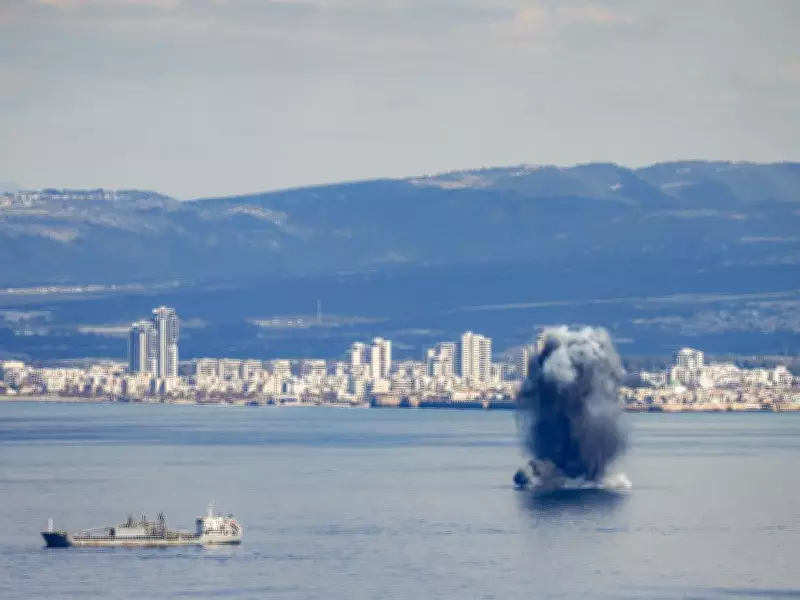
Witnesses reported at least three explosions near the Intelligence Ministry building in northern Tehran on Saturday evening, with air defence systems activating in the area. Israel's military announced new strikes against missile launchers and aerial defence systems in central Iran.
Tragically, in southern Iran, at least 85 people were reported killed when a girls' school was struck, with dozens more wounded according to the local governor on state TV. A U.S. Central Command spokesperson acknowledged reports of the school strike and stated they were being investigated.
Iran's state news agency IRNA reported at least 15 people killed in the southwest, with a sports hall, two residential areas, and a hall near a school being hit. The conflict caused significant regional disruption, with flights across the Middle East affected and air defence fire heard over Dubai. Shrapnel from an Iranian missile attack on the UAE capital killed one person, according to state media.