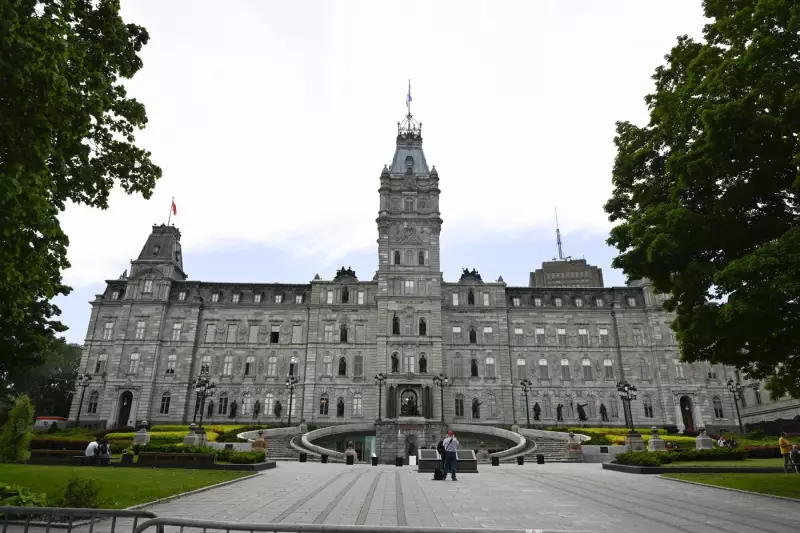
The Quebec National Assembly has officially reconvened for its spring legislative session, with provincial politicians returning to Quebec City against a backdrop of renewed economic uncertainty. The session's opening is shadowed by a potential resurgence of protectionist trade policies from the United States, a key trading partner for the province and Canada.
Economic Headwinds Frame Legislative Agenda
The return of lawmakers to the historic legislature building on January 28, 2025, marks the beginning of a critical period for the provincial government. While a full slate of domestic bills is expected, the spectre of new tariffs threatened by former U.S. President Donald Trump adds a layer of complexity to economic planning. This external pressure comes as Quebec, like the rest of Canada, continues to navigate post-pandemic economic adjustments and evolving labor markets.
Although the specific details of the provincial government's legislative priorities for the session were not fully outlined in the initial report, the context suggests that economic resilience and trade diversification will be prominent themes. The threat of tariffs underscores the province's vulnerability to shifts in U.S. policy and the importance of the cross-border relationship for Quebec's industries.

Domestic Context and Broader Canadian Landscape
The spring session's commencement aligns with a period of significant transition across Canada, as highlighted by a series of other national news items. These include major policy shifts set for the coming year, such as the planned end of remote work options for thousands of public and private sector workers in 2026, indicating a broader move toward re-establishing physical workplaces.
Furthermore, the political and economic climate is being shaped by several other factors, including new federal immigration rules, a spy watchdog's review of AI use by security agencies, and various new provincial laws scheduled to take effect. This national context forms the backdrop against which Quebec's legislators will debate and formulate policy.
Navigating Uncertainty in the Coming Months
The convergence of international trade threats and domestic policy shifts sets the stage for a consequential spring session at the National Assembly. Provincial leaders will be tasked with crafting legislation that not only addresses local needs but also positions Quebec's economy to withstand potential external shocks.
The outcome of this session could have significant implications for business confidence, investment, and job security within the province. All eyes will be on Quebec City as the government reveals its detailed agenda and responds to the evolving economic landscape, both at home and south of the border.