Ontario's 2026 Budget Draws Both Praise and Criticism from Stakeholders
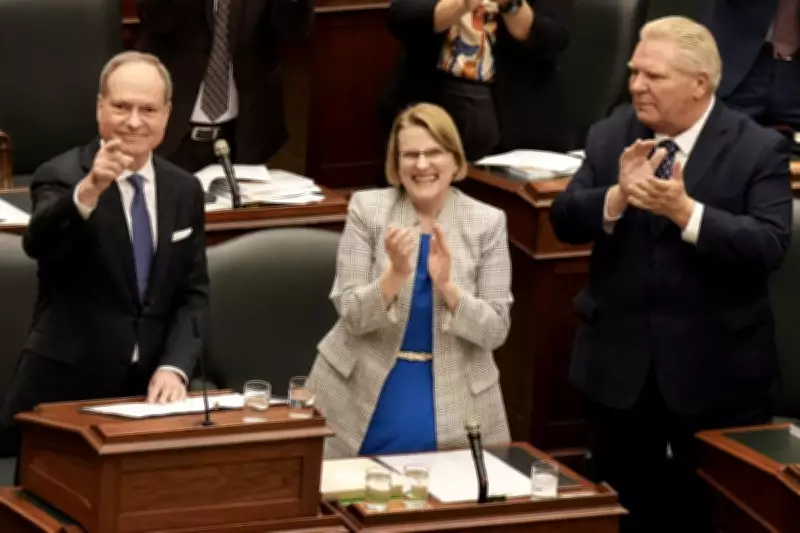
The Progressive Conservative government of Ontario, led by Premier Doug Ford, unveiled its 2026 budget on Thursday, March 26, 2026, sparking a range of reactions from business, community, and professional organizations across the province. Finance Minister Peter Bethlenfalvy presented the fiscal plan in the Ontario legislature, with Premier Ford and Health Minister Sylvia Jones in attendance, marking the government's eighth budget since taking office.
Business Community Welcomes Direction but Seeks Implementation Details
The Toronto Region Board of Trade expressed cautious optimism about the budget's overall trajectory, particularly its continued investment in critical infrastructure, energy, and transit projects. Board president and CEO Giles Gherson acknowledged that Ontario has been making substantial investments in productive directions and that this budget maintains that commitment while advancing conditions for private sector growth.
"The direction is right. Now we need to make sure it reaches the businesses and workers it's designed to serve," Gherson stated in an official release. The board highlighted specific initiatives they had advocated for that appeared in the budget, including the $4-billion "Protect Ontario Account Investment Fund" aimed at fostering investment in key sectors and a widely praised small business tax cut.

However, the board emphasized that the true measure of success will be in the execution. "The measure of this budget will be whether a manufacturer in Scarborough or a scale-up in Brampton can benefit from these programs and drive investment and growth in the months ahead — without a consultant, without months of paperwork, without uncertainty about whether they qualify," their statement elaborated, calling for streamlined access to these programs for local businesses.
Healthcare Investments Praised Alongside Criticism of Safe Consumption Site Cuts
The Registered Nurses' Association of Ontario (RNAO) offered a mixed assessment of the healthcare provisions in the budget. The organization welcomed increased funding for primary care and a $1-billion boost for home care services, as well as a $124 million investment to expand nursing education seats across the province's institutions.
RNAO president Lhamo Dolkar noted that these measures could help alleviate the ongoing nursing shortage in Ontario. However, the association expressed strong disapproval of the government's decision to cut funding for provincially supported supervised drug consumption sites (SCS).
"It is an ideological decision that leaves people to fend for themselves," Dolkar asserted. "Ontario has a toxic drug crisis and SCS sites are essential health services for people who need help with substance use, no different than people who have cancer and require chemotherapy." The RNAO characterized this move as abandoning vulnerable populations during a public health crisis.
Real Estate Association Applauds Home Affordability Measures
On the housing front, the Ontario Real Estate Association (OREA) praised the government's initiative to expand eligibility for HST exemptions on new home purchases. OREA president Kim Fairley described this as a concrete step toward reducing the cost of home ownership for Ontario families.
"This proposal, pledged in partnership with the federal government, will help move the needle for those on the sidelines and help more Ontario families afford a home," Fairley commented. She added that creating new pathways to home ownership represents significant progress in addressing affordability challenges.
OREA also expressed satisfaction with the budget's commitment to collaborate with federal authorities to find solutions for reducing development charges (DCs), which have been identified as a major contributor to rising housing costs. The association urged the provincial government to continue prioritizing policies that have the most substantial impact on housing affordability.

The 2026 Ontario budget reflects the Ford government's focus on economic growth and key industries while navigating ongoing uncertainties. As various stakeholders digest the details, the implementation of these measures will be closely watched to determine their effectiveness in serving both the business community and the broader population of Ontario.