New Zealand has joined a growing list of democratic countries pledging to cut public-service jobs, as liberal democracies worldwide grapple with post-pandemic fiscal pressures. The small island nation of around five million residents will soon have nearly 9,000 fewer public servants after the government announced in May that it would be slashing the bureaucracy to save money.
Global trend of public-sector reductions
New Zealand is not alone in this effort. Australia's federal government is seeking voluntary redundancies from thousands of public servants. The U.K. government is slashing department administration budgets, while major opposition parties are calling for more drastic measures. Canada is well into the process of shedding almost 30,000 public service jobs over the next several years.
“Countries are under similar pressures,” said Lori Turnbull, professor of political science at Dalhousie University in Halifax. “The economic crisis is forcing governments to say: ‘We are reducing the cost in our own house.’” Many countries, Turnbull said, are being pressed to reduce the cost of government services in the wake of hiring splurges and rampant spending during the COVID-19 pandemic. Governments are responding by cutting public-service jobs to varying degrees, at varying speeds and to different political ends.

Canada's public service growth and cuts
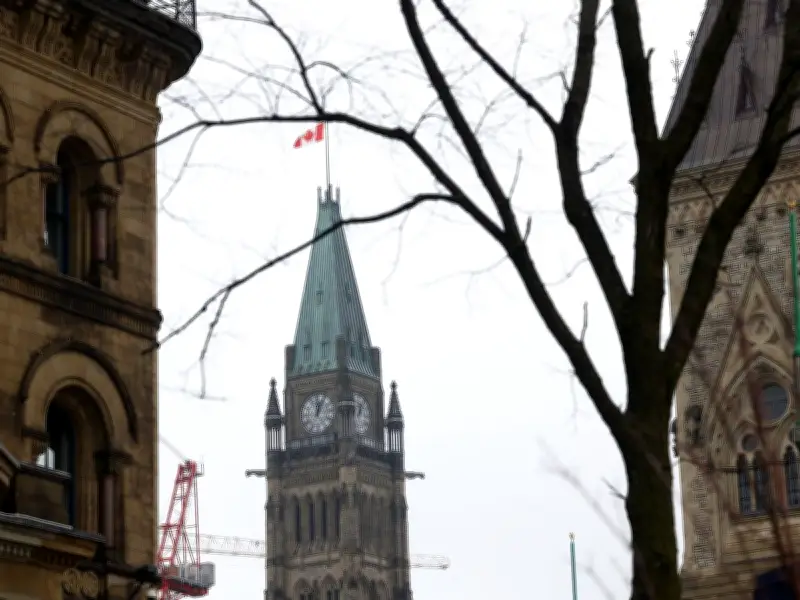
Like New Zealand and the U.K., Canada's public service grew significantly during the pandemic, increasing from a population of around 285,000 in 2019 to about 365,000 in 2024. The Trudeau government has since announced plans to reduce the workforce by roughly 30,000 positions over the next several years, aiming to return to pre-pandemic levels.
New Zealand's approach: Reversing 'largesse'
In a pre-budget speech last week, New Zealand’s finance minister Nicola Willis announced a government plan to slash thousands of public-service jobs. The plan would cut about 8,700 positions — or around 14 per cent of the country’s public service — for an estimated $2.4 billion in savings. The cuts, according to Willis, would correct for a “period of largesse under the last government,” a left-of-centre coalition led by the Labour Party’s Jacinda Ardern.
Karl Lofgren, a public administration professor at the Victoria University of Wellington, called the cuts “significant,” but said the timeline would help soften the blow. “It’s not immediate,” he said. “It’s not going to axe lots of jobs here and now.” New Zealand is currently governed by a three-party coalition that includes the centre-right National Party, the libertarian ACT Party and the nationalist NZ First. “Three really strange bed partners,” Lofgren said. “This was just a practical, pragmatic solution.” All three, however, are united by a desire to cut taxes, which Lofgren said may help explain their push to pare back spending. Another explanation, he added, is the state of the country’s finances following a pandemic spending boom during which the government was “splashing up money.” “Once it stopped, we were almost back in the financial situation like in the mid-1980s,” Lofgren said, referring to a severe fiscal crisis that caused the country to drastically cut back its public sector.
Canada's approach, while less drastic in percentage terms, follows a similar trajectory. The federal government has focused on reducing external consultants and attrition rather than mass layoffs, but the overall direction mirrors the global trend toward smaller government.