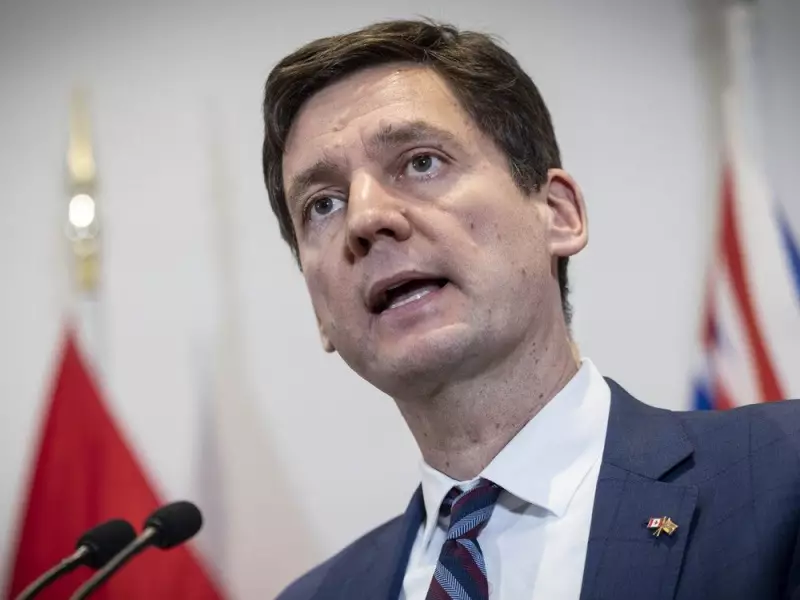
In a year-end interview that has raised significant concerns, British Columbia Premier David Eby made a startling admission regarding one of the province's most critical challenges. When pressed to specify the number of Aboriginal title claims currently filed in B.C. courts, the Premier declined to give a figure and instead highlighted a fundamental government dilemma.
"The challenge, I guess, as I would put it, is no one has really nailed how to move forward on this in order to provide both the certainty to the business community but also address reconciliation," Eby stated in December 2025.
A Leadership Void on a Consequential File
For political observers and industry leaders, the implication of Eby's comment was unmistakable. Trevor Halford, the interim leader of the Official Opposition, characterized it as a clear sign that the Premier has no viable path forward on the issue most consequential to shaping B.C.'s future. The admission suggests the government's reconciliation agenda is currently at odds with fostering a stable, predictable climate for investment and business operations.

Halford warns that without an immediate course correction, this leadership gap could have devastating effects on the province. The core risk is the creation of a new reality where privately held land title is subject to profound legal uncertainty for everyone except Indigenous nations. This strikes at the heart of property rights and economic development.
Eby's Central Role in DRIPA and Contradictory Outcomes
The roots of the current crisis, according to analysis, are tied directly to Eby's previous role as Attorney General. He was the principal architect and promoter of the Declaration on the Rights of Indigenous Peoples Act (DRIPA). During its legislative passage, Eby repeatedly framed it as mere "framework legislation" that would not alter land title or supersede existing laws.
That assurance was directly contradicted by a landmark B.C. Supreme Court decision in August 2025 concerning the Cowichan Tribes. The court ruled that Crown grants of fee simple interest—the legal bedrock of most private land ownership—"unjustifiably infringe the Cowichan’s Aboriginal title." This ruling has sent shockwaves through the business and property-owning community, validating earlier warnings.
Warnings Ignored and the Road Ahead
The potential consequences were foreseen. During the 2024 election campaign leaders' debate, the Conservative Party of B.C. cautioned against including land title and infrastructure within DRIPA's scope, highlighting how Indigenous law could subsequently apply to private property. In response, Premier Eby at the time asserted that "nothing could be further from the truth" regarding the notion of land being taken from British Columbians.
Today, with the Premier openly acknowledging he has no solution to balance these competing imperatives, the province faces a period of heightened uncertainty. The challenge now lies in finding a pragmatic path that genuinely advances reconciliation while providing the stability and confidence necessary for B.C.'s economy and residents to thrive. The absence of such a plan, as conceded by the Premier himself, represents a significant policy and leadership failure with wide-reaching implications.