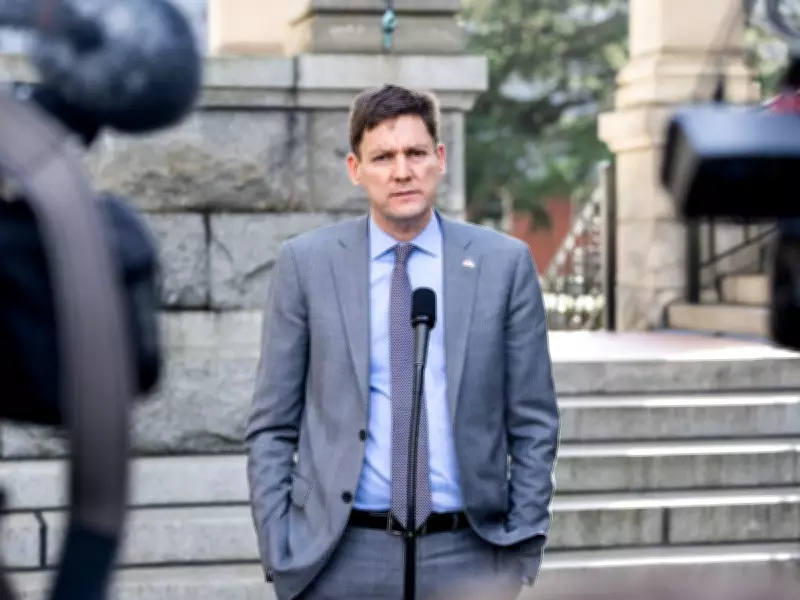
Premier Eby Reverses Course on Declaration Act Amendments
In a significant policy reversal, British Columbia Premier David Eby has abandoned plans to amend the Declaration on the Rights of Indigenous Peoples Act (DRIPA) during the current legislative session. Instead, the premier announced on Thursday that his government will seek Indigenous support for temporarily suspending specific sections of the Act that were central to a recent Court of Appeal decision.
Facing Overwhelming Indigenous Opposition
The premier's change in direction comes just one day after he publicly committed to amending the legislation. Eby's abrupt pivot follows what sources describe as overwhelming and intensifying opposition from Indigenous leadership across the province. Indigenous leaders had made their position clear through both public statements and direct communications to the premier's office, expressing strong objections to any changes to legislation they helped develop and strongly support.
"To say that Indigenous leadership is enthusiastic about any change would be a total misstatement," Eby acknowledged during a press conference on Wednesday, even as he maintained his commitment to amendments at that time. "They are not. And so it has been a challenging conversation."

The Court Decision That Sparked the Controversy
The controversy stems from a recent British Columbia Court of Appeal ruling where two of three judges determined that the province's mineral claims staking system conflicts with the United Nations Declaration on the Rights of Indigenous Peoples. The judges specifically cited provisions in the Declaration Act and related Interpretation Act, concluding that "properly interpreted, the Declaration Act incorporates the UN declaration into the law of B.C. with immediate legal effect."
For several weeks prior to Thursday's announcement, the New Democratic Party government had been circulating proposals to Indigenous leaders that would have modified the most contentious provisions of both acts. These proposals received what insiders describe as zero support from Indigenous communities, who value the legislation precisely because of how courts have already utilized it to advance Indigenous rights.
The Proposed Temporary Suspension
Under the new approach announced Thursday afternoon at the legislature, Eby proposed what he described as "the minimum necessary" suspension clauses to address legal concerns. The premier explained that these temporary measures would eliminate the risk that other courts might overturn additional British Columbia laws using similar reasoning as the mineral claims decision.
The suspension would remain in effect for up to three years, according to Eby's announcement. This timeframe would allow the province to complete its appeal of the mineral claims decision to the Supreme Court of Canada, assuming the high court agrees to hear the case. Notably, a three-year suspension would also ensure the issue does not resurface politically before the next provincial election scheduled for October 2027.
Political Implications and Next Steps
The premier's announcement caught many observers by surprise, given his firm commitment to amendments just 24 hours earlier. Eby had previously described amending the Declaration Act as "non-negotiable for the provincial government" in response to the court decision.
The temporary suspension approach represents a significant compromise that acknowledges both the legal concerns raised by the Court of Appeal decision and the political reality of Indigenous opposition to substantive changes. The government now faces the challenge of securing Indigenous support for the suspension proposal while managing the legal implications of the court's interpretation of DRIPA.
This development highlights the ongoing tension between provincial governance priorities and Indigenous rights recognition in British Columbia, with the Declaration Act serving as a focal point for these complex negotiations. The outcome will have significant implications for resource development, legal interpretation, and government-Indigenous relations in the province for years to come.