Edmonton city council has delayed a decision on establishing special zoning classifications for the Rossdale Flats area, pushing the public hearing to July 6 after a heated meeting where concerns over Indigenous consultation and sacred burial grounds dominated the discussion.
Council Defers Vote for Further Indigenous Engagement
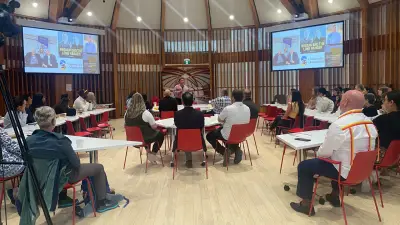
During a Tuesday meeting, council voted to refer the River Crossing development plan to a July 6 public hearing, emphasizing the need to highlight the extent of consultation with Indigenous groups connected to the area and the surrounding North Saskatchewan River Valley. A separate report on Indigenous Engagement within the North Saskatchewan River Area Redevelopment Plan will be heard at the July 2 Urban Planning Committee. Mayor Andrew Knack invited all concerned stakeholders to attend, acknowledging that the public hearing had veered into broader governance questions about development on Rossdale.
“People were using the public hearing to address what is actually a separate issue around governance about who should be allowed to build on Rossdale — if anyone,” Knack said. “I’ve heard quite clearly from groups like the Confederacy of Treaty 6 and Enoch (Cree Nation) that if anything were to happen there, the expectation is they would be heavily involved in that work because of the burial grounds and the sacredness of that land and what that historical connection means.”

Disruption in Chambers
Following the decision, two individuals rose from the audience shouting “Sacred Burial Ground” and “People in the ground are watching you!” before being escorted out of chambers by security. The incident underscored the emotional intensity surrounding the redevelopment of the historic area.
Proposed Zoning Classifications
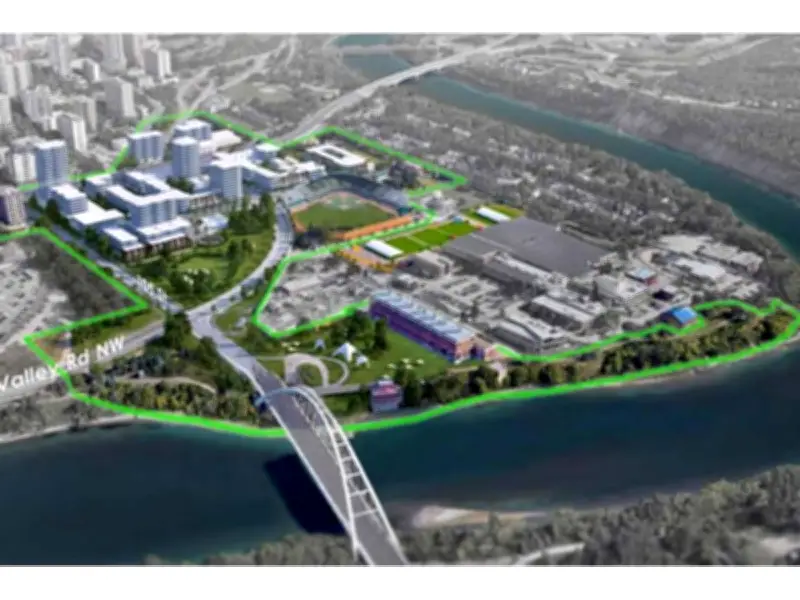
Administration had proposed two new zoning classifications for the River Crossing area: the River Crossing Medium Scale Residential Zone (RCRM) and the River Crossing Large Scale Residential Zone (RCRL). These would impose requirements on developers to ensure views of major landmarks such as the Legislature Grounds, the Rossdale Power Plant, the Walterdale Bridge, and the River Valley are not obstructed. The rules would also regulate tower height and orientation to prevent shadows from impacting existing residences and pathways.
No development is currently planned, but any proposals under the new zones would face specific limits: a maximum building length of 80 metres, minimum three-metre setbacks from a street if above 24 metres, a maximum tower floor plate of 850 square metres, and a minimum 25 metres between towers. Developers would also be responsible for upgrades to the area’s fire suppression capacity.
Flood Risk and Infrastructure
Concerns about flooding were raised, particularly as EPCOR works on upgrades to the Rossdale Water Treatment Plant to mitigate potential impacts from a once-a-century flood. However, administration noted that the proposed development site is set back from the most susceptible areas, with only a small portion located within a zone considered at risk during a once-every-500-years flood event. Phase 1 of the redevelopment plan would include constructing a new road at 102 Street between 96 Avenue and 97 Avenue, as well as a new intersection with traffic signals.
Indigenous Consultation Efforts
Administration told council it had sent emails to the governments of Treaty 6, 7, and 8, as well as the local Metis Government and Lac Ste. Anne Métis Community Association twice since November but did not receive any feedback. An archaeological assessment by Turtle Island Cultural Resource Management found a strong chance that human remains could be uncovered by excavation and recommended both site-specific development plans and more consultation with Indigenous stakeholders for each development.