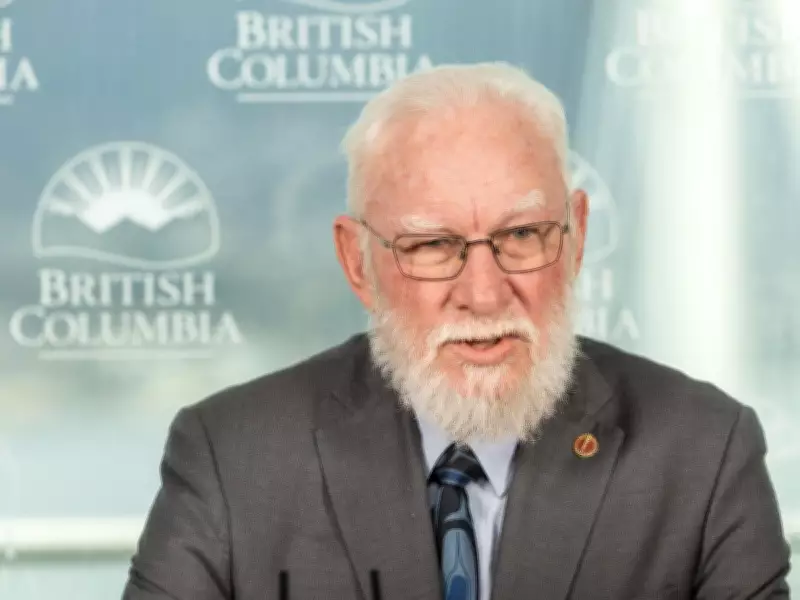
Former Vancouver Mayor Advocates for Streamlined Services in Downtown Eastside
Larry Campbell, the former mayor of Vancouver and current special adviser to the province on issues facing British Columbia's poorest neighborhood, has spent the last six months engaging with aid workers and residents in the Downtown Eastside. His contract has been extended by another six months, allowing him to continue his critical work in addressing the area's complex challenges.
Focus on Coordination Rather Than Funding Changes
Campbell emphasized on Tuesday that his approach is not about increasing or decreasing funding to the Downtown Eastside, but rather about ensuring that existing resources are spent efficiently and produce tangible results. "I don't think you can buy your way out of this," he stated during a press conference. "I'd like to find some way of coordinating the money, the organizations, to the point where there's cooperation."
He made it clear that his goal is not to reduce financial support for the community. "I want to make this absolutely clear, I don't want to take one cent away from what's going to the Downtown Eastside. This is not about saving money. This is about taxpayers' money going in to help a community that's in dire straits, and being able to see what the results are."

Contract Extension and Financial Details
Campbell was originally appointed in September with a six-month contract worth $92,000, plus an additional $10,000 for expenses. With the extension, his total compensation will reach $204,000, including $20,000 for expenses. During his initial term, he has been meeting extensively with community advocates and residents to gather insights on addressing the interlocking crises of homelessness, addiction, mental health challenges, and toxic drugs.
Worsening Conditions and Historical Context
The former mayor, who served as chief coroner from 1996 to 2000 and as mayor from 2002 to 2005, noted that the situation in the Downtown Eastside has deteriorated significantly since his earlier tenure. He attributed this decline to several factors, including the rise of fentanyl, the closure of the Riverview psychiatric hospital, and the halt in rental housing construction during the 1990s.
"I was used to heroin, and this is not heroin," Campbell remarked about fentanyl. "You do not get that brain damage, you do not get that physical damage from heroin, and you don't get the overdose, because with heroin, the overdose is caused by the quantity of the drug. With what we're seeing here, it's not necessarily the quality or the quantity of the drug, it's the mix."
Call for Better Collaboration and Housing Solutions
Campbell identified numerous organizations operating in the Downtown Eastside and suggested that there are significant opportunities for improved collaboration and reduced service overlap. He also criticized the current state of many single-room occupancy (SRO) buildings, advocating for better housing solutions, particularly for Indigenous women who face safety concerns in these facilities.
"His focus has been bringing the right people together," said Housing Minister Christine Boyle in a statement. "Now it is time for those partners to take action and create impactful and long-lasting solutions for this community." Boyle added that Campbell's work has "laid the groundwork for some upcoming next steps" and expressed anticipation for the solutions his continued efforts will yield.
As Campbell continues his advisory role, his emphasis remains on creating a more coordinated, efficient approach to service delivery in one of Canada's most challenged urban neighborhoods, aiming to transform how support is provided to those in need.