The British Columbia government is expanding a $16-million program aimed at chronic offenders responsible for the majority of property crime in the province, drawing cautious optimism from community safety groups but skepticism from some business owners who have experienced frequent vandalism.
Program expansion and funding
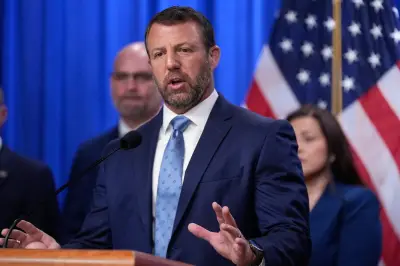
Public Safety Minister Nina Krieger announced the expansion, which will establish teams of prosecutors, corrections and probation officers, and mental health professionals to monitor individuals repeatedly charged with offenses such as breaking and entering, window smashing, and vandalism. The new hubs will be located in Chilliwack, Courtenay, Dawson Creek, Langley, Maple Ridge, Penticton, Surrey, Victoria, and two in Vancouver. Existing hubs in Nanaimo, Kelowna, and Nelson will continue operations.
The program is modeled after a pilot initiative launched three years ago, which Krieger said has proven successful in reducing violent crime in the communities where it operates. The $16 million in funding will support the expansion to 12 additional communities.

Business owner concerns
John Neate Jr., founder and CEO of JJ Bean, expressed doubts about the program's ability to prevent the frequent damage his coffee shops endure. He noted that windows are often shattered and bathrooms vandalized, typically after hours or when the perpetrator has already fled the scene. “I just don’t know how they’re gonna capture these people, even when you get them on video or camera, they never seem to. I’ve never ever heard of anybody being arrested, even though they have in the past asked us for cameras,” Neate said.
He added that breaking and entering might have a better chance of leading to an arrest due to alarms, but random window smashing is harder to stop. “The problem with breaking the windows is if they’re doing it just out of pure mental anxiety from overdose, or whatever, they throw a rock and leave.” Neate suggested that undercover police or security guards might be needed to intervene in real time.
Program mechanics and pilot success
The program brings together police, prosecutors, and corrections to ensure a stronger police response and better coordination within the justice system. Probation officers and police will maintain frequent contact with chronic offenders, while mental health professionals and other experts connect them with housing, addiction supports, and mental health care. Information sharing among police, probation officers, and correctional officials aims to enable swift reactions to any crime.
Nanaimo Mayor Leonard Krog reported positive feedback from his city’s RCMP detachment, indicating that the pilot was effective in getting people off the streets and into supportive programs. “This model essentially brings together police, prosecutors, and corrections to ensure that there’s a stronger police response, that we’re strengthening justice system co-ordination and creating opportunities for individuals that are offending to connect with supports,” said Krieger.