Alberta Independence Vote Gains Momentum as UCP Insider Says 'People Want a Say'
Alberta could be headed for a historic vote on independence this October, with United Conservative Party insiders revealing growing public demand for a direct say on the province's future within Canada. The potential referendum promises to be a contentious political battle that will capture national attention.
UCP House Leader Voices Albertans' Frustration
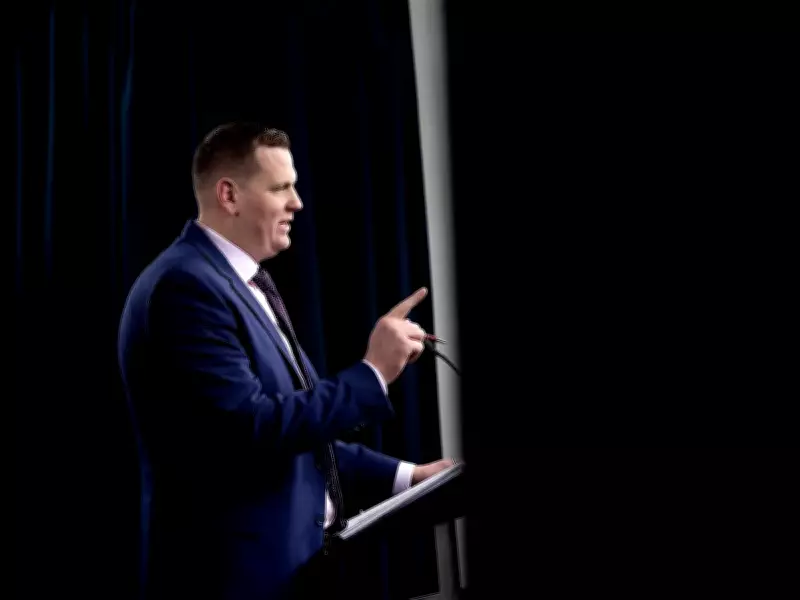
Joseph Schow, the legislature quarterback for Premier Danielle Smith and the UCP government, has emerged as a vocal representative of Albertan discontent. "People in Alberta are rightfully upset by the way they've been treated by the federal government for decades," Schow stated in recent comments.
He elaborated on the depth of this frustration: "After 10 years of Justin Trudeau it's come to a head. People are angry and they want to be heard. They are sick and tired of how Ottawa has treated us. They are ticked off and they want a say."

Historical Context and Current Sentiment
Schow recalled a childhood memory that illustrates longstanding western alienation: "When I was growing up every time I walked into my grandfather's house I would see a well-worn cartoon from bygone days. It is the cartoon of a cow where the West feeds the cow and the East milks it." He added pointedly, "Not much has changed."
This sentiment has translated into concrete political action. Premier Danielle Smith established a petition process that could trigger a referendum if enough signatures are gathered. Supporters of Alberta independence claim they have already met this threshold, making an October vote increasingly probable.
Mixed Motivations Behind Independence Push
The movement for an independence vote encompasses diverse perspectives:
- Separatist advocates who genuinely want Alberta to leave Canada
- Protest voters seeking to send Ottawa a strong message about western alienation
- Process supporters who value the opportunity for public debate regardless of their final position
Schow noted that many constituents in his southern Alberta riding are keeping their positions "closer to the chest," but emphasized: "They like the fact there's a process in place where they get to feel heard through direct democracy. They have not had that for a very long time."
Political Reactions and Counter-Movements
The Alberta NDP and their leader Naheed Nenshi have launched strong opposition to the independence movement, accusing Premier Smith of "pandering to separatists." Meanwhile, Smith has reiterated that her government will advocate for Alberta remaining a Canadian province while addressing what she calls the "legitimate grievances of Albertans."
Recent polling indicates a majority of Albertans still oppose separation, suggesting the referendum could become more about expressing frustration than actually achieving independence. However, the mere possibility of such a vote represents a significant escalation in federal-provincial tensions that have simmered for generations.
As Alberta potentially approaches this constitutional crossroads, the debate promises to expose deep divisions not only between Alberta and Ottawa, but within the province itself. The October vote, if it proceeds, will test the strength of Canadian federalism and the limits of western alienation in one of the country's most resource-rich provinces.