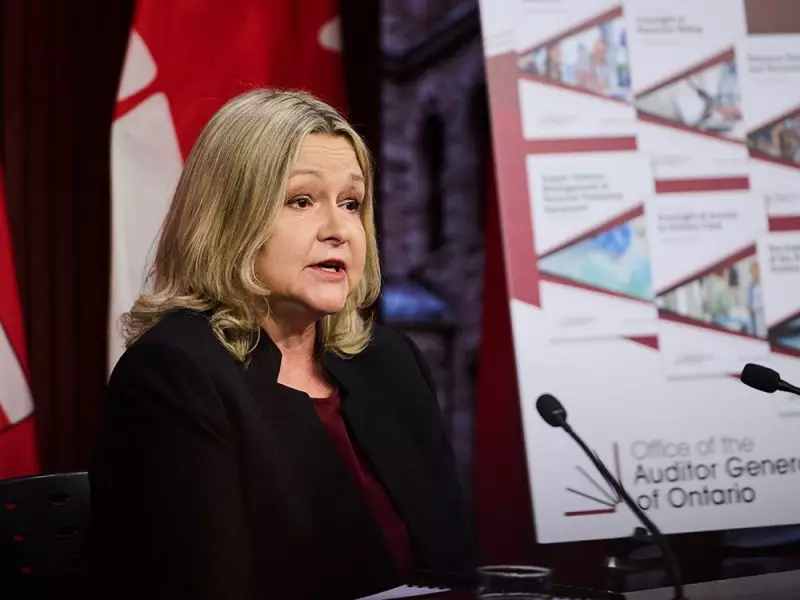
Ontario's Auditor General, Shelley Spence, has delivered a critique of the province's health care system that columnist Randall Denley calls "weak and outdated." In a recent opinion piece, Denley contends that Spence's annual report, released in December 2025, fails to adequately acknowledge the Ford government's tangible progress, particularly in expanding access to family doctors and medical training.
Auditor General's Focus on Process Over Progress
Spence's report, which dedicated significant space to three separate health care audits, examined access to primary care, training for new family doctors, and OHIP billing practices. While Denley acknowledges these as important subjects, he argues the overall assessment offers "too much fussing about bureaucratic processes and too little acknowledgement of the real progress." He asserts that only on the matter of OHIP billing irregularities did the Auditor General present substantial findings.
Substantial Gains in Primary Care Ignored, Says Denley
Denley takes specific issue with the report's handling of primary care expansion, which he identifies as the Progressive Conservative government's most significant health-care challenge. He points out that Spence's report defines the problem using data from March 2024, when approximately two million Ontarians lacked a family doctor.

Denley highlights that the landscape has changed since then. The provincial government committed $2.1 billion earlier in 2025 with the goal of connecting every Ontarian to primary care by 2029. The early results, according to Denley, have been impressive. Through the expansion of existing health-care teams and the creation of new ones, the government has connected 400,000 Ontarians to primary care in 2025, with a further 300,000 to be added through an expansion that began in the fall. This achievement of connecting 700,000 people, Denley argues, receives barely a mention in the Auditor General's assessment.
He also counters Spence's claim about a lack of a coordinated and equitable approach to recruiting doctors, noting that the new health teams are strategically located in the province's least-served areas. Regarding a provincial waiting list for doctors, Denley states the government's position is that the 235,000 people on the list at the start of 2025 will all be assigned a doctor by the spring of 2026.
Medical School Expansion and OHIP Billing Scrutiny
Another area of progress omitted, in Denley's view, is the expansion of medical training. He notes that Ontario is adding 340 undergraduate and 551 postgraduate seats at medical schools, with most new spots dedicated to family medicine. This includes the expansion of existing schools and the addition of two new ones, one already open.
On the issue that garnered significant media attention—OHIP billing—Denley does not dispute the Auditor General's findings of irregularities. Spence's report highlighted instances of some doctors billing for work 24 hours a day, 365 days a year, a practice that media reports suggested could be costing taxpayers up to $1 billion annually. While acknowledging this as the report's most substantive part, Denley maintains the overall picture presented by the Auditor General is unfairly negative, focusing on administrative shortcomings while downplaying measurable results.
In conclusion, Denley's rebuttal frames the Auditor General's 2025 report as a document overly concerned with process, arguing it misses the forest for the trees by not giving due weight to the provincial government's concrete steps to address Ontario's health care staffing and access crises.