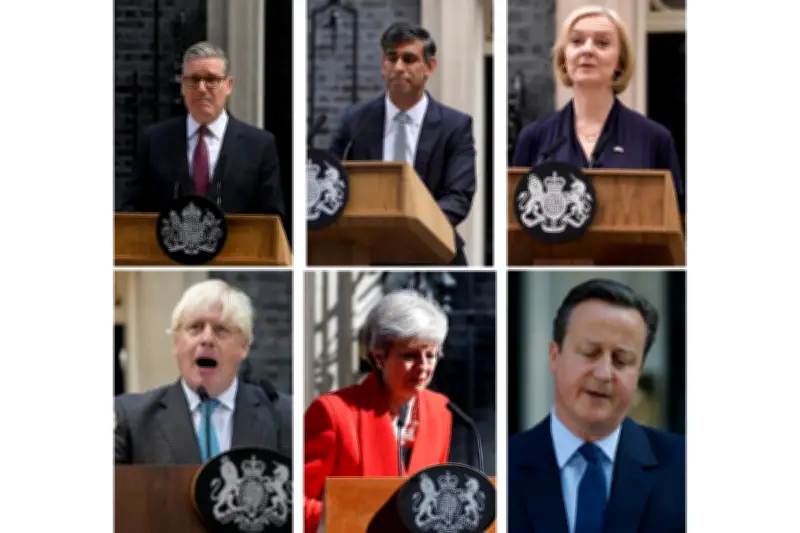
The United Kingdom has experienced a remarkable period of political turnover, with six different prime ministers holding office over the past decade. Starting with David Cameron in 2016 and continuing through Theresa May, Boris Johnson, Liz Truss, Rishi Sunak, and the current leader Keir Starmer, the rapid succession highlights deep instability in British politics.
From Cameron to May: The Brexit Trigger
David Cameron resigned on June 24, 2016, immediately after the Brexit referendum, in which 51.9% of voters chose to leave the European Union. He was succeeded by Theresa May, who took office on July 13, 2016. May's tenure was dominated by Brexit negotiations, but she resigned on June 7, 2019, after failing to get her withdrawal agreement through Parliament three times.
Johnson's Turbulent Tenure
Boris Johnson became prime minister on July 24, 2019, promising to deliver Brexit. He won a landslide election in December 2019 and completed the UK's departure from the EU on January 31, 2020. However, his premiership was marred by scandals including Partygate, where lockdown-breaking gatherings at Downing Street led to police fines. Johnson resigned on September 6, 2022, after a mass exodus of ministers.

The Shortest Premiership: Liz Truss
Liz Truss won the Conservative leadership election and became prime minister on September 6, 2022. Her mini-budget on September 23, which included £45 billion in unfunded tax cuts, caused financial turmoil, crashing the pound and forcing Bank of England intervention. She resigned on October 25, 2022, after just 49 days in office, the shortest tenure in British history.
Sunak's Steady but Brief Term
Rishi Sunak took over on October 25, 2022, and stabilized the economy with a more cautious fiscal approach. He led the Conservatives to a heavy defeat in the July 2024 general election, losing 251 seats. Sunak resigned on July 5, 2024, after Labour won a landslide majority of 174 seats.
Starmer's Current Leadership
Keir Starmer became prime minister on July 5, 2024, leading the Labour Party to power after 14 years of Conservative rule. His government has focused on economic growth, public service reform, and strengthening ties with the EU. As of June 2026, Starmer remains in office, facing challenges including a sluggish economy and ongoing strikes.
Impact on Governance and Public Trust
This rapid turnover has eroded public confidence in political institutions. According to a June 2026 Ipsos poll, only 22% of Britons trust politicians to tell the truth, down from 38% in 2016. The constant leadership changes have also hindered long-term policy planning, particularly on issues like healthcare, housing, and climate change.
Political analysts attribute the instability to deep divisions within the Conservative Party over Brexit and austerity, as well as a fragmented media landscape and the rise of social media-driven politics. The UK's first-past-the-post electoral system has also contributed, as it can produce strong majorities that mask underlying volatility.
Historical Context and Future Outlook
Before 2016, the UK had only four prime ministers in 25 years: Margaret Thatcher (1979-1990), John Major (1990-1997), Tony Blair (1997-2007), and Gordon Brown (2007-2010). The current pace is unprecedented in modern British history. Some experts argue that electoral reform, such as proportional representation, could reduce instability, but major parties resist change.
As the UK approaches the next general election, due by January 2030, the question remains whether Starmer can break the cycle or if another rapid succession awaits.