The City of Windsor has issued demolition orders for 17 derelict houses owned by the Ambassador Bridge company, a move that has delighted area residents but does not end the ongoing dispute between the municipality and the Canadian Transit Company (CTC).
Residents Celebrate Long-Awaited Action
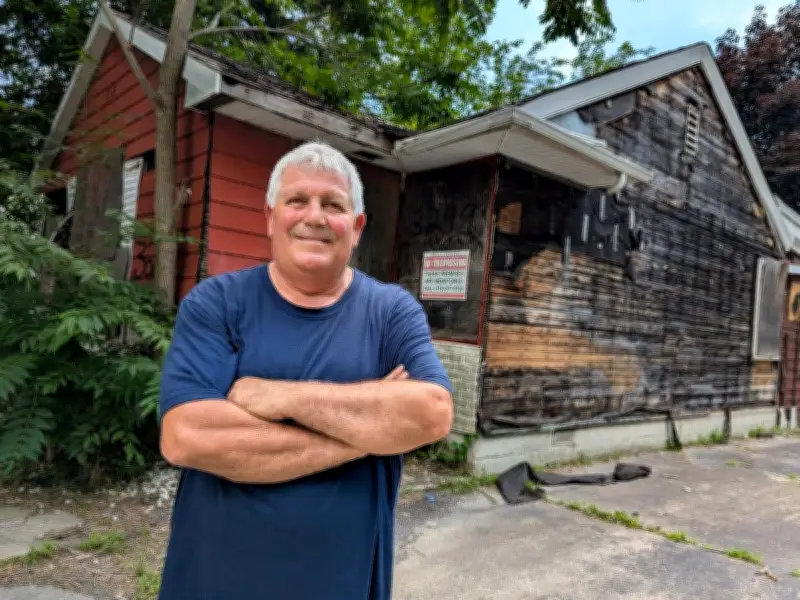
Wayne Boismier, a 68-year-old resident of Edison Street for 52 years, expressed relief. “It’s about time. It’ll be a big relief to see these come down,” he said. His well-maintained home sits across from four boarded-up houses with collapsing roofs deemed too dangerous to remain. “The neighbourhood used to be full of people who took care of their houses,” Boismier added. “Why don’t they just tear all those houses down?”
The demolition orders target properties that have become symbols of decades of blight in the historic Sandwich Town area. Residents have long complained about the deteriorating state of homes owned by the bridge company.

Bridge Company Calls Approval Insufficient
The Canadian Transit Company, which owns and operates the Canadian half of the Ambassador Bridge, welcomed the demolition of some properties but criticized the limited scope. In a written statement, the company described the approval as “insufficient.” Once the 17 homes are demolished, approximately 20 boarded-up houses will remain in the neighbourhood, along with more than 100 empty lots—most of which once had homes—owned by the CTC.
The company has been pushing to tear down all its west-end properties to make way for a new secondary truck inspection plaza. However, city council remains opposed, citing a 2007 bylaw designed to prevent further destruction of the historic area.
Political and Historical Context
Mayor Drew Dilkens, who represented Ward 1 when the Sandwich Demolition Control Bylaw was enacted in 2007, criticized the company’s approach. “You’re dealing with a company that really doesn’t care about the neighbourhoods in which they operate, which is a real sad state of affairs,” Dilkens told the Windsor Star. He recalled that council hoped the bridge company would maintain and rent out its properties, but that never materialized. “What you see with the Ambassador Bridge is that they just really don’t care,” he said. “It’s all about blockbusting. It’s all about buying up homes, not investing in them, and letting them fall into a state of disrepair.”
The standoff is set against the backdrop of delays in opening the publicly owned Gordie Howe International Bridge, the first direct competitor to the Ambassador Bridge across the Detroit River. In 2017, the CTC received federal cabinet approval to demolish homes along Indian Road for a new bridge span, overriding the city’s bylaw. That permit has since expired, and the company’s website states it is not planning a replacement bridge. However, the CTC continues to pursue a secondary truck inspection plaza off Huron Church Road—a condition tied to the original second-span approval. The current inspection plaza is located two kilometres off Malden Road.
What Remains
Despite the demolition orders, the conflict is far from resolved. The city maintains its position that further demolitions would harm the neighbourhood, while the company argues that more properties need to be cleared for its expansion plans. For now, residents like Boismier will see 17 eyesores removed, but the broader battle over the future of Sandwich Town continues.