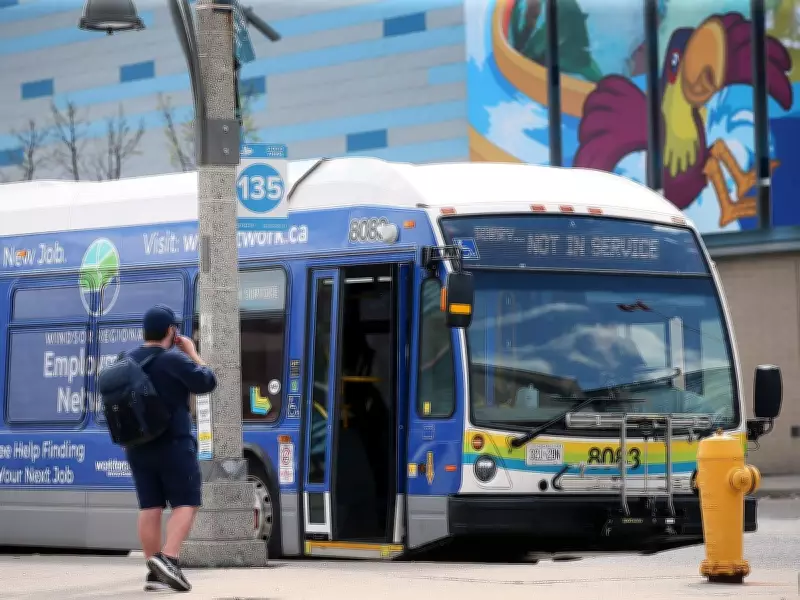
Windsor Dissolves Transit Board Amid $8M Deficit and School Board Backlash
In a significant governance shift, Windsor city council has voted to eliminate the Transit Windsor board of directors following revelations of an $8-million deficit in 2025. The decision comes after what officials described as 'startling' sick day usage and a substantial drop in post-secondary student ridership that severely impacted the transit system's finances.
Council's Controversial Decision
Starting October 18, Transit Windsor will transition from an independent board-governed entity to a city department directly overseen by the full city council. The closed-door decision reportedly divided council members, with Ward 9 Councillor Kieran McKenzie, who chaired the dissolving board, expressing strong reservations about the move.
"I think the board has a role to play," McKenzie stated. "My vote was to continue with the status quo." He warned that the change represents "a step backward from a governance standpoint and from an accountability standpoint."

Under the previous structure, the Transit Windsor executive director reported monthly to the board at public meetings where residents could participate as delegates. While council will still receive some transit reporting through its environment, transportation, and public safety standing committee, McKenzie emphasized that "you're just not going to get that direct month-to-month scrutiny on the service."
Roots of the Financial Crisis
The $8-million deficit that prompted this dramatic action stemmed from multiple factors that converged in 2025:
- Revenue shortfalls totaling $5.66 million, primarily driven by a 19% drop in post-secondary transit pass usage from 2024 to 2025, with an additional 18% decline projected for 2026
- Reduced provincial gas tax revenue that fell $1.18 million below expectations
- Changes to Ontario Works that decreased bus pass funding for eligible riders
- Operating expenses exceeding budget by nearly $2.3 million
Jelena Payne, deputy city CAO and commissioner of economic development, highlighted what she called "startling" statistics regarding employee sick days. Nearly 280 Transit Windsor employees took at least eight-and-a-half paid medical leave days in 2025.
"We were surprised," Payne told council. "Would we expect staff to take sick days? Absolutely. However, I don't believe the city could have anticipated the number of sick days Transit Windsor staff took last year. The statistics tell me that there was rampant sickness in Transit Windsor, which I don't believe there was."
International Student Impact and Cost Overruns
The revenue decline was significantly exacerbated by Ottawa's cap on international student permits, which directly reduced transit pass usage among this demographic. This federal policy change created an unexpected financial burden for the municipal transit system.
On the expenditure side, the $2.3 million in operating overruns included:
- $440,000 for fleet maintenance
- $105,000 for security costs and toll expenses before the tunnel bus service was eliminated
- $1.7 million covering paid medical leave, unbudgeted labor for tunnel bus and school services, and overtime to maintain service levels
To partially address the deficit, the city transferred $1.3 million from reserves, reducing the shortfall to $6.65 million. However, this stopgap measure proved insufficient to save the independent board structure that had governed Transit Windsor for years.
The dissolution of the Transit Windsor board marks a pivotal moment in municipal governance, reflecting the complex financial pressures facing public transportation systems amid changing demographics, provincial policy shifts, and unexpected operational challenges.