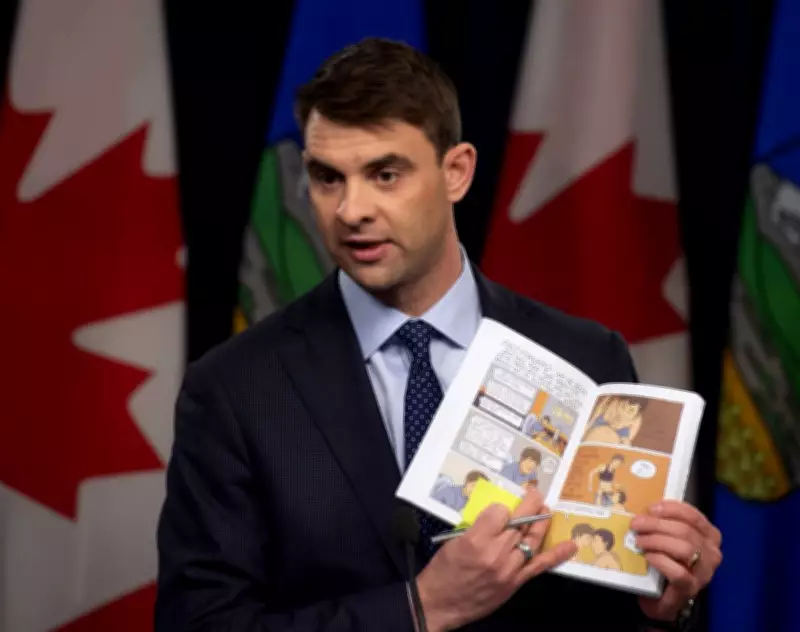
Alberta's UCP Government Seeks Control Over Public Libraries Despite Minimal Funding
The funding imbalance for Alberta's public libraries presents a significant concern on its own merits. In Edmonton, municipal contributions exceed provincial funding by nearly 9.7 times, while Calgary's city share outpaces provincial support by a factor of 8.5. Municipalities across the province overwhelmingly provide the vast majority of funding that sustains public library operations throughout Alberta.
Frozen Funding and Increased Control
Late last year, public library officials and municipalities requested an increase to the per-capita funding that has remained frozen at the same level since 2019. The provincial government refused this request, citing budget deficit concerns, despite seven years of inflation that has substantially eroded the value of their contributions. Now, despite paying for only a fraction of public library operations, the provincial government seeks unprecedented control through proposed legislation.
Bill 28, which includes an amendment to the Libraries Act, would grant Alberta's Minister of Municipal Affairs sweeping new powers over public libraries. The legislation allows for the appointment of an inspector and, more concerningly, gives the minister authority to act on that inspector's report in any way they see fit. The wording is as broad as it is alarming: The minister "may make any order that the minister considers appropriate." This represents not merely oversight but potential partisan control over a beloved community institution.

Questionable Expertise and Democratic Concerns
This level of authority would be questionable under any circumstances, but it becomes especially difficult to justify given the apparent lack of relevant expertise at the top. Minister Dan Williams' publicly available biography does not list formal educational qualifications, and his work experience is described only in vague terms, including a job at a gravel company.
Meanwhile, public libraries are led by professionals with advanced degrees, often a master's in Library and Information Science, and supported by staff with specialized post-secondary training. While Williams was elected by 8,200 voters in Peace River, with his lack of education and experience, he would be rejected from even an entry-level position at a public library.
Undermining Local Governance
Perhaps most troubling is what Bill 28 means for local governance. Alberta's public libraries are currently overseen by library boards made up of volunteer community members, often with specialized expertise to make meaningful governance contributions. They also include elected municipal representatives to ensure democratic representation.
Library boards exist for a reason: They reflect local priorities, understand community needs, and ensure that libraries remain responsive to the people they serve. They represent a model of grassroots, democratic governance that Bill 28 essentially sidelines.
By giving the province unprecedented authority over all library operations in theory, the legislation replaces local decision-making with centralized control. It strips autonomy from communities that fund and rely on their libraries. Instead, it hands control to a provincial government that contributes comparatively little and has shown zero interest in making meaningful investments in libraries.
Hypocrisy in Governance Approach
The audacity at play here is hard to ignore. Premier Danielle Smith and her UCP government have been vocal critics of federal overreach, frequently framing themselves as defenders of local autonomy and provincial jurisdiction. Yet Bill 28 does exactly what they claim to oppose. It concentrates decision-making power and overrides the voices of local communities. This legislation makes municipalities the victims of what appears to be a hypocritical perspective on governance.