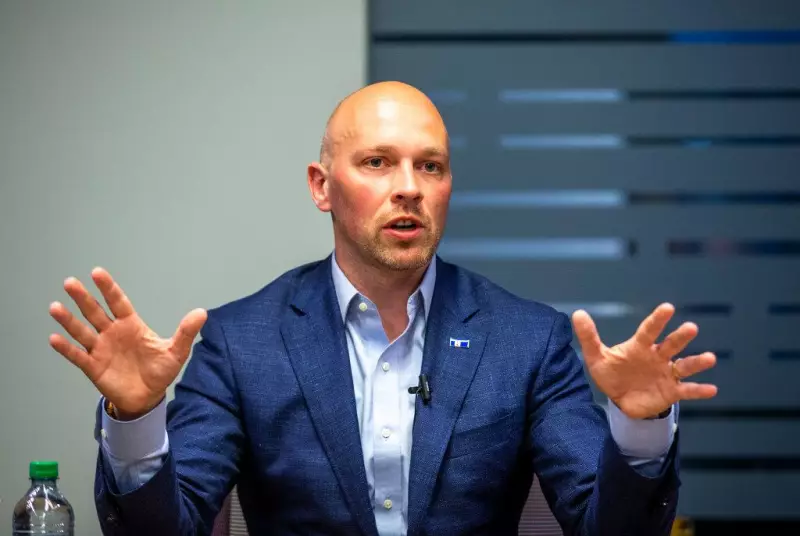
Toronto City Councillor Brad Bradford is expressing frustration after his proposal to provide refunds to transit riders for significant delays was effectively sidelined at city council. His motion, which called for full fare reimbursements for Toronto Transit Commission (TTC) delays of 15 minutes or more, was amended to a study, a move he fears may bury the initiative.
Motion Amended, Sent for Further Evaluation
Bradford presented the motion to council on Wednesday, December 18, 2025. However, Councillor Alejandra Bravo, who also sits on the TTC board, successfully put forward an amended version. The revised motion directs the TTC Board to "evaluate and consider" how a refund guarantee program could function and report back in the spring of 2026.
Bradford was sharply critical of the outcome. "I'm sure the bureaucrats at the TTC will come up with a million reasons to suggest that it's difficult to do," he stated. He accused Mayor Olivia Chow's allies of effectively arguing the system is too broken to fix and characterized the amendment as punting the idea "into the bureaucratic abyss with the risk of never being heard from again."

The Case for Rider Refunds
The councillor's proposal was modelled on similar customer service guarantees in other major cities, including London, Singapore, and Washington, D.C., as well as the existing GO Transit Service Guarantee in Ontario. Bradford argued that with nearly 25,000 instances of TTC delays lasting 15 minutes or longer recorded in 2025 alone, a concrete accountability measure is urgently needed.
"We have to hold the TTC to a higher standard and raise the bar," Bradford insisted during the council debate, which also touched on performance issues with the newly opened Finch LRT line.
Councillor Bravo Advocates for Due Diligence
In response, Councillor Bravo told the Toronto Sun that while she supports the principle of accountability, the board requires more information before implementation. She wants the proposal considered alongside the TTC's ridership growth strategy and other capital investments.
"The board has to figure out whether it's going to work, how's it going to work, and how much it's going to cost," Bravo explained on Friday. She cited estimates from TTC staff during the debate suggesting infrastructure costs, such as potential Presto system updates, could reach $80-90 million.
Bradford countered that this figure was an informal estimate, not part of an official report, and that a refund system could be implemented incrementally. He suggested starting with a pilot project on the subway or using a self-reporting online system similar to GO Transit's. "Are there some things to work through? Yes," he acknowledged. "But all of the stuff can be negotiated."
The fate of the refund proposal now rests with the TTC Board's evaluation, with a report expected in the coming months.