Toronto's World Cup Emergency Plans Prioritize Flood Risk Over Other Disasters
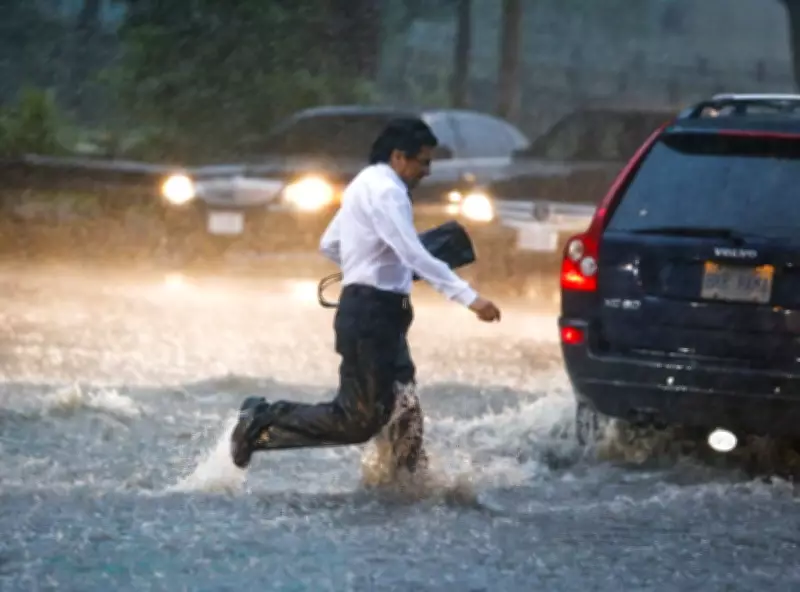
Emergency planners in Toronto are deep in preparations for the upcoming FIFA World Cup, and their primary concern revolves around a watery threat. Documents obtained through a freedom-of-information request by the Toronto Sun indicate that city officials are more worried about flooding than any other potential calamity during the summer soccer tournament.
Flooding Tops the Risk Assessment Charts
A slide deck prepared for a World Cup emergency preparedness working group meeting in December 2024 scored various hazards based on likelihood and average consequence. Flooding emerged as the biggest total risk, primarily because it received the highest likelihood rating. This placed it ahead of other significant threats including extreme heat, cyberattacks, civil disorder, and even overcrowding at event venues.
An appendix specifically addressing flood risk, created by Toronto emergency management in January 2025, speculated about potential flooding around Lake Shore Boulevard. The document referenced historical flooding events in 2017 and 2019, suggesting that similar conditions could occur if Lake Ontario swells during periods of heavy rainfall.

Vulnerable Locations and Historical Precedents
The risk assessment identifies several key World Cup sites as particularly vulnerable to flooding. BMO Field, the primary soccer venue, could be affected, along with the fan festival space at Fort York. Union Station is also singled out as a problem area for potential water accumulation.
While most other World Cup-related sites aren't considered significant flood risks, Centennial Park presents a notable exception. This location, which will serve as a training site, could theoretically have roads overtaken by what the documents describe as "a storm event similar to the passage of Hurricane Hazel in 1954."
Risk Classification and Emergency Preparedness
A "risk register" included in the hazard identification and risk assessment package compiled by Toronto emergency management referred to flooding as "almost certain" to occur. This classification means the event has a greater than 50% chance of happening within a year.
Other risks rated as "almost certain" include cyberattacks, disruption of infrastructure, oil or natural gas emergencies, civil disorder, extreme heat, and transportation incidents. However, in a separate risk assessment document that remained unfinalized as of late January 2025, cyberattacks were ranked as the only Level 1 "risk priority," with floods still considered a major Level 2 priority alongside infrastructure disruption.
Tabletop Exercises and Official Response
The city's emergency planning efforts have included comprehensive tabletop exercises to simulate various disaster scenarios. In March 2025, officials conducted a day-long "multi-agency tabletop exercise" that simulated a hypothetical chemical release affecting a "mass gathering" related to the soccer tournament. This scenario specifically revolved around a high-attendance England-Argentina match at BMO Field on June 23.
Additionally, the city held a tabletop exercise specifically focused on flooding in February 2025, though details about this event were not included in the documents provided to the Toronto Sun.
When asked for comment, City Hall provided a statement acknowledging that Toronto "has experienced more frequent and intense rainfall events" recently, thus justifying the concerns about floods. The statement noted that "while flooding does not pose an immediate or widespread threat to the tournament, it is a factor that must be considered when planning transportation, venue access and emergency response operations for an event of this scale."
Document Details and Legal Expenditures
The documents were provided as part of a 442-page bundle following a freedom-of-information request that initially sought emails related to Toronto's shelter services division and the World Cup. The search parameters were broad enough to capture various municipal government initiatives, including emergency planning exercises.

Among the revelations was an almost entirely redacted chart on consulting expenditures for 2024, which showed that City Hall's World Cup secretariat spent more than $445,000 for legal work by the firm Osler, Hoskin and Harcourt. The description of this legal work was redacted from the documents.
Toronto is scheduled to host six matches during the 2026 FIFA World Cup, with the first game taking place on June 12. As the tournament approaches, emergency planners continue to refine their strategies for managing what they've identified as the most likely threat to the event's success: flooding from Lake Ontario and heavy rainfall events.