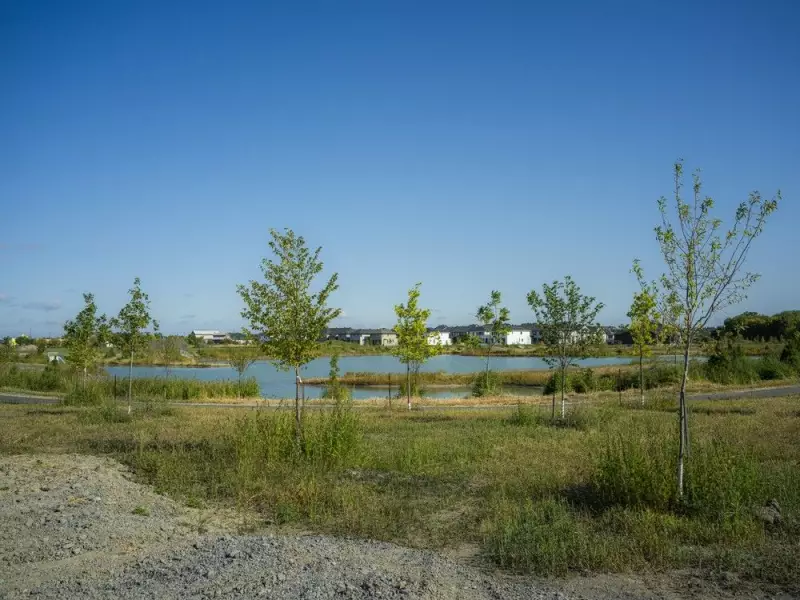
Ottawa Mayor Mark Sutcliffe is on track to break a core campaign promise, with his administration falling hundreds of thousands of trees short of a pledge to plant one million during his first term in office.
A Promise Unfulfilled
During the 2022 municipal election campaign, mayoral candidate Mark Sutcliffe made a straightforward commitment: to oversee the planting of one million trees by the end of his first four-year mandate. As his term nears its conclusion, that promise remains overwhelmingly unfulfilled. According to city figures and reporting, the actual number planted is a mere fraction of the target, leaving the city approximately 900,000 trees short of the goal.
The shortfall highlights a significant failure in urban forestry management for a national capital whose symbol is the maple leaf. The promise, which seemed simple on the campaign trail, has been entangled in bureaucratic processes and competing municipal priorities, leaving residents with a deteriorating tree canopy instead of the promised green growth.

Ottawa's Sparse Canopy and the Gatineau Contrast
The consequences of this failure are visible across the city. Ottawa's overall tree canopy coverage sits at roughly 36 per cent, a marginal increase from 34 per cent in 2017. This figure remains well below the city's own target of 40 per cent coverage. More concerning is the uneven distribution of this canopy.
Suburban neighbourhoods experiencing rapid development, such as Stittsville, Riverside South, and Barrhaven, have seen significant net losses. Trees are often cleared for new housing developments, with saplings planted in their place failing to compensate for the loss of mature trees for decades.
The contrast with Ottawa's neighbour is stark. A 2019 assessment by the National Capital Commission (NCC) found that urban Gatineau boasted a 45 per cent tree canopy, compared to just 31 per cent for urban Ottawa at the time of that study. While measurement methods may vary, the significant gap points to a long-standing disparity in urban forest management between the two sides of the Ottawa River.
Why a Healthy Tree Canopy Matters
The issue extends far beyond aesthetics. A robust urban forest provides critical environmental and public health benefits that are now being compromised. Trees act as natural air conditioners, mitigating the urban heat island effect during increasingly hot summers. They are vital for stormwater management, absorbing runoff and reducing flood risks.
Furthermore, trees improve air quality by filtering pollutants and sequestering carbon dioxide. They dampen traffic noise, provide essential habitat for birds and wildlife, and numerous studies confirm their positive impact on mental health and community well-being.
The failure to meet the planting target represents a missed opportunity to invest in this low-cost, high-return natural infrastructure. As Ottawa continues to grow and face the challenges of climate change, the deficit in its urban forest leaves the city more vulnerable and less livable for its residents.