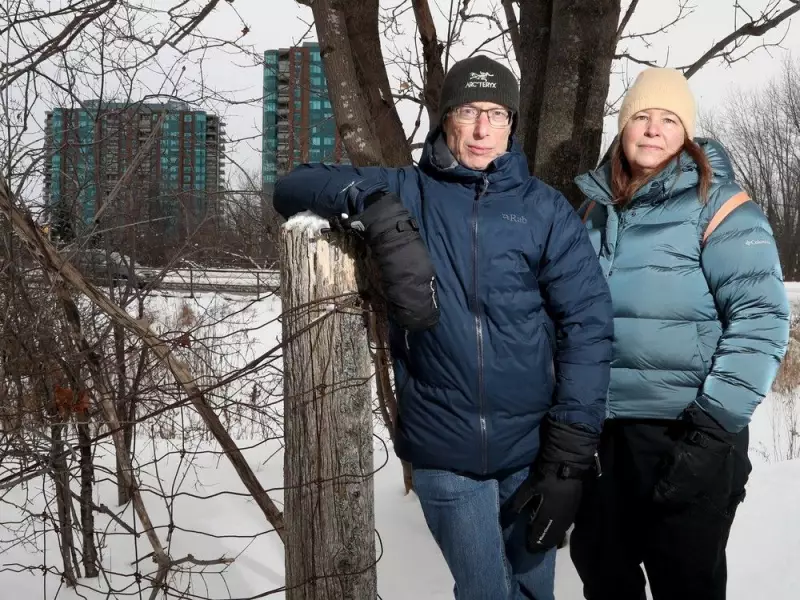
A major rezoning proposal in Ottawa has sparked significant concern among community advocates and environmentalists, who fear it could pave the way for development on protected National Capital Commission (NCC) greenspace that includes a cherished cultural trail.
What Land is at Risk?
The land in question comprises two significant swaths on either side of the Rideau River, totalling approximately 103 hectares. This area is part of the southern loop of the 37-kilometre Poets' Pathway, a trail network connecting Britannia Beach to Beechwood Cemetery that utilizes existing walking and cycling paths. The specific sections under threat are the Woodroffe-Merivale stretch on the river's west side and the Lower Rivergate Corridor near McCarthy Woods on the east side.
Community representatives, including Andrei Grushman of the Hunt Club Community Association and Mireille Trent from the Ottawa South Eco-Action Network (OSEAN), argue the change was made with little public transparency. "Normally, there would be public meetings and consultations," said Grushman. "The core issue here is that the change was made suddenly and without a bit of in-depth analysis. It just kind of happened overnight."

Lack of Transparency and Environmental Concerns
Paul Johanism, chair of the Greenspace Alliance of Canada’s Capital, stated he only discovered the potential rezoning by meticulously comparing before-and-after maps in a massive package of zoning bylaw amendments. The changes are set to be presented at a joint committee meeting on Wednesday, December 17, 2025.
While the NCC states the land was acquired decades ago for an unbuilt transportation corridor and is now being considered for housing amid the national crisis, environmentalists highlight the area's ecological value. Although McCarthy Woods itself is protected, the surrounding meadows slated for rezoning provide "prime feeding habitat" for birds of prey like barred owls, Cooper’s hawks, and merlins. The Greenspace Alliance emphasizes that these urban forests deliver crucial ecosystem services, including climate regulation and air purification, and are vital for Ottawa to reach its target of 40 per cent tree canopy cover.
The Path Forward and Community Response
The NCC, through spokesperson Valérie Dufour, confirmed the move is part of a federal directive to identify under-utilized public lands to increase housing stock, including affordable housing, in the National Capital Region. The land is currently a patchwork of zoning designations.
However, community groups remain vigilant. They contend that the "development reserve" designation for such a large, ecologically sensitive area was decided without proper public engagement or a thorough analysis of the environmental trade-offs. The situation sets the stage for a potential conflict between urgent housing needs and the preservation of Ottawa's valued green corridors and cultural landmarks like the Poets' Pathway.