Toronto Residents Seek Injunction to Stop Third Street Homeless Shelter Project
A coalition of residents in South Etobicoke is taking legal action to prevent the City of Toronto from moving forward with its controversial plan to transform a municipal parking lot into a homeless shelter. The group, known as the New Toronto Initiative (NTI), has filed for an urgent injunction, arguing that the city has ignored proper procedures and zoning regulations.
Legal Challenge Against Shelter Development
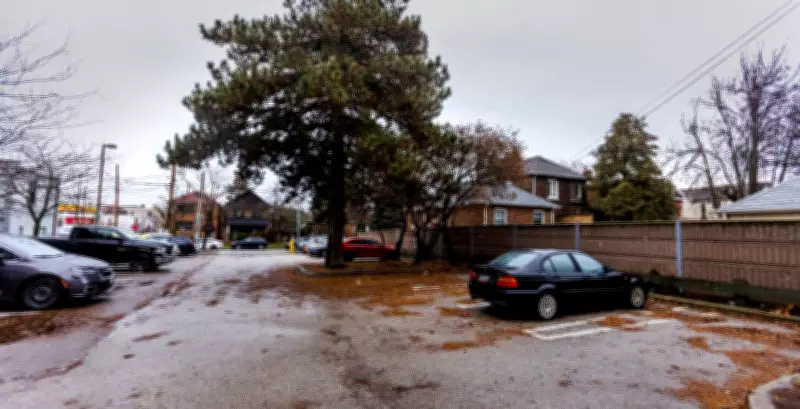
Michael Nemanic, the lawyer representing the New Toronto Initiative, confirmed that he filed the injunction on Monday and is seeking an immediate hearing to stop development at 66 Third Street, located near Lake Shore Boulevard and Islington Avenue. The site, which until recently served as a city-run parking lot, is slated to become a shelter accommodating approximately 50 homeless seniors, though it is not expected to open before 2028.
"The city has decided to go full steam ahead on site works and other preliminary work required to redevelop the parking lot into a municipal shelter," Nemanic stated. "We served them with a comprehensive statement of claim six months ago and never received a response. We realized that the only way to get a fair shake is to ask for an urgent injunction."

Community Concerns and Process Issues
While acknowledging the ongoing housing crisis and the need for more affordable and supportive housing, Nemanic emphasized that the dispute centers on methodology rather than necessity. "There's a right way to do it and there's a wrong way, and we believe the city's doing it the wrong way," he explained. The NTI's lawsuit alleges that the selection of the Third Street site was "arbitrary, subjective and improper" and was influenced by the "bad faith desires" of local councillor Amber Morley and consultant Bruce Davis to advance personal interests.
The urgency of the injunction stems from recent developments: the parking lot operations have ceased, and modular construction techniques could allow the shelter to be erected rapidly—potentially before the NTI's case is heard in court. "When they make their building permit application, that could mean that in less than three months from now, they would be authorized to start formal construction at the site," Nemanic warned.
Zoning and Political Context
Accompanying the injunction are two affidavits, including one from a planning expert who contends that the site does not comply with zoning rules, as it is explicitly designated for use as a parking lot. The NTI also questions the city's relationship with Bruce Davis, who was appointed to CreateTO—the agency managing municipal real estate—during the same council meeting that approved $50,000 in backing for consultants facing "nuisance legal proceedings."
Nemanic highlighted the political sensitivities surrounding the issue, noting, "We're in an election year and this isn't a popular issue. No councillor wants to touch it. That's the reality." He argued that establishing a fair process with clear rules is essential, and the city's failure to engage meaningfully for six months justifies the legal action.
City's Response and Next Steps
When contacted for comment, the City of Toronto indicated it would be unable to provide a statement until the following week. The allegations in the NTI lawsuit have not been proven in court, and both Councillor Morley and consultant Davis have previously defended their actions when questioned by media outlets.
The injunction specifically targets the city and does not include Morley or Davis as parties. Nemanic concluded, "It is a contentious issue, but if you establish a fair process with rules, and then you decide to ignore those rules—and after you've been told you're ignoring those rules, don't make a peep for six months—then I think taking the next step, which is filing this injunction, is pretty reasonable."
As the legal battle unfolds, the outcome will have significant implications for Toronto's approach to addressing homelessness and community development in South Etobicoke.