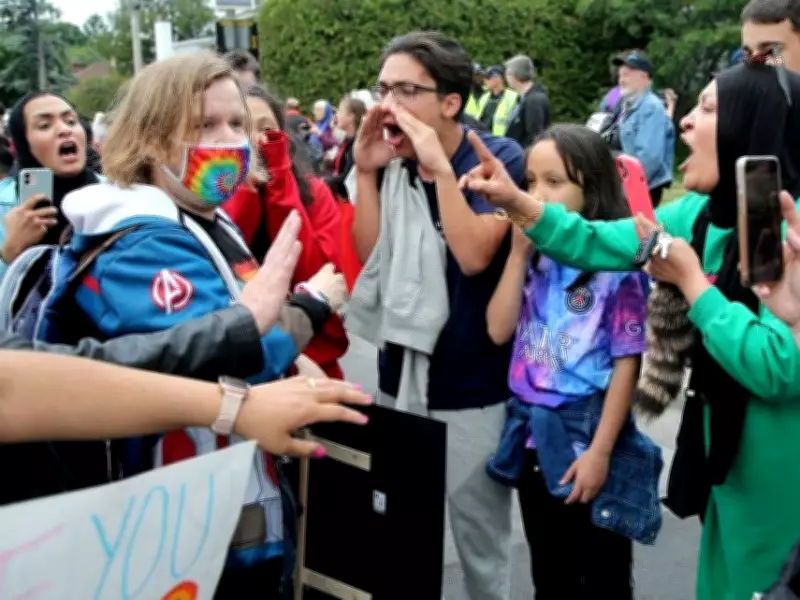
Ottawa's 'Bubble Bylaw' Targeting Protests Near Vulnerable Facilities Could Launch This Summer
After nearly a year of anticipation, Ottawa city councillors are poised to debate a contentious "bubble bylaw" designed to restrict protests near sensitive social infrastructure. The proposed legislation aims to create protective zones around schools, hospitals, long-term care facilities, and community health centers, sparking discussions about community safety versus constitutional freedoms.
Specifics of the Proposed Safe Access Zones
According to a comprehensive 39-page staff report, the bylaw would establish "safe access zones" extending 50 meters from walkways, doorways, and driveways of designated facilities. This represents a reduction from the original 80-meter proposal floated last year. Municipal staff argue this distance strikes a balance between allowing protesters to be heard while ensuring unimpeded access to essential services.
The regulations would also prohibit loudspeakers, sound amplification devices, and pyrotechnics within these zones. Facilities would need to apply for safe-access zone status, with designations valid for one year and renewable. Residential care facilities would have 24/7 protection, while other locations would be covered one hour before opening and after closing.

Balancing Rights and Community Safety
The staff report emphasizes that the bylaw "is designed to prioritize safe access to vulnerable social infrastructure while ensuring that measures are proportionate and minimally impair fundamental freedoms, including freedom of expression, assembly, and association." This approach aligns with similar regulations already implemented in other Ontario municipalities like Toronto and Oakville in 2025.
Notably, the bylaw includes exemptions for labor disputes and marches that merely pass through protected zones, providing flexibility for organized demonstrations.
Councillor Concerns and Historical Context
Somerset Councillor Ariel Troster, who supported the motion with "extreme reservations," has voiced significant concerns about potential overreach. She specifically worries about granting expansive new powers to police and bylaw officers, citing historical examples where disruptive protests advanced social justice causes.
"The purpose is to be disruptive and it is to make people listen," Troster remarked after a committee meeting in May 2025. "And people do it when they're desperate, when they don't have any other place or any other way that they can make their voice heard." She referenced landmark events like the 1969 Stonewall riots in New York City that propelled LGBTQ2S+ rights forward.
Rising Hate Crimes and Community Safety Data
The proposed bylaw emerges against a backdrop of increasing hate-motivated incidents across Canada. Statistics Canada data reveals police-reported hate crimes have more than doubled in recent years, with 4,777 cases documented in 2023 alone. Ontario recorded 15.6 incidents per 100,000 people that year, exceeding the national average of 12 incidents per 100,000.
Most religion-targeted hate crimes were directed at Jewish and Muslim populations. Ottawa Police Service data from their Community Safety Data Portal shows hate crime incidents have generally increased since 2018, though 2024 saw a modest four-percent decrease to 467 incidents from 487 in 2023.
Implementation Timeline and Next Steps
If approved by city council, the bubble bylaw would take effect on August 1, 2026. The debate represents a critical juncture for Ottawa as municipal leaders attempt to reconcile competing priorities: protecting vulnerable populations accessing essential services while preserving democratic rights to peaceful assembly and free expression.
The proposed regulations aim to prevent protesters from spilling into residential areas and impacting neighboring communities while maintaining consistency with other municipal approaches across the province. As councillors prepare for deliberations, the outcome will significantly shape how Ottawa manages public demonstrations near its most sensitive institutions.