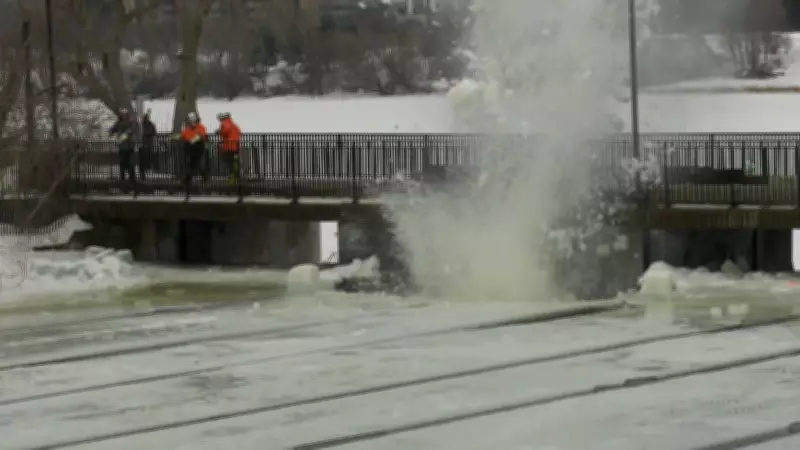
Ottawa's Annual Ice Blasting on Rideau River Commences for Flood Control
The City of Ottawa has initiated its yearly ice blasting operations along the Rideau River, a distinctive municipal practice aimed at mitigating spring flood risks. This procedure, part of the Rideau River Flood Control Program, involves strategically detonating ice to prevent blockages that could lead to significant flooding as temperatures rise.
A Local Tradition for Public Safety
Often described as "a real Ottawa thing" by residents, the ice blasting is a critical preventive measure. City workers carefully place explosives at key points along the river to break up thick ice formations. This controlled fragmentation helps ensure that meltwater flows smoothly downstream, reducing the potential for ice jams that can cause sudden and severe flooding in adjacent neighborhoods.
Timing and Execution of the Operation
The blasting commenced on February 28, 2026, with crews working diligently under specific weather and ice conditions. The timing is crucial; operations must occur before the spring thaw accelerates to maximize effectiveness. According to municipal officials, this annual effort is based on extensive monitoring of river conditions and historical flood data.

"This is a proactive approach to safeguard our communities," a city representative noted. "By managing the ice now, we can prevent costly damage and disruptions later in the season."
Community Impact and Environmental Considerations
While the blasting is noisy and visually striking, it is conducted with minimal environmental disturbance. The City of Ottawa coordinates with environmental agencies to ensure that wildlife habitats are protected and that the explosions do not harm aquatic ecosystems. Residents living near the river are typically notified in advance to prepare for the temporary disruptions.
The program underscores Ottawa's commitment to innovative infrastructure management, blending traditional knowledge with modern techniques to address natural challenges. As climate patterns evolve, such measures become increasingly vital for urban resilience against extreme weather events.