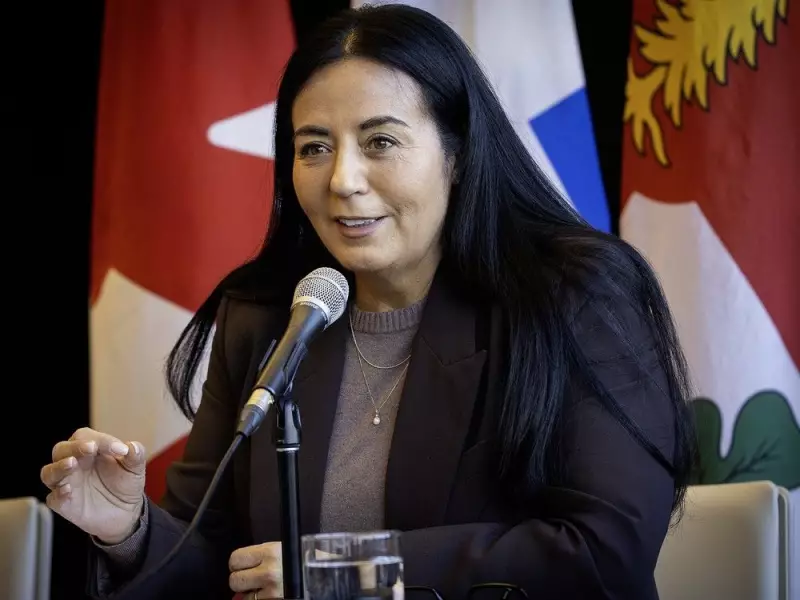
Montreal Mayor Soraya Martinez Ferrada has formally outlined her administration's priorities for the next four years, directing her executive committee to tackle a range of pressing issues from the housing crisis to traffic congestion and nightlife promotion.
Defining a "Pivotal Moment" for the City
In mandate letters signed on December 1, 2025, and made public this week, Mayor Martinez Ferrada reminded committee members that Montreal is at a "pivotal moment" facing considerable challenges. She instructed that all actions must aim to tangibly improve residents' lives, following consultations with citizens, businesses, and community organizations.
The letters, echoing a federal government approach, list each member's main priorities and specific commitments. The mayor identified core city-wide goals as tackling the housing crisis, reducing homelessness, strengthening security, improving cleanliness, enhancing mobility, and managing with "rigour and agility."

Key Assignments: From Mobility to Homelessness
Alan DeSousa, the Mayor of St-Laurent borough and the member for mobility and infrastructure, received one of the longest lists. His dozen-plus commitments include assessing the bike lane network, advancing the long-awaited Cavendish Blvd. extension, and better coordinating city-wide roadwork. He will be supported by Aref Salem, the new chairperson of the Société de transport de Montréal (STM), who is tasked with increasing métro frequency and ensuring the Blue Line extension stays on budget while prioritizing the Orange Line extension.
On the environment front, city councillor Gabrielle Rousseau-Bélanger is responsible for overseeing the administration's pledge to maintain car access to Camillien-Houde Way on Mount Royal.
The top administrative priority—the homelessness crisis—has been assigned to executive committee president Claude Pinard. His mandate includes establishing a fund to match private sector donations and adding 2,000 transitional and permanent housing options. He will work closely with city councillor Benoit Langevin, the point person for cohabitation with the community sector.
For security, Pierrefonds-Roxboro borough mayor Dimitrios Jim Beis must add security cameras across Montreal, equip police with body cameras, support victims of hate crimes, and prepare for natural disasters.
Reconciliation, Culture, and Downtown Revival
Following criticism for initially dropping a dedicated reconciliation role, the mandate for city councillor Josué Corvil (responsible for culture, diversity, and inclusion) was updated to include "Indigenous relations and togetherness." He is asked to strengthen ties with Inuit and First Nations communities and prepare for the 325th anniversary of The Great Peace of Montreal in 2026. His letter also mandates actively combating racism, Islamophobia, antisemitism, and homophobia.
The letters reveal specific plans to boost downtown and cultural life. Two members are tasked with promoting Montreal's underground city, while others must make it easier for downtown restaurants to install terrasses. Ahuntsic-Cartierville borough mayor Maude Théroux-Séguin, responsible for citizen participation, gastronomy, and nightlife, has been asked to help promote food trucks and create a dedicated team to handle noise complaints.
The mandate letters also extend to opposition members invited to sit on a new "mayors’ table," emphasizing that boroughs play a vital role and collaboration is essential despite political differences.