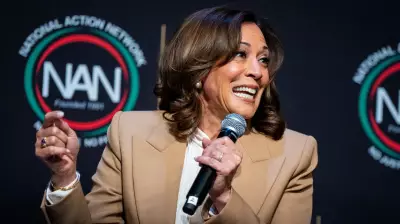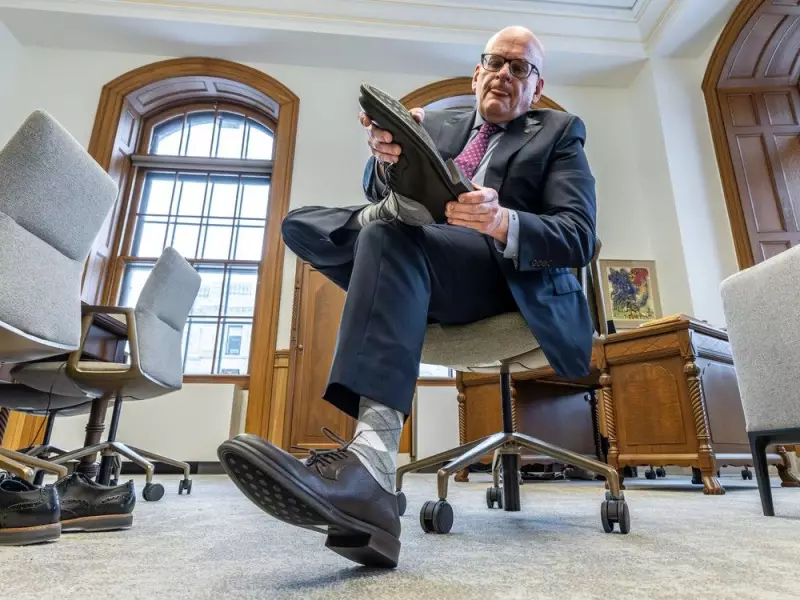
Montreal Mayor Soraya Martinez Ferrada has presented her administration's first budget, a $7.67-billion spending plan for 2026 that she describes as a rigorous return to municipal basics. The budget, tabled on Monday, January 12, 2026, comes with an average property tax increase of 3.8 per cent for homeowners and a focus on debt reduction and core services.
A Budget Focused on Fundamentals
Mayor Martinez Ferrada framed the 2026 fiscal plan as a corrective measure after what she characterized as years of overspending. The budget represents a 5.4 per cent increase in expenses, with major allocations for public security, public transit, and recreation and culture. A significant portion of new spending is directed toward the homelessness crisis, including an additional $20 million for support organizations and a $100 million, 10-year fund to convert buildings into shelters.
Claude Pinard, the executive committee chair, underscored the administration's philosophy. "If you find this budget boring because there’s no major projects for this year, I think that’s a great thing," Pinard stated. "We’re getting back to the basics of what a city's job is." The city plans to cut costs by $79 million, partly through a review of departments and the eventual elimination of 1,000 municipal jobs.

Debt Reduction and Tax Hike Justification
A key driver of the increased expenses is a deliberate effort to tackle the city's debt. The administration is allocating an extra $87 million toward debt servicing payments. Mayor Martinez Ferrada defended the 3.8 per cent average tax hike, insisting it aligns with her campaign promise to keep increases in line with inflation. She explained the calculation was based on the inflation rate observed in Montreal between September 2024 and September 2025.
"I was always very clear that it would be in line with inflation," the mayor said. "And that’s what I did." She noted the overall increase is comparable to recent budgets in neighbouring Longueuil and Laval. The city council portion of the tax rise is limited to 3.4 per cent, with the higher average resulting from additional borough-level increases.
Opposition Criticizes Lack of Vision
The opposition at city hall, led by Projet Montréal interim leader Ericka Alneus, offered a starkly different assessment. Alneus criticized the budget for delaying key projects like the revamping of Ste-Catherine St. E. and McGill College Ave., and for cutting into plans to expand the Bixi bike-share network to underserved boroughs.
"It’s not that we’re against being rigorous with the city’s finances and budget," Alneus said. "But when you do it without vision, it kind of smells like austerity." She also contrasted the administration's 3.8 per cent tax increase with Projet Montréal's campaign promise to limit hikes to between two and three per cent.
Alongside the annual budget, the city presented its 10-year, $25.9-billion capital works program. This long-term plan includes investments such as $473.5 million for bike paths, $1 billion to revitalize downtown, and $578 million for affordable and social housing. Montreal's city council must adopt the 2026 budget by the end of January, following public hearings by the city's finance commission.