Edmonton Residents Challenge City's Parking Ban Statistics
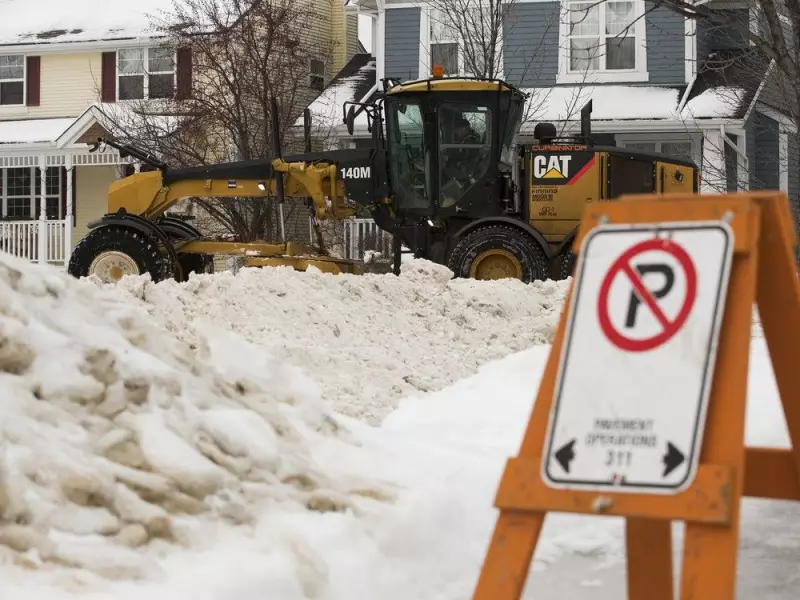
Residents of Edmonton are pushing back against recent city claims regarding compliance with snow removal parking bans, arguing that the statistics don't tell the full story of who's actually leaving vehicles on residential streets during critical clearing operations.
Questioning the 90% Non-Compliance Figure
Following a city announcement suggesting that 90 percent of residents failed to remove their vehicles from residential streets during recent snow removal efforts, local community members are demanding more detailed evidence to support this claim. The controversy stems from what many describe as misleading statistics that fail to distinguish between permanent residents and temporary visitors or workers.
One Edmonton resident provided a detailed account of their own street's compliance, noting that every homeowner moved their vehicle as requested. The problem, they explained, stems from properties being used for short-term rentals and ongoing construction projects that bring numerous non-resident vehicles to the area.

The Real Culprits: Short-Term Rentals and Construction
"On my residential street, every resident moved their vehicle off the street," reported Paula Benson of Edmonton. "However, there is an infill unit owned by a Calgary-based company that operates as four separate Airbnb units. The transient occupants bring multiple vehicles, sometimes accommodating up to twenty people at once."
Benson further noted that construction activity compounds the problem, with workers' vehicles remaining on streets despite clear parking ban signage. "I counted six vehicles parked on the street from people working on a house while the parking ban was in place," she added.
Calls for Better Enforcement and Accountability
Residents argue that the city's enforcement approach needs significant improvement. "These non-residents did not move their vehicles in spite of the parking-ban sign posted at the entrance to the street," Benson emphasized. "They don't live here so why should they care? If the City of Edmonton actually enforced the parking ban through ticketing and towing, it would help."
The sentiment reflects growing frustration among homeowners who feel they're being unfairly blamed for problems created by temporary occupants and commercial activities in residential areas.
Community Responsibility and Winter Preparedness
Another perspective comes from H.C. Kolthammer, who expressed disappointment in what they perceive as declining civic responsibility. "It is almost unbelievable that as many as 90 percent of Edmontonians neglected to remove their vehicles," they wrote. "The reports that people were throwing shovels, swearing and threatening snow-equipment operators are deplorable."
Kolthammer emphasized that residents have been adequately notified about parking bans and should take personal responsibility. "There were plenty of notifications from the city, so people can't claim ignorance," they noted. "Or, is that the problem? Laziness has overtaken many or are they so glued to their phones that they can't think for themselves?"
Broader Implications for Municipal Policy
This parking ban controversy highlights several ongoing challenges facing Edmonton's municipal governance:
- The impact of short-term rental properties on neighborhood dynamics and city services
- Enforcement gaps in construction zone parking regulations
- Communication effectiveness between city administration and residents
- Balancing enforcement with community education about winter responsibilities
As Edmonton continues to navigate winter weather challenges, this debate underscores the importance of accurate data collection and nuanced understanding of compliance issues. The city faces the dual challenge of maintaining effective snow removal operations while ensuring fair assessment of resident cooperation.
Both perspectives in this discussion agree on one crucial point: gratitude for the snow removal crews who work diligently under challenging conditions. "Much gratitude to the many snow crews who did a very good job," Kolthammer concluded. "You are greatly appreciated."