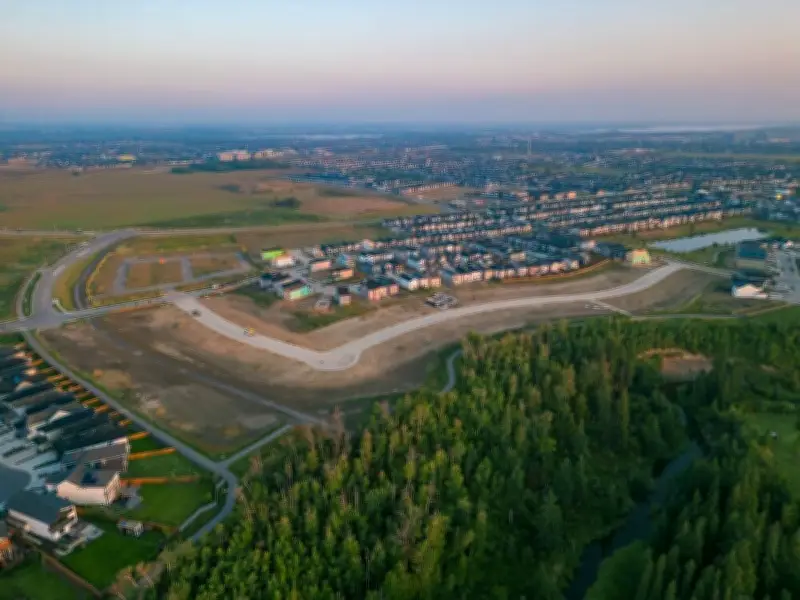
Edmonton's population boom continues, but new market research reveals that suburbs and surrounding communities are capturing a larger share of growth compared to the urban core. A report from real estate firm Avison Young shows the City of Beaumont leading the greater Edmonton region with a 6.3% population increase in 2025, followed by Leduc County at 4.7% and Spruce Grove at 4.2%. Urban Edmonton, in contrast, grew by only 3.4%.
Why Are Suburbs Growing Faster?
The report attributes much of this growth to interprovincial migration, primarily from Ontario and British Columbia. New residents are drawn by affordability and recent infrastructure developments in surrounding communities. “They have their own downtowns, they have their own amenities, they have everything you need,” said Brandon Imada, senior vice-president of multifamily at Avison Young in Edmonton. He added that lower taxes in these areas make homes more affordable and development more attractive for builders.
Imada noted that growth outside the city limits coincides with rapid development in south Edmonton. Some now question whether the City of Edmonton should start developing neighbourhoods south of 41 Avenue SW. “We've just grown so much suburban and urban sprawl-wise that we've basically hit the border of Leduc already, and it just makes a ton of sense to continue to develop further south,” Imada said.

Pressure for New Neighbourhoods
Stephen Raitz, vice-president of policy and advocacy with BILD Edmonton Metro, said people choose surrounding communities because they want to live near major industrial areas where they work, such as the airport, Nisku, and Acheson. This demand is expected to grow as the region prepares for more industrial development near the airport, driven by increased defence spending. “That is the development pressure signified on a map,” Raitz said, referring to the Avison Young report showing the Terwillegar and rural southwest area leading multifamily developments in April 2026.
Raitz argues that new development costs would pay for themselves, citing a BILD report from last year. He wants city council to greenlight new neighbourhoods south of 41 Avenue SW.
Concerns Over Sprawl and Taxes
Ward papastew Coun. Michael Janz, a critic of expanding city boundaries, said the BILD report fails to account for police and transit costs, which are the most expensive items in the city's budget. Janz contends that developers profit most from new development, while associated costs place a greater tax burden on the city. The debate continues as Edmonton grapples with how to manage its population boom while balancing growth with fiscal responsibility.