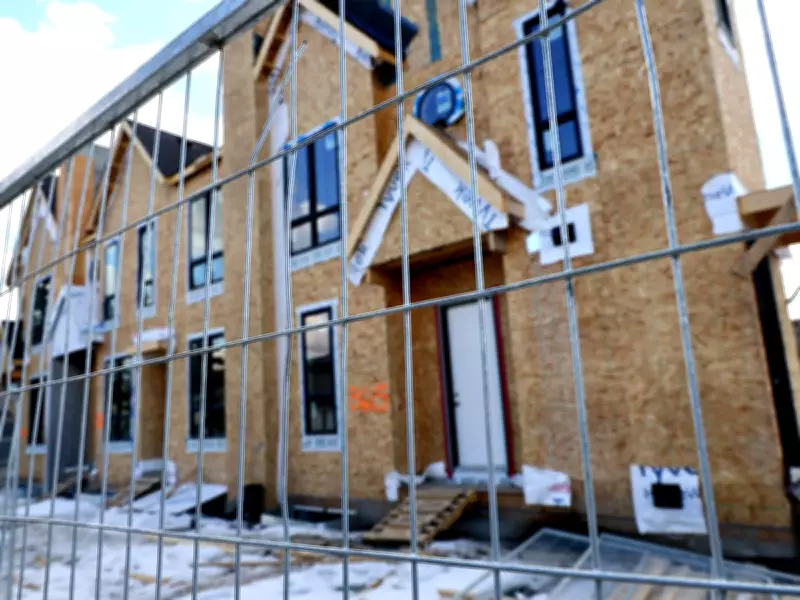
Calgary's Blanket Rezoning Bylaw Officially Repealed After Council Vote
The controversial blanket rezoning bylaw that has dominated Calgary's municipal politics for years has been officially repealed by city council. In a decisive 12-3 vote, council members moved to eliminate the contentious legislation that allowed developers to build multiplex dwellings in single-family neighborhoods without council approval.
Legal Limbo Until August Expiration
Despite the repeal, the bylaw will remain in a state of legal limbo until it officially expires in early August. This means developers can continue to submit applications under the 2024 rules until that time. Mayor Jeromy Farkas explained that this delay is "a legal requirement" designed to ensure procedural fairness and protect taxpayers from potential legal challenges.
"Procedural fairness is important," Farkas stated in an interview following Wednesday's repeal. "We didn't want to expose the city taxpayer to needless legal challenges or court action that could ultimately be costly. So, we've done this in a fair way to everybody involved in the development industry."

Fulfilling Campaign Promises
The repeal represents a significant victory for Mayor Farkas, who campaigned on bold promises to reverse what he called "the inanities and failures of the previous council." With the support of a fresh council, he has successfully delivered on his most popular campaign pledge.
Farkas also pledged to keep taxes low, and council delivered on that front as well with a modest 1.2 percent property tax increase. However, the province added another six percentage points through education property taxes, which Farkas criticized as "opportunistic." He accused the United Conservative Party of using Ottawa-style equalization to spread Calgary money throughout Alberta.
Addressing Housing Affordability Concerns
Farkas's primary objection to the 2024 zoning bylaw centered on its failure to address housing affordability for young Calgarians. During public hearings, he was particularly moved by testimony from young residents who felt "locked out of the city they love."
"What resonated with me the most was hearing from young Calgarians who felt locked out of the city they love," Farkas said. "Our job is to make sure the next generation can afford to stay in Calgary."
The mayor questioned the effectiveness of the blanket rezoning approach, noting that it often resulted in $600,000 bungalows being replaced with four $700,000 luxury condos. He dismissed the trickle-down housing theory as "a pipe dream" that failed to deliver affordable options for young people.
Looking Toward Alternative Solutions
With the repeal complete, Farkas is advocating for alternative approaches to Calgary's housing challenges. He wants the city to focus on building more "non-market" housing in partnership with non-profit organizations, utilizing city-owned land to create affordable options for families and students.
"Housing policy should open doors for young people, not close them," Farkas emphasized. "I strongly support providing for more non-market housing, particularly at rates families and students can afford, with more transit-oriented development."
The repeal raises questions about potential consequences, including whether the federal government will withdraw housing accelerator funds previously allocated to Calgary. As the city transitions away from blanket rezoning, council will need to develop new strategies to address both housing supply and affordability in one of Canada's fastest-growing cities.