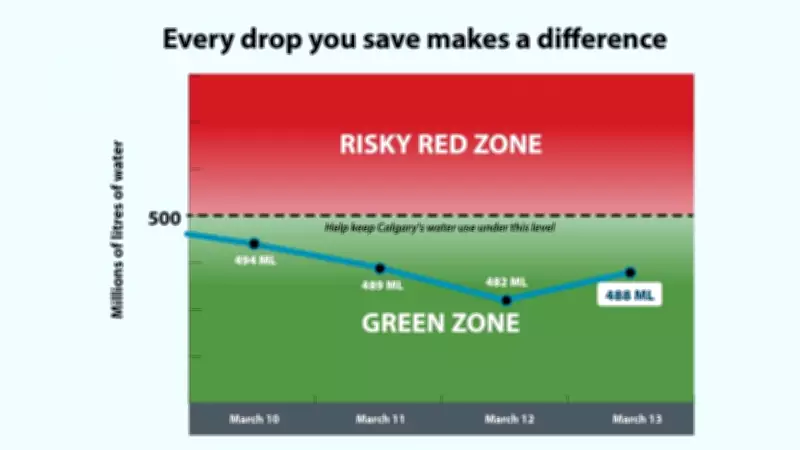
Calgary Achieves Fifth Consecutive Day of Reduced Water Consumption
In a significant development for urban resource management, the city of Calgary has reported a consistent decline in water usage over five straight days last week. This encouraging trend highlights the effectiveness of local conservation initiatives and public cooperation in addressing environmental sustainability challenges.
Sustained Conservation Efforts Yield Results
The consecutive reduction in water consumption represents a notable achievement for Calgary's municipal water management strategy. This marks the first time in recent memory that the city has maintained such a prolonged period of decreased usage, suggesting a growing public awareness and commitment to preserving vital water resources.
While specific numerical data on the exact volume of water saved has not been disclosed by authorities, the pattern of declining consumption indicates that both residential and commercial users are actively participating in conservation measures. This coordinated effort comes at a crucial time when many Canadian municipalities are grappling with water security concerns.

Broader Context of Water Management in Alberta
The success in Calgary occurs against a backdrop of varied water-related developments across the province. Notably, a boil water advisory was recently issued for a southwest Calgary neighborhood, underscoring the ongoing challenges in maintaining water quality infrastructure. Meanwhile, other regions continue to face their own water management issues, including flood warnings in parts of the Grand River watershed.
Calgary's achievement stands in contrast to some national trends where resource management remains a pressing concern. The city's ability to sustain reduced water consumption for multiple consecutive days demonstrates what can be accomplished through effective public communication and community engagement in environmental initiatives.
Implications for Future Conservation Policies
This five-day streak of declining water use provides valuable data points for municipal planners and environmental policymakers. The success suggests that:
- Calgary residents are responsive to conservation messaging
- Current water management strategies are producing measurable results
- There is potential for further reductions through continued public education
- Similar approaches might be effective in other municipalities facing water challenges
As climate patterns continue to evolve and urban populations grow, such conservation successes become increasingly important for ensuring long-term water security. The Calgary example offers a model for how cities can work collaboratively with their residents to achieve meaningful environmental outcomes.
Looking forward, municipal officials will likely monitor whether this positive trend can be maintained and potentially expanded to other resource conservation areas. The five-day achievement serves as both an accomplishment to celebrate and a foundation upon which to build more comprehensive sustainability programs for the future of Calgary and potentially other Canadian cities facing similar resource management challenges.