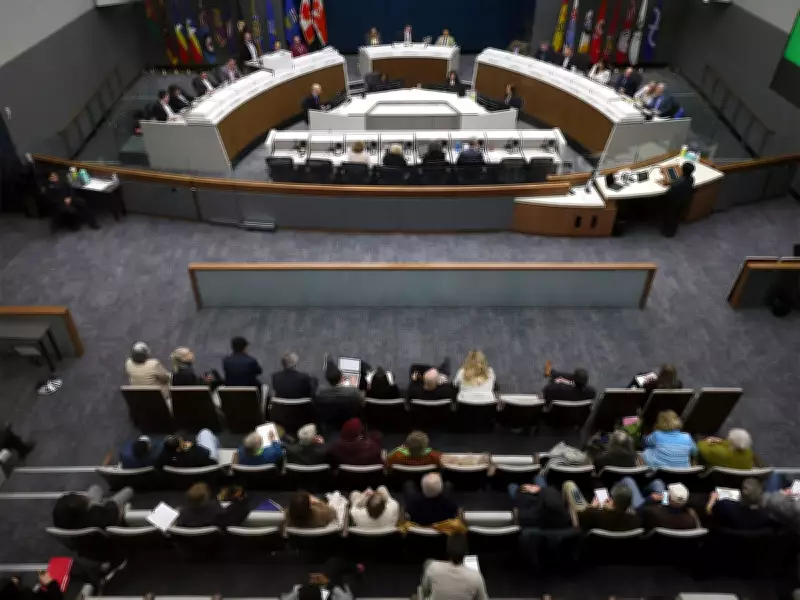
Calgary's Blanket Rezoning Repeal Hearing Concludes After Extensive Public Participation
The long-anticipated public hearing regarding the proposed repeal of Calgary's blanket rezoning policy has officially concluded after two weeks of intense discussion and debate. This significant municipal process saw an extraordinary level of citizen engagement, with 411 Calgarians personally addressing council members and an additional 3,293 written submissions received by city administration.
Substantial Policy Changes Under Consideration
At the heart of the hearing was a policy that previously allowed homeowners to redevelop single-family detached homes into duplexes, fourplexes, or row housing without requiring prior land-use redesignation. If the repeal receives council approval, it would trigger substantial changes to Calgary's urban landscape.
According to pre-hearing administrative presentations, approving the repeal would redesignate 306,774 residential parcels—representing approximately 68 percent of Calgary's homes—back to their original zoning classifications. The city's base density would decrease from 75 units per hectare to 60 units per hectare, building heights would be capped at 10 metres, and zero lot lines would be eliminated entirely.

Divergent Public Perspectives on Housing Development
The hearing revealed sharply contrasting viewpoints among Calgary residents regarding the future of housing development in the city. Eileen Deans, a Ward 10 resident, expressed strong opposition to the blanket rezoning policy, suggesting it prioritized income generation through property taxes and developer profits over genuine housing affordability concerns.
"I was a little bit shocked when it actually did pass, given the clarity with which the public spoke and repeatedly made points," Deans told council members. "From what I've seen and read, it would be like adding lipstick to a pig to keep going with this. It is fundamentally flawed."
Conversely, other speakers advocated strongly for retaining the current policy. Chloe Chan, a Crescent Heights resident, argued that R-CG zoning effectively removed bureaucratic obstacles from the redevelopment process, making more affordable housing options easier to construct.
"Reintroducing a bottleneck for development at this moment is as good as taking a crowbar to the kneecaps when what we need is a brace," Chan told council. She emphasized Calgary's substantial population growth—approximately 350,000 people over the past decade—and Alberta's high interprovincial migration rates as compelling reasons to maintain streamlined development processes.
Procedural Implications and Next Steps
Should the repeal gain council support, R-CG redevelopment would still be permitted, but homeowners would need to obtain formal rezoning approval through a city council public hearing—a process that introduces additional procedural requirements and potential delays.
The hearing commenced on March 23, 2026, at Calgary City Hall, with dozens of residents lining up to participate from the first day. The city has announced that the matter will receive further consideration during a regular council meeting scheduled for April 8, where council members will deliberate on the extensive public feedback received.
This comprehensive public engagement process highlights the complex balancing act municipal governments face when addressing housing affordability, development regulations, and community planning in rapidly growing urban centers like Calgary.