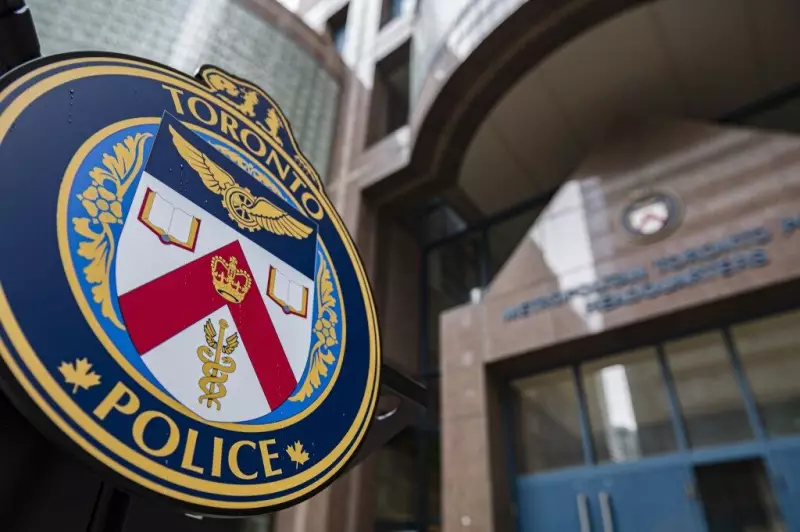
A recent public statement by the Toronto Police Service has ignited significant controversy and concern within the city's Jewish community and beyond. The force posted on social media platform X that 'there are no known threats to Toronto's Jewish community.' This declaration came just hours after the same police service announced the disruption of a second alleged ISIS-linked terror plot targeting Jewish Torontonians in recent months, as reported by the Toronto Sun's Bryan Passifiume.
Contradictory Messaging Amid Ongoing Threats
The timing and content of the police statement have raised serious questions. First, critics ask why law enforcement would publicly announce a perceived absence of threats, potentially alerting those who may be planning attacks that are, as yet, undetected. Second, the statement seems to contradict the police's own demonstrated understanding of the threat level, evidenced by their deployment of field commands to protect Jewish neighbourhoods for over two years.
Toronto Police hate crime data paints a stark picture of the reality for Jewish citizens. Since the Hamas terrorist attack on Israel on October 7, 2023, reported hate crimes against Jewish people in Toronto have skyrocketed. In 2024 alone, the Toronto Police hate crime unit reported that 40% of all reported hate crimes were antisemitic, targeting a community that represents just 3.6% of the city's population.
A National Crisis of Antisemitism
The alarming trend is not confined to Toronto. Statistics Canada reports that nationally over the last two years, a shocking 70% of all police-reported hate crimes based on religion were against Jewish people, who constitute only 0.9% of Canada's population.
Further evidence comes from B'nai Brith Canada's annual audit. The advocacy organization, which has tracked hate crimes since 1982, recorded a 125% increase in incidents last year, jumping from 2,769 in 2022 to a record 6,219 in 2024. This surge includes online harassment, face-to-face intimidation, vandalism, and violence.
The manifestations of this hate are severe and tangible. Incidents include the firebombing of synagogues, bullets fired at Jewish day schools, threats against university students, harassment in Jewish neighbourhoods, and vandalism of homes, businesses, and cemeteries. The editorial argues this is driven by propaganda that falsely blames Canadian Jews for the actions of the Israeli government, a discriminatory logic akin to blaming all Canadian Muslims for the terrorism of Hamas.
A Global Context and Local Fear
The sense of vulnerability is amplified by international events, such as the ISIS-inspired massacre of Jews celebrating Hanukkah on Australia's Bondi Beach on December 14, 2025. The editorial underscores that such an attack 'could happen anywhere, including Canada.'
The core criticism of the police statement is that it minimizes a daily reality of threat and anxiety for Jewish Canadians. Despite the successful disruption of terror plots—actions for which police deserve credit—the lived experience of the community, backed by hard data, indicates a persistent and growing danger that demands constant vigilance and clear, consistent communication from authorities.