White House Press Secretary Confronts CNN Reporter in Tense Exchange Over Media Coverage
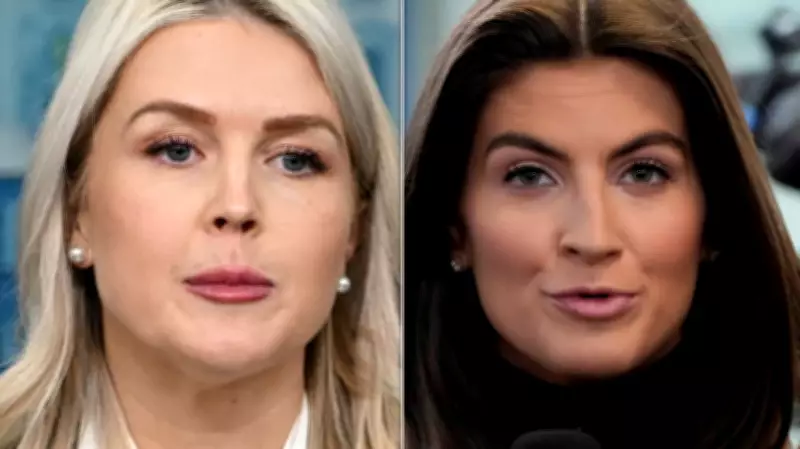
White House press secretary Karoline Leavitt launched a sharp rebuke against CNN's Kaitlan Collins during a Wednesday press briefing, following Collins' challenge regarding Defense Secretary Pete Hegseth's recent criticism of the media. The confrontation centered on the administration's stance toward press coverage of American service member fatalities in the ongoing U.S.-Israeli military engagement with Iran, which has claimed six lives thus far.
Defense Secretary's Comments Spark Media Debate
Earlier that day, Hegseth accused what he termed the "fake news" media of attempting to "make the president look bad" by reporting on the deaths of U.S. troops. This accusation set the stage for Collins' direct question to Leavitt: "Is it the position of this administration that the press should not prominently cover the deaths of US service members?"
Leavitt responded not by addressing the query directly, but by attacking Collins, CNN, and the broader media landscape. She asserted, "No, it’s the position of this administration that the press in this room and the press across the country should accurately report on the success of Operation Epic Fury and the damage it is doing to the rogue Iranian regime that has threatened the lives of every single American in this room."

She emphasized the administration's gratitude for the armed forces' sacrifices, stating, "If the Iranian regime had their choice, they would kill every single person in this room. And so we can all be very grateful that we have an administration and that we have men and women in our armed forces who are willing to sacrifice their own lives for the rest of us in this room and for every American across the country and for every troop that is based in the Middle East."
Heated Back-and-Forth Escalates
When Collins pushed back by quoting Hegseth's remarks, Leavitt retorted sharply, "That’s not what the Secretary said, Kaitlan, and that’s not what the Secretary meant, and you know it. You know you are being disingenuous." The exchange intensified as Collins noted that the media has historically covered "the deaths of U.S. service members under every president," a point that further fueled the dispute.
Leavitt escalated her criticism, declaring, "The press does only want to make the president look bad. That’s a fact. Listen to me, especially you and especially CNN. And the Secretary of Defense cares deeply about our warfighters and our men and women in uniform. He travels all across this country to meet with them, to connect with them and your network has hardly ever probably reported on that."
She highlighted that Chairman of the Joint Chiefs, Chairman Kaine, expressed condolences to the families, and President Donald Trump would attend the dignified transfer of the fallen troops. Collins countered that covering such transfers is "not making the president look bad" but simply "showcasing that," to which Leavitt accused CNN of using "every single thing this administration says" to undermine the president, calling it "an objectable fact."
Broader Implications for Media Relations
Collins maintained her stance, replying, "I don’t think covering troop deaths is trying to make the president look bad." Leavitt pivoted to critique CNN's coverage more broadly, arguing, "If you’re trying to argue right now that CNN’s overwhelming coverage is not negative of President Donald Trump, I think the American people would tend to disagree, and your ratings would tend to disagree with that, as well."
Later, on Jake Tapper's show "The Lead," Collins reiterated her position, stating, "covering the deaths of these service members has nothing to do with President Trump himself personally, just as it didn’t with other presidents." Tapper expressed shock at the remarks from Hegseth and Leavitt, underscoring the ongoing tension between the administration and the press over journalistic responsibilities and political narratives.

This incident highlights the deepening rift between the White House and major media outlets, particularly concerning sensitive topics like military casualties and presidential image management. The exchange raises questions about press freedom, the role of media in wartime reporting, and the administration's approach to public communication during conflicts.