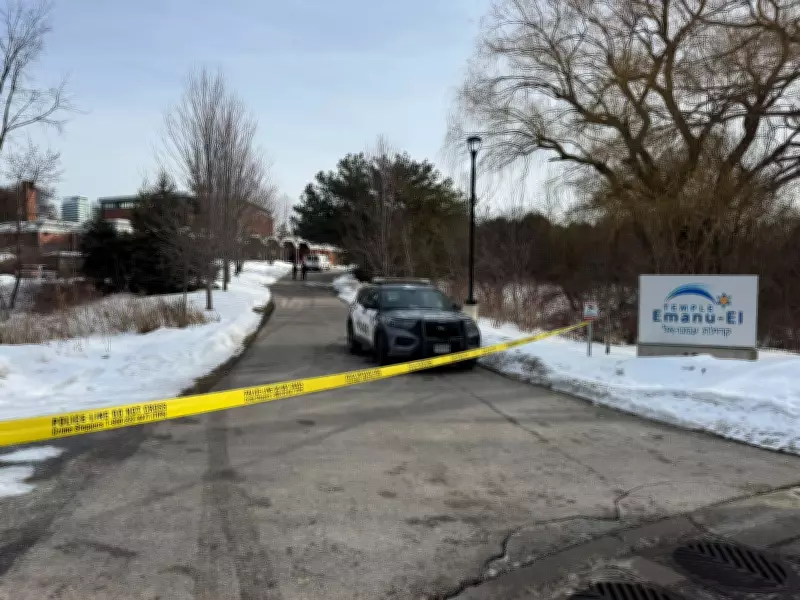
Three Toronto Synagogues Targeted by Gunfire in Disturbing Antisemitic Attacks
In a deeply troubling escalation of violence against religious institutions, three Jewish houses of worship in the Toronto area have been struck by gunfire within days, challenging official reassurances that antisemitism has no place in Canadian society. The incidents represent a disturbing pattern of targeted attacks that has left the Jewish community increasingly vulnerable and questioning the effectiveness of political responses.
A Pattern of Violence Against Jewish Institutions
The first attack occurred at Temple Emanu-El, followed by overnight gunfire striking BAYT (Beth Avraham Yoseph of Toronto) and Shaarei Shomayim. These three separate shooting incidents targeting synagogues have sent shockwaves through Jewish communities across Canada, raising serious concerns about the safety of religious spaces and the persistence of antisemitic hatred.
This violence follows a documented pattern of increasing threats against Jewish institutions over the past two years, including vandalism, protests outside synagogues, and targeted harassment of Jewish businesses and community centers. The recent gunfire represents a dangerous escalation in both method and intent.

Political Responses and Community Reality
Following these attacks, Ontario Premier Doug Ford described the shooting at Temple Emanu-El as "a vile and targeted act of antisemitism" and stated that "antisemitism has no place in our province." Similarly, Solicitor General Michael Kerzner declared that "cowardly acts of antisemitism, violence and hate will never be normalized or accepted in Ontario."
However, community leaders and advocates argue that such statements have become the political equivalent of "thoughts and prayers"—well-intentioned but increasingly empty rhetoric that fails to address the underlying problem or provide meaningful protection for vulnerable communities.
The Disconnect Between Words and Reality
The uncomfortable truth facing Canadian society is that antisemitism is not disappearing but appears to be thriving in certain segments. This reality manifests in multiple ways:
- Jewish schools requiring armed security personnel
- Synagogues installing concrete barriers and enhanced security measures
- Community institutions conducting threat assessments before hosting events
- Regular protests outside Jewish establishments with antisemitic rhetoric
- Vandalism targeting Jewish-owned businesses
Deputy Chief Rob Johnson of the Toronto Police Service stated that "a shooting targeting a place of worship is unacceptable," but community members note that "unacceptable" seems inadequate language for describing bullets fired into sacred spaces.
A Growing Pattern of Hate Crimes
These synagogue shootings represent part of a disturbing pattern that has been developing steadily over recent years. Jewish institutions and businesses have faced repeated attacks and threats, with each incident following a familiar sequence: public condemnation, police investigation, official assurances that hate will not be tolerated, followed by another incident.
The attacks thrive in an environment where antisemitic rhetoric has become increasingly normalized in certain circles, where mobs march through Jewish neighborhoods chanting destructive slogans, and where individuals feel emboldened enough to target religious institutions with firearms in Canada's largest city.
As concrete barriers rise around synagogues and security measures become standard for Jewish institutions, the gap between official reassurances and lived reality grows wider. The fundamental question remains: why does this pattern of violence against Jewish communities continue despite repeated condemnations and promises of protection?
The Jewish community across Canada now lives with heightened security concerns as a daily reality, challenging the narrative that antisemitism has no place in Canadian society when evidence suggests otherwise. These recent attacks on three Toronto synagogues serve as a stark reminder that words alone cannot protect vulnerable communities from targeted violence.