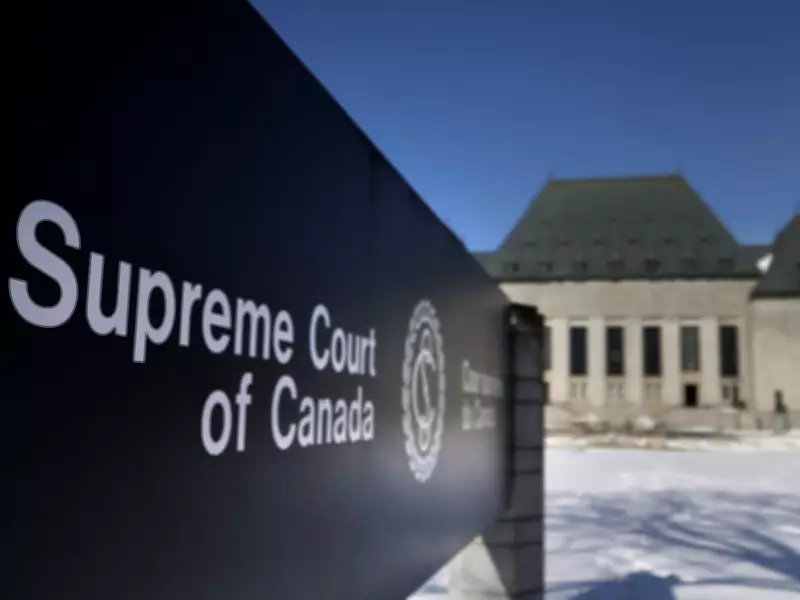
Supreme Court of Canada Rules Refugee Claimants Eligible for Quebec Subsidized Child Care
The Supreme Court of Canada has issued a landmark decision, ruling that excluding refugee claimants from access to subsidized child-care services in Quebec constitutes discrimination against women. This ruling, published on Friday, not only upholds a previous appeal court decision but also expands eligibility to include refugee claimants who do not possess work permits.
Background and Legal Challenge
The case originated seven years ago when Bijou Cibuabua Kanyinda, a mother of three from the Democratic Republic of Congo, filed for a judicial review of Quebec's Reduced Contribution Regulation. This regulation, implemented in 2018, had explicitly excluded refugee claimants from eligibility for subsidized child-care services. Kanyinda arrived in Quebec via Roxham Road in 2018 and, despite holding a work permit, was denied access to affordable child care for her children.
In 2019, she argued that Quebec's rules were discriminatory based on sex, citizenship, and immigration status. Initially, a Quebec Superior Court judge found no sex-based distinction in the regulation. However, the Quebec Court of Appeal later overturned this, concluding that discrimination did exist, leading to refugee claimants with work permits gaining access to subsidized child care in 2024.

Court's Reasoning and Impact
The Supreme Court's decision emphasizes that women are disproportionately affected by such exclusions. In its summary, the court stated, "Women are more likely to have primary child-care responsibilities, and access to affordable child care is closely tied to their ability to work. As a result, the exclusion reinforces and worsens the disadvantage experienced by women refugee claimants."
Justice Andromache Karakatsanis, in the ruling, found that while Quebec's goal of limiting subsidized child care to individuals with a sufficient connection to the province was important, there was no real link between this goal and excluding refugee claimants. She also concluded that the requirement for work permits was unnecessary, thus widening the eligibility criteria.
Lawyer Sibel Ataogul, who represented Kanyinda, hailed the recognition of sex-based discrimination as "huge" and noted that it sets a precedent for all of Canada. "It sets a precedent for all of Canada now," she said in an interview.
Political and Social Reactions
Following the decision, Quebec Families Minister Kateri Champagne Jourdain stated that the government will analyze the Supreme Court's ruling. She reiterated the pressures on the child-care network, which has had to accommodate thousands of children of asylum seekers. "Over the past few years, Quebec has welcomed nearly 40 per cent of asylum seekers arriving in Canada, which is almost double its demographic weight," she said in a statement. "Our commitment has always been to ensure the sustainability of our network to promote the best possible development for children."
Previously, Premier François Legault defended the exclusion, calling it "a question of common sense" to prioritize Quebec citizens amid a shortage of daycare places. The Attorney General of Quebec had appealed the Court of Appeal's decision to the Supreme Court, which has now been upheld and expanded.
Implications and Future Steps
This ruling is expected to have significant implications for refugee claimants in Quebec, particularly women, by enhancing their access to affordable child care and supporting their integration into the workforce. It underscores the legal principle that immigration status should not be a barrier to essential services that promote gender equality.
The decision marks a critical step in addressing systemic inequalities and may influence similar policies across Canada. As the government reviews the ruling, stakeholders will be monitoring its implementation to ensure compliance with the court's directives.