Federal Bureaucrats Settle Contentious Trademark Battle Over Notorious Outlaw Biker Club Logo
In a surprising legal clash that pits corporate regulations against underground biker culture, federal officials at the Canadian Intellectual Property Office have resolved a fierce trademark dispute over the logo of the Rock Machine Motorcycle Club. This emblem is infamous for its association with a brutal underworld conflict that resulted in more than 160 fatalities during a prolonged power struggle.
A Logo Steeped in Violent History
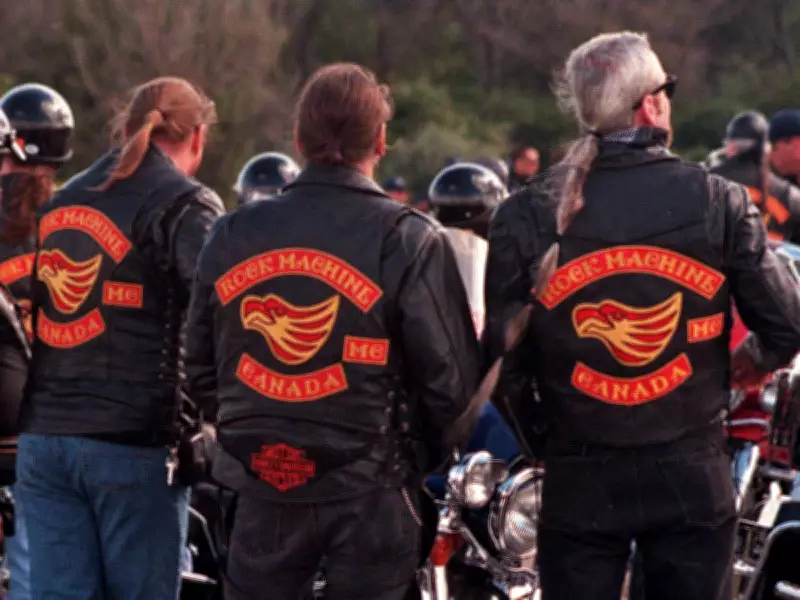
The Rock Machine name and distinctive patch remain deeply recognizable, particularly among residents of Quebec who recall the devastating biker war that unfolded from 1994 to 2002. This violent confrontation pitted the Rock Machine against the Hells Angels Motorcycle Club in a series of shocking incidents that included shootouts, targeted assassinations, bombings, arson attacks, mass arrests, and relentless media coverage.
These patches, known as "colours" within biker circles, are worn on the backs of members as a powerful symbol of club affiliation and a bold projection of organizational strength. The Rock Machine's specific design features a stylized bird's head with a predatory beak and a piercing eye, accompanied by the text "Rock Machine" above and "Nomads" below. Flanking the central image are the letters "MC" for motorcycle club on the right and a diamond shape enclosing "1%" on the left, a marker denoting its status as an outlaw club rather than a recreational riding group.

The Trademark's Unusual Path to Registration
In 2010, Sylviette Brown from York Region, located north of Toronto, submitted the Rock Machine patch for trademark protection. Official records indicate that despite a Google search by a Canadian Intellectual Property Office official revealing accounts of gang activities, turf wars, arsons, and murders linked to the club, the trademark was surprisingly approved and officially registered in 2012.
Sylviette Brown is the mother of Shawn (Bad Dog) Brown, a veteran biker who once served as the national president of the Rock Machine long after the Quebec conflict had subsided. This familial connection adds a personal dimension to the ongoing legal saga over the club's iconic imagery.
Legal Challenge and Mysterious Client
The trademark faced a significant challenge in 2024 when lawyers from Shift Law, a Toronto-based firm specializing in intellectual property, filed to have it cancelled. They argued that the logo had not been used commercially for several years, thereby justifying its expungement from the official registry.
Rebecca Kupfer, a lawyer at Shift Law, stated, "We were acting on a client's behalf, but I'm not at liberty to disclose information about my client. An expungement proceeding was commenced on the belief that the trademark wasn't being used by the current owner." She further explained that the move was intended to "clear the way for my client," who reportedly has pending trademark applications for similar designs.
Allegations of American Involvement
Sylviette Brown and her son claim to know the identity behind the trademark challenge. According to Sylviette Brown, representatives from American chapters of the Rock Machine contacted her about the trademark prior to the legal action. She alleges, "It's the American chapters of the Rock Machine. They want to come to Canada to sell goods and open up again, to restart in Canada."
This allegation suggests that the trademark dispute may be part of a broader effort to revive the club's presence in Canada, leveraging the logo's notoriety for commercial purposes. The resolution by federal bureaucrats marks a critical juncture in this unusual intersection of legal formalities and the lingering legacy of outlaw biker culture.