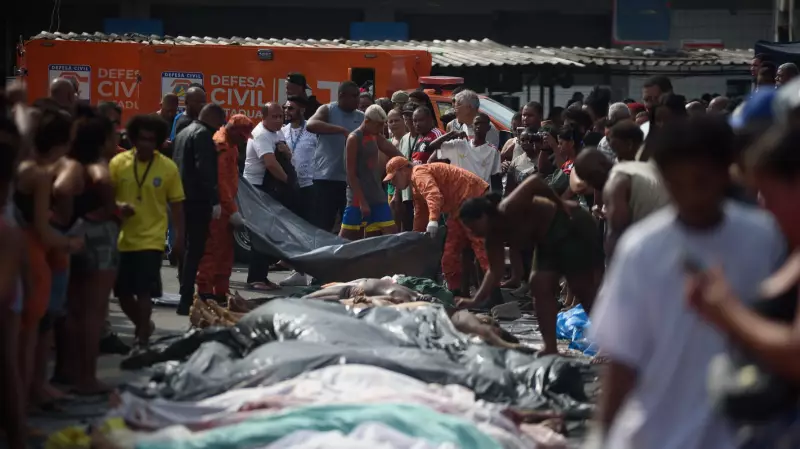
Rio de Janeiro has become the epicenter of a brutal law enforcement campaign that has left at least 132 people dead in a series of coordinated police raids. The operations, targeting powerful drug trafficking organizations, have sparked international concern about police tactics and civilian safety.
Unprecedented Violence in Favela Communities
The recent police actions represent one of the deadliest periods in Rio's ongoing battle against organized crime. Heavily armed officers have been conducting raids in multiple favelas, engaging in intense firefights with gang members that frequently result in civilian casualties.
Local residents describe terrifying scenes of explosions, automatic weapons fire, and residents trapped in their homes during the operations. Many community members report being unable to access medical care, buy food, or send children to school during the raids.

Government's Stance on Security Crisis
Brazilian authorities defend the aggressive tactics as necessary to combat well-armed criminal organizations that control large territories in Rio's impoverished neighborhoods. Police officials argue that the operations have successfully disrupted drug trafficking routes and seized significant quantities of weapons.
However, human rights organizations have documented numerous cases of alleged extrajudicial killings and excessive force. "We're witnessing a disturbing pattern of lethal violence that disproportionately affects poor, Black communities," stated a representative from a local monitoring group.
International Reaction Mounts
The rising death toll has drawn condemnation from international human rights groups and foreign governments. United Nations experts have called for independent investigations into the police operations, citing potential human rights violations.
Meanwhile, Rio's state government maintains that the crackdown is essential for restoring public safety and reclaiming territory from criminal elements that have long terrorized local communities.
Impact on Daily Life
The ongoing security operations have created a climate of fear throughout affected neighborhoods:
- Schools and businesses frequently close during police actions
- Emergency services struggle to reach injured residents
- Public transportation routes are disrupted
- Many residents report psychological trauma from continuous violence
As the death count continues to rise, questions about the effectiveness and humanity of Rio's security strategy are becoming increasingly urgent from both local and international perspectives.